

The Importance of Sleep

#PhysicalWellness

As UMass Lowell enters its spring 2022 finals, it is important for students to remember how essential sleep is to academic success. Getting a good night’s sleep every night can dramatically improve test scores.

According to a study posted in the nbj Science of Learning journal, getting a good night’s sleep regularly, not just the night before an exam, is linked to better overall academic performance, including on exams. Regularly getting longer sleep, higher quality sleep, and consistent sleep account for 25% of the determining factor in overall grades.

Longer sleep was the first factor analyzed. Getting enough sleep is the most known element of being rested enough for strong academic performance, but it is still often under-looked on college campuses. In general, getting more sleep is better than getting less, however, everyone should strive to get around 8 hours of sleep a night.

Higher sleep quality is also important to feeling rested every day. Sometimes factors outside of anyone’s control can make sleep more challenging, but there are controllable elements in ensuring higher quality sleep. Reducing use of technology before bedtime, taking less naps, exercising throughout the day, and not eating too close to bedtime can all assist in getting the best sleep possible.

One of the most under-looked parts of sleep health is sleep consistency. People who go to bed around the same time every night and wake up around the same time every morning typically feel more well-rested than people who fall asleep and wake up at different times each day, even if they get the same amount of sleep. Setting personal bedtimes and wake-up times every day can not only lead to feeling more well-rested but can also improve nightly quality of sleep.

Sleep is crucial to academic performance because, when people are not well-rested, it can be more challenging to think clearly. The time people sleep recharges their brains and ensures that they can perform as strongly as possible the next day. More sleep, and better sleep, each night gives the brain more time to recharge and be ready for the next day.

Consistency in personal sleep schedules also helps the brain in this recharging process because it teaches the brain when it should sleep and when it should be awake every day. If someone were to fall asleep at 10 pm every night and wake up at 6 am every morning, the brain and body gets used to this pattern, and the brain ensures that the body is ready to function by 6 am every morning. With inconsistent sleep schedules, the brain cannot learn when it is time to rest and when it is time to be active, which can lead to feeling tired during the day and energetic at night.

Memory is highly important to academic success, which is reliant on having a well-functioning brain. When people get a good night of sleep every night, it allows the brain to retain more information both in the short-term and the long-term. Adopting these healthy sleeping habits can lead to stronger academic success in college students.
UMass Lowell introduces Office of Student Life and Well-being

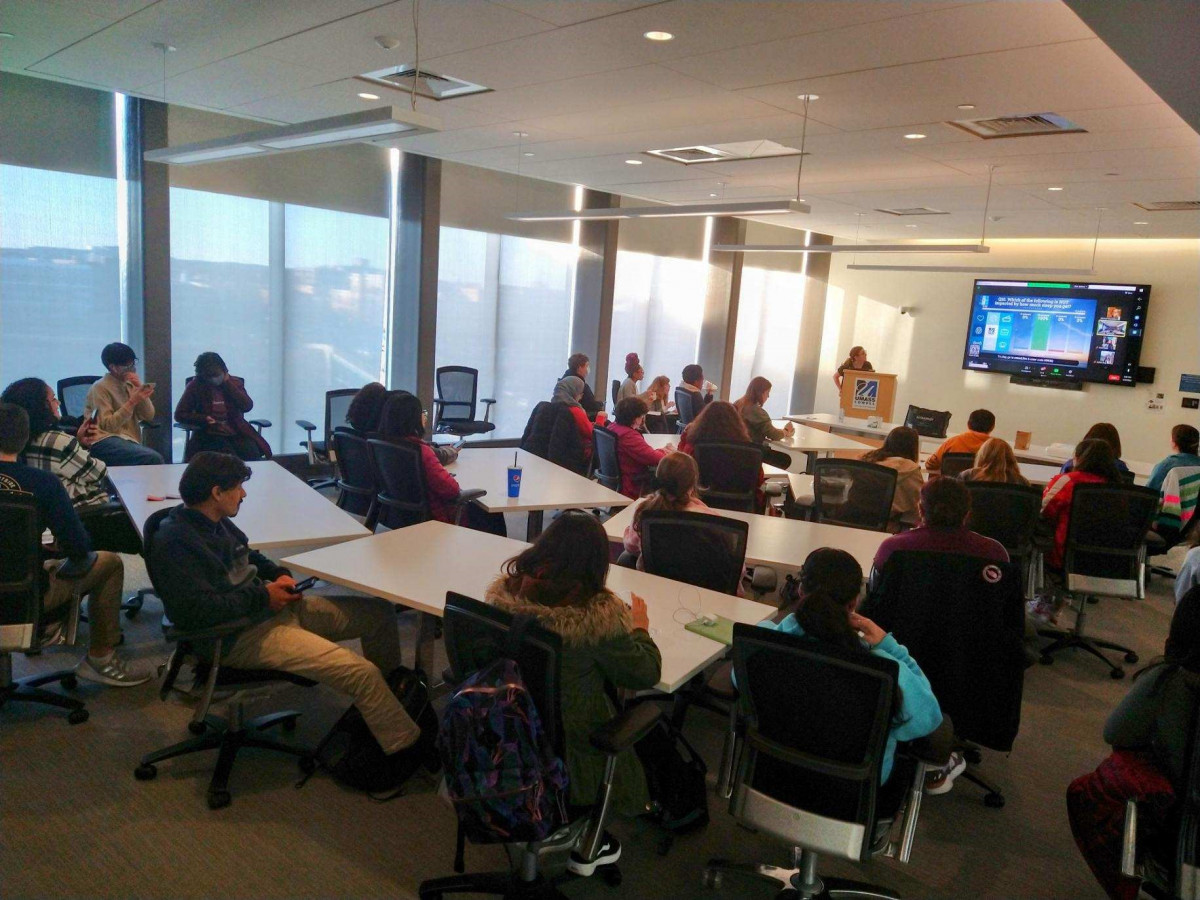
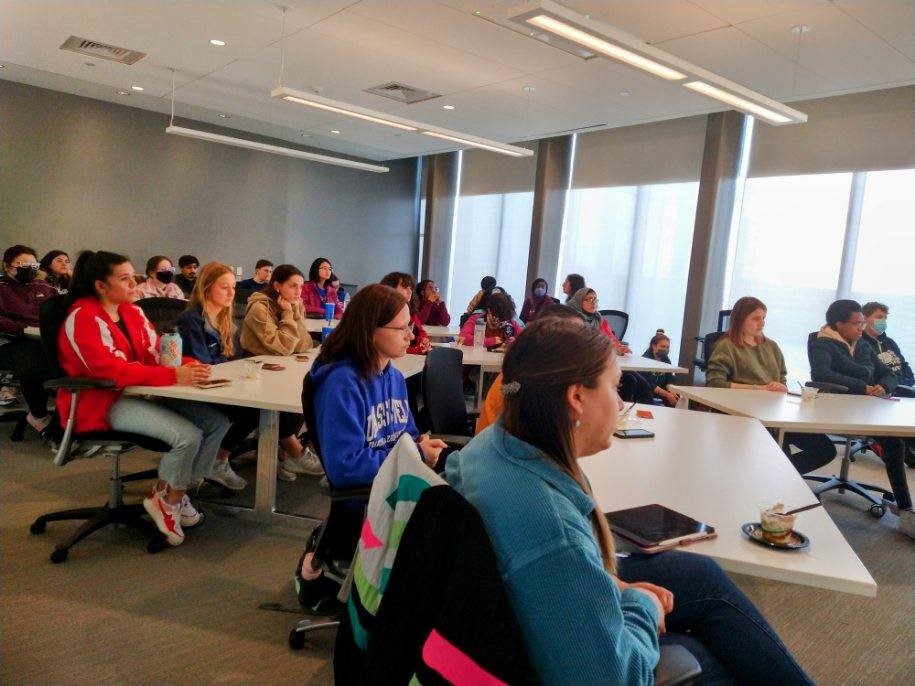
(Photo courtesy of Hannah Monbleau/UMass Lowell) On March 22, The Office of Student Life and Well-being hosted a trivia night dedicated to sleep, which was well received by students.

Lillie Zate
Connector Staff

Recently, UMass Lowell has introduced the Office of Student Life and Well-being, with a focus on educating students on the eight dimensions of well-being and incorporating health-promoting actions across campus culture, improving the lives of students and helping them in every aspect of their lives.

The eight dimensions of well-being that the office focuses on are emotional, environmental, financial, intellectual, occupational, physical, social and spiritual well-being.

“We are aiming to create a hub for all of the different wellness efforts in every dimension of wellness,” said Hannah Monbleau, assistant director of the Office of Student Life and Well-being. The office is trying to use holistic approaches to improve how students feel on campus in a way that can help them in the long run.

Across campus, many areas already have health initiatives going on, such as UMatter2. The Office of Student Health and Well-being wants to bring everything together and gather resources that can provide for students. As a result, students will be able to learn healthy habits and take away small changes that can improve and help them live healthy lives, in a more proactive and holistic way.

The Office of Student Life and Well-being hopes to reach their goals in several ways such as publishing resources, hosting seminars, lectures and workshops, partnering with other offices and programs on campus, having workshops during orientation for incoming freshmen.

UMass Lowell is not the first university to start something such as this – this is a part of a network of about 70 institutions across the country that promote health and well-being, which is continuing to grow every day, focusing on a well-being model to support students.

The office wants to break down barriers for students that might be preventing them from getting help and gaining the skills they need to meet all the eight dimensions of well-being.

“Other institutions are trying to find better ways to help their students; our office aims to find better strategies that are more proactive so students can have the tools they need to cope with the challenges they have…”

The Office of Student Life and Well-being is still a new organization and is growing every day, and they have UMass Lowell students’ interests as a top priority.

“We’re seeing that students have so many things they need help with, and we want to have all their resources for them, in one place,” Monbleau said. “We hope students can gain an understanding that the university cares for them, and we are here for them in all aspects of their lives.”

The Office is trying to find ways to track what students are struggling with and gather data to fine-tune the programs and resources they can offer students. They also want to become a place where students feel comfortable providing them with feedback.

“We’re hoping to make the lives of students a little easier and their experiences at UMass Lowell a lot better,” said Monbleau.

The office hopes to improve academic performance and the overall campus atmosphere by partnering up with other organizations on campus and providing resources.

Ruben Sanca, director of Student Life and Well-being added, “It’s important that once we can address the student body and get them the help they need, we can also help our staff and faculty. The more we help them, the better we can help our students,” he said.

The Office of Student Life and Well-being believes that the university needs to find ways where we can all work together.

“I think that in doing this and educating students, we will be learning more things ourselves,” said Monbleau.

Story appeared in The Connector student newspaper on March 29, 2022.

Don’t Sleep on Trivia Night 3/22/22

On March 22nd, 2022, The Office of Student Life and Well-being hosted their first event, Don’t Sleep on Trivia. Students are constantly reporting that they don’t get enough sleep, and March is Sleep Awareness Month, which made it the perfect time for an event related to sleep.

Students were able to attend both in person and virtually. The event was also a “Destination UML” event, meaning that prospective students considering attending UML were able to attend as well.

The room filled up with students eager to learn about healthy sleep habits, so much so that we ran out of chairs! Students enjoyed whole wheat zucchini muffins and yogurt parfaits, which both contain a healthy balance of carbohydrates and dairy, making them the perfect snack for a good night’s sleep.

The event kicked off with a presentation about the science of sleep by Diana Walker-Moyer, Director of Health Services. She explained that sleep is a time for the body to restore, and not the brain. She spoke of the hormones that affect our sleep, emphasizing the importance of getting 7-8 hours of sleep at night and waking up at the same time each day. She explained that healthy sleep improves our physical, intellectual, and emotional well-being.

After Diana’s great presentation, Assistant Director of Student Life and Well-being, Hannah Monbleau hosted Round 1 of Trivia. Students answered questions about the science of sleep [which were informed by Professor Zhang from the Zuckerberg College of Health Sciences] from their phones (how convenient!). The top 3 winners were announced on the leader board and a sleep mask, essential oil diffuser, and Tempurpedic pillow were claimed by the winners!

Up next, University Dining’s Dietitian provided nutrition tips for healthy sleep. She broke them into her “Sleep Do’s” and “Sleep Don’ts”

According to Melissa, to achieve healthy sleep you should:

  • Eat a healthy, balanced diet such as the Mediterranean diet
  • Limit highly processed foods
  • Have a carbohydrate containing snack 1 hour before bed combined with a dairy product

To achieve healthy sleep, you should NOT:

  • Deprive yourself of sleep- you will be hungrier and prefer high fat and high sugar foods
  • Have caffeine 4-6 hours before bedtime
  • Eat highlight processed foods before bed, and avoid being energy depleted, as it will be harder to fall asleep.

Next, the Office of Student Life and Well-being shared some tips from Jon Bragg, Associate Director of Residential Education, including respecting quiet and courtesy hours, and requesting support from an RA if someone is being too loud, making your room as comfortable as possible, having a blanket for the winter and a fan for the summer, creating a sleep schedule for your roommate and always using headphones when watching TV or listening to music.

After Melissa and Res Life’s great tips, Hannah Monbleau hosted a 2nd round of trivia. This time, the 10 questions were related to sleep dos and don’ts. Students answered on their phones and the top 3 winners won! The prizes were a lavender sleep spray, a sound machine, and a weighted blanket.

The event concluded with Diana Walker-Moyer providing attendees with the following take-aways:

  • Aim for 7-8 hours of sleep at night
  • Create a sleep-friendly environment
  • If you lose sleep, catch up by going to bed 1-2 hours earlier the next night
  • Avoid daytime naps if you can, but if you must nap, limit it to 20-30 minutes
  • Put the lid on the caffeine, the nicotine, and the alcohol too close to bedtime
  • Use your bed for sleep and sex only.
  • Exercise to move your body! But don’t exercise 3-4 hours before bedtime.
  • Finish regular meals 2-3 hours before bed, but don’t go to sleep hungry! Have a healthy bedtime snack such as yogurt with granola or cheese and crackers.

Students and staff that attended hopefully left feeling full of both yummy food and great sleep knowledge and were ready to have the best night’s sleep of their lives!

Welcome!

The mission of the Office of Student Life & Well-being is to advance the Division of Academic and Student Affairs holistic concept for student success by infusing health promoting actions and collaborations into campus culture.

This blog will be used to publish student stories on how they are incorporating the 8 dimensions of wellness into their daily life on campus.