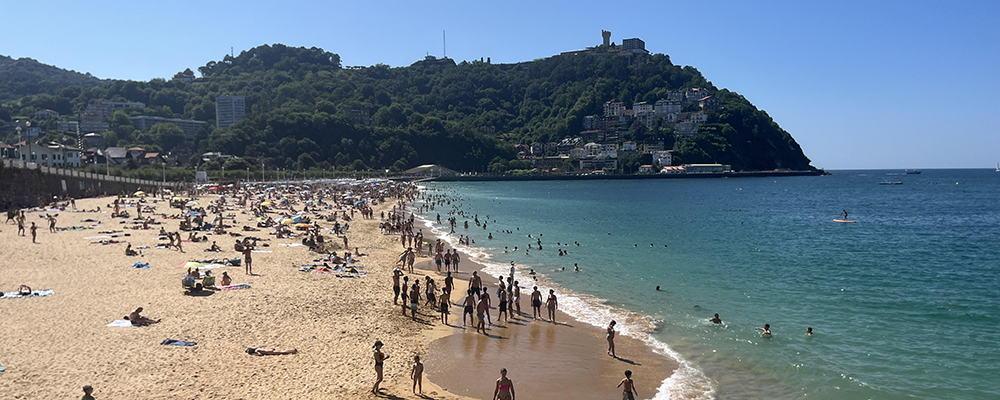
Our final full day in San Sebastián felt different from the beginning. For the first time since we arrived, the weather had completely changed. When I walked outside of Olarain that morning, I immediately went back upstairs to grab my raincoat. The sky was cloudy, La Concha was covered in fog, and the bike ride to Lacunza was damp and colder compared to the weather we had gotten used to during the trip.
I arrived early to class and waited in a nearby plaza before going inside. From 9:30 a.m. to 1:00 p.m. every weekday, we had Spanish classes at Lacunza. At the start of the trip, class felt intimidating, but by the final day, it had become part of our normal routine in San Sebastián. At the end of class, we received certificates of completion from Lacunza. The certificates were meaningful because they marked the end of a daily routine, and showed us that our hard work paid off.
Shortly after class ended, we met at Zurriola Beach for a farewell picnic. Even with the cloudy weather, there were still people on the beach and plenty of surfers in the water. We sat together on the sand eating tortilla and Basque cheesecake while discussing the trip.
Much of the conversation focused on Basque culture and the topics we had studied throughout the program. We talked about the two books we had read before the trip, All That Followed and What We Tried to Bury Grows Here. Both novels helped provide context for many of the places we visited and were the basis for the discussions that we had throughout the program. These conversations naturally connected to discussions about ETA, Spanish politics, and the relationship between Basque and Spanish identity.
One idea that kept coming up during the picnic was the slower pace of life in San Sebastián. Compared to the United States, people here seem much less rushed. Meals are treated as social events rather than quick necessities, and nobody seems eager to move on to the next thing. We were rarely rushed out of restaurants, people spent more time outside, and socializing felt like an important part of everyday life rather than something squeezed into a busy schedule.
That slower pace became one of my favorite parts of being here. Some of my favorite moments during the trip were simply walking or biking through the city. In the United States, most daily activities involve driving somewhere quickly. In San Sebastián, moving through the city on foot or by bike made everything feel more connected and relaxed. Even if a bike ride in San Sebastián took the same amount of time as a car ride back home, it felt much shorter because you were so much more integrated into the city and community.
After we finished eating, we said our goodbyes to Professor Zabalbeascoa before splitting into smaller groups for the rest of the afternoon. After the picnic, I walked through Parte Vieja to buy a few souvenirs before leaving. I bought some Basque salt, which had been recommended during our picnic discussion, along with a San Sebastián magnet before riding my bike back to Olarain.
While riding back, it suddenly occurred to me that it would be my last time biking through San Sebastián. The bikes had become such a normal part of daily life that I had not really thought about the fact that we were leaving the next morning.
Back at the hotel, I started packing, doing laundry, and preparing for the early bus ride the next morning. Once I finished, I decided to go out one last time for dinner. For my final dinner in San Sebastián, I ordered some Basque cod because I wanted to remember the taste of San Sebastián before I left.
The day felt like a fitting end to the program. It combined the routines that had become familiar to us, like biking to class and spending time together as a group, with conversations about everything we had experienced and learned during our time in the Basque Country. While the trip was coming to an end, the final day provided an opportunity to reflect on what we had learned, appreciate the city one last time, and say goodbye to a place that had become familiar in a surprisingly short amount of time.