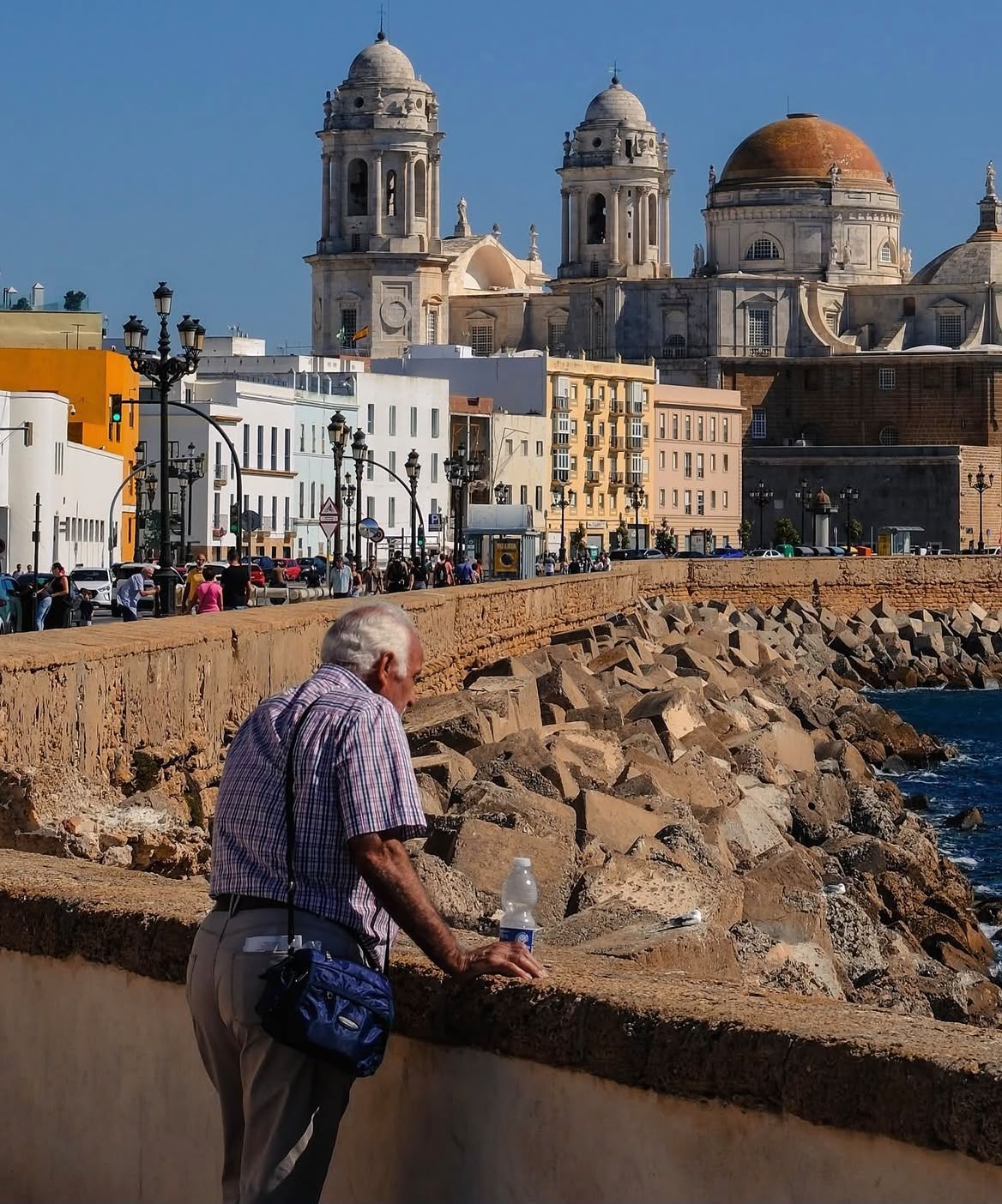
Once a key port in ancient times, the modern Cádiz remains a beautiful city with an abundance of history, both to see and to hear.
There are many wonderful opportunities in Cádiz and while you are strengthening your Spanish, be sure to take time and embrace the city itself. Within it hides an ever present history that can be found on every street. Before you even step foot within a museum you’ll surely have seen small parts of that history which date back to centuries before the discovery of the Americas.
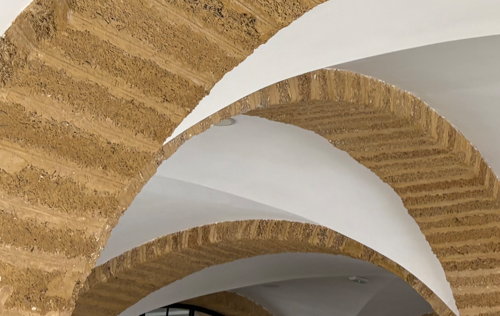
Throughout the city is a uniquely colored stone which is essential in the construction of many buildings. Cádiz had partially once been an island, so it is safe to say it is pretty close to the ocean. This tan-brown stone is Piedra Ostionera, or sandstone. It can be found everywhere truly, and is used in both ancient and more modern structures, like the Universidad de Cádiz.
Piedra Ostionera in UCA.Building made of Piedra Ostionera.
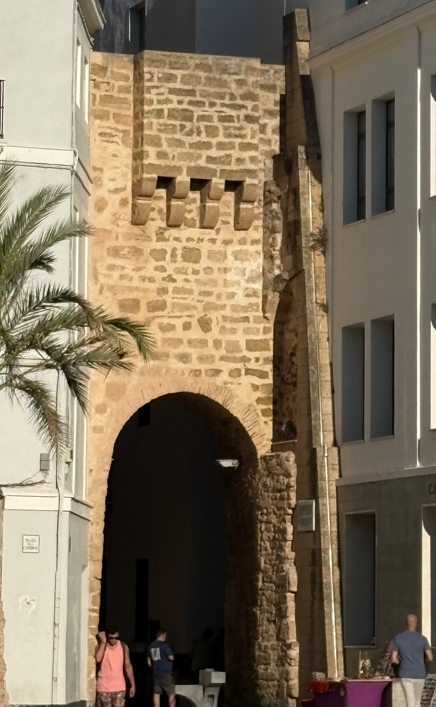
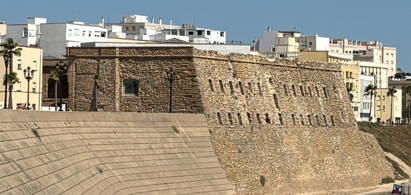
While one might glance over this old hanging wall in the Plaza Catedral, it is in fact a historic landmark, known as the Arco de la Rosa, it was once the gate to the city, when Cádiz was a walled city. Nearby to the Plaza Catedral is an old fortress which once defended the city and now rests as an example of ancient architecture.
Arco de la Rosa.The fortress, known as the Baluarte del Matadero.
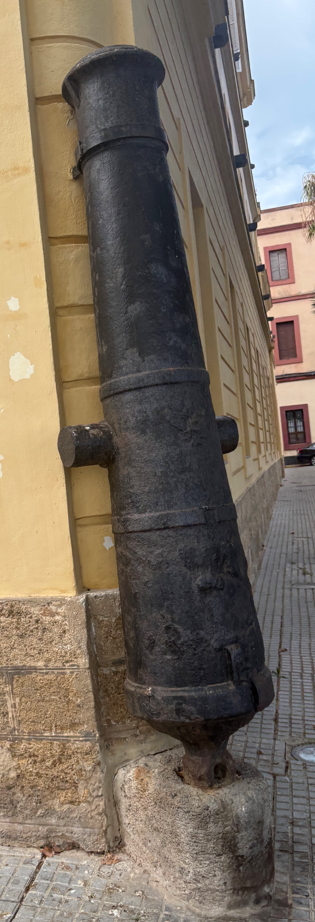
As you walk the streets, you’ll also run across these cannons, or cañones. These are not reproductions, and each one likely sat upon a boat or perhaps was even used at one point before it became more useful as a protective barrier against street traffic.
A cannon still guards the streets of Cádiz.
The history in Cádiz is palpable, and perhaps now you’ll have gotten a bit of a glimpse into just why that is. An essential pit stop for centuries, Cádiz is a city truly unlike any other, where centuries of geographic and political importance layer into the modern marvel it is today.
(And Why Language Learning Outside of the Classroom is 100% Worth It!)
Whether you’re taking Spanish classes as a part of required curriculum or as your major or minor, studying abroad creates an environment for students to embrace uncertainty, and gain a sense of comfort with a language that neither a group presentation nor a textbook exercise can provide.
My first days in Cádiz were a bit disorienting, but eventually I fell right back into the flow of my Spanish skills that I admittedly hadn’t touched since the past Spring semester. This wasn’t because I was back sitting behind a desk listening to a professor, it was because I was in front of a pizza counter ordering my post-flight lunch; it was because I was at the train station asking how to print my ticket; it was because I needed to figure out the hours of the gym and library at the dorms.
When spending these three weeks in Cádiz, Spain, you are both a student, and a tourist. But what about life in between?
This in-between is where the real language learning happened. Not in the vocab lists, but in the small, everyday moments where Andalusian Spanish did not match what I’d spent years learning at school. Some of it I picked up within days, while other peculiarities took me until week three to stop tripping over. Here are the quirks that stood out most:
Sounds
¿GraCias? No, GraTHias. One prominent and common vocal distinction in Spain is the use of the sound “th” in place of all “z” or “c” sounds followed by the letters E or I. otherwise used in other Latin American or Spanish-speaking countries. What English speakers “often call the “Spanish lisp” is considered a normal habit in this European culture, and something you may pick up yourself while spending time in the city of Cádiz.
Dropping the Last Letter Another common vocal quirk that you might notice in Spain specifically is the dropping or replacing of the last letter of certain words.
END LETTER
NORTHERN/CENTRAL SPAIN
SOUTHERN SPAIN
Ending -d
Dropped or swapped to a “th” (verdad → verda/verdath)
Dropped
Intervocalic -d-
Dropped in casual speech (comprado → comprao)
Dropped
Ending -s
Always pronounced
Dropped (gracias → gracia)
Ending -r
Always pronounced
Dropped (cantar → cantá)
Grammar
Conjugations As most American students know, it is taught that the “vosotros” conjugation of verbs is mostly used in Spain. While I am able to attest to this, I can also say that it is almost exclusively used in the classroom setting, as professors speak to the students. ¿Entendéis?
Verb Tenses When using the past tense, we often think to use what is called thepreterite indefinite which describes a past action that has started and finished at a specific point in time. Its endings look like this:
-ar
-er/-ir
Yo
-é
-í
Tú
-aste
-iste
Él/Ella/Ud.
-ó
-ió
Nosotros
-amos
-imos
Vosotros
-asteis
-isteis
Ellos/Ellas/Uds.
-aron
-ieron
In Spain though, is it much more common to see the present perfect tense when describing something in the past, instead of the preterite indefinite. It is conjugated by using the verb “haber” in front of the past participle of the verb, and is the English equivalent to saying, “I have…” oftentimes used when describing something in the recent past, like this [past] week, this [past] morning, etc. Its form looks like this:
-ar
-er/-ir
Yo
he -ado
he -ido
Tú
has -ado
has -ido
Él/Ella/Ud.
ha -ado
ha -ido
Nosotros
hemos -ado
hemos -ido
Vosotros
habéis -ado
habéis -ido
Ellos/Ellas/Uds.
han -ado
han -ido
It was important to keep this verb tense in mind, despite knowing how to use other types of tenses appropriately. Because we were in Spain, we needed to make sure we were applying what we were learning properly, and needed to use the present perfect when completing writing assignments or essay tests.
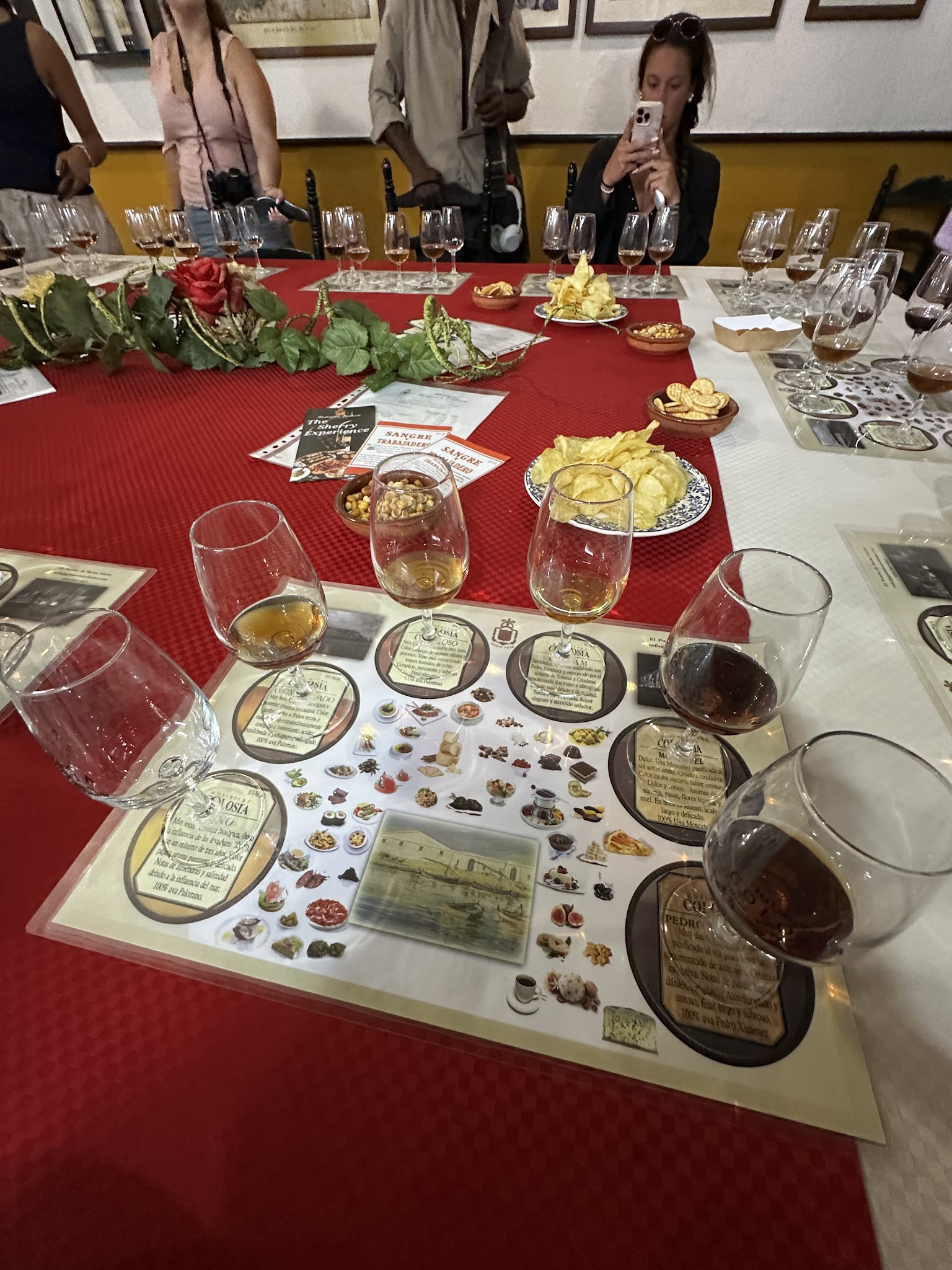
On this day, our group took a boat trip to another part of the country, where we got to visit a winery. It had rows upon rows of old wine casks. After the tour, we got to do a wine tasting. They gave us 5 different types of wine, each with a different flavor. I learned that day that wine is definitely an acquired taste for some, including myself.
These barrels have been aging for years with inscriptions of when they were cast and by whom.We tried 5 different flavors of wine here going from bitter to sweet. The last one tasted almost like molasses.
Sunsets & Beaches of Cádiz
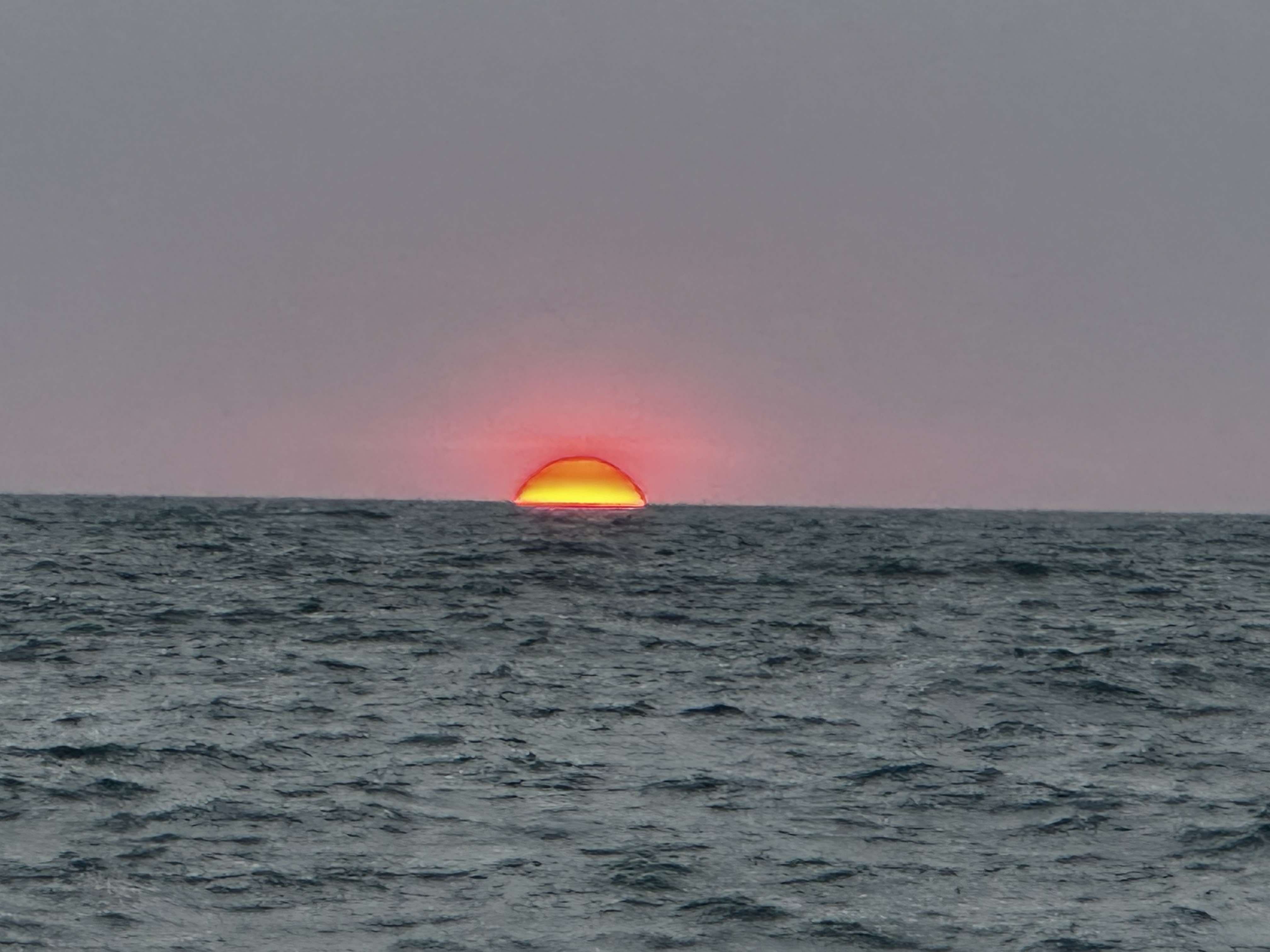
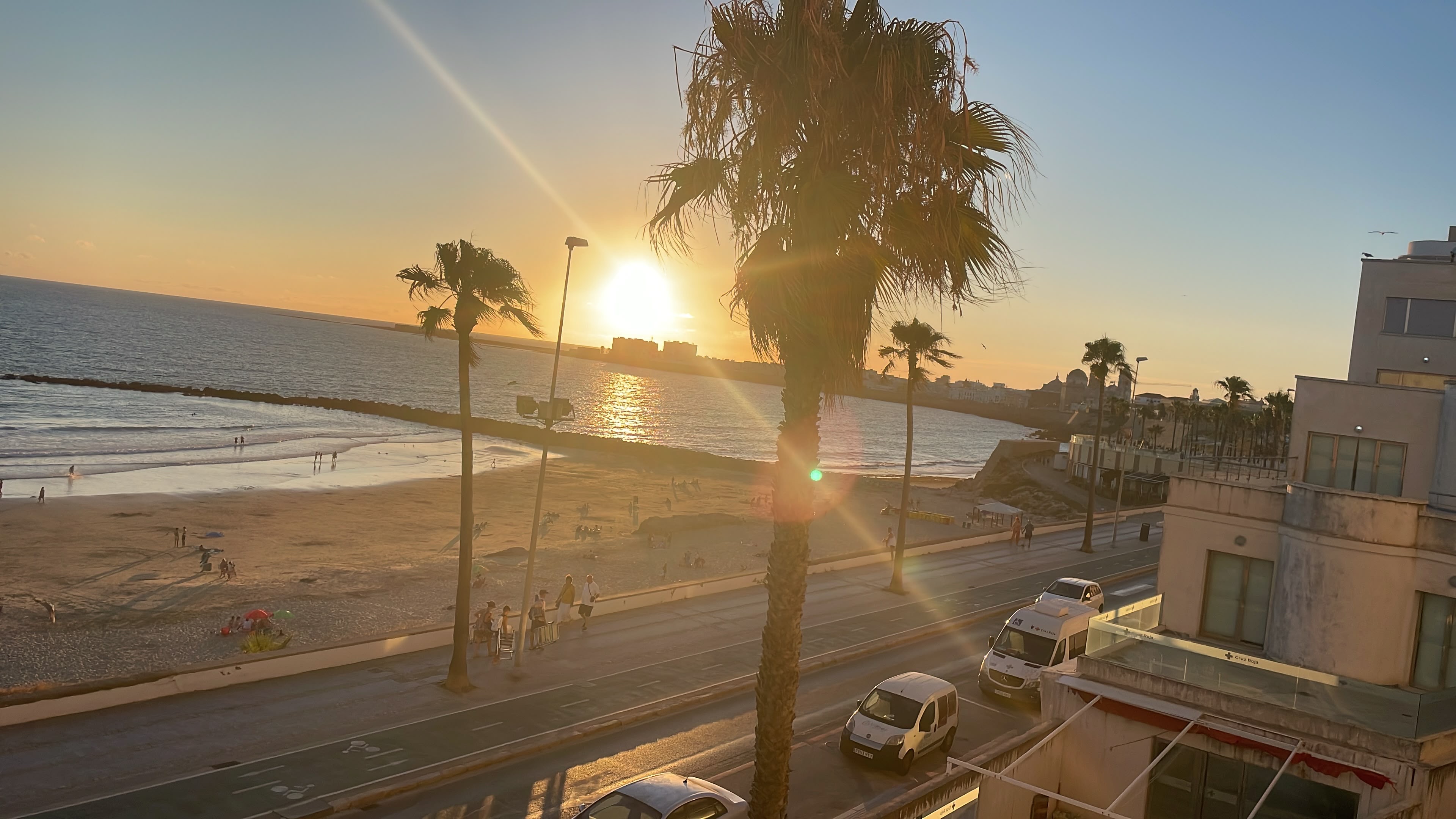
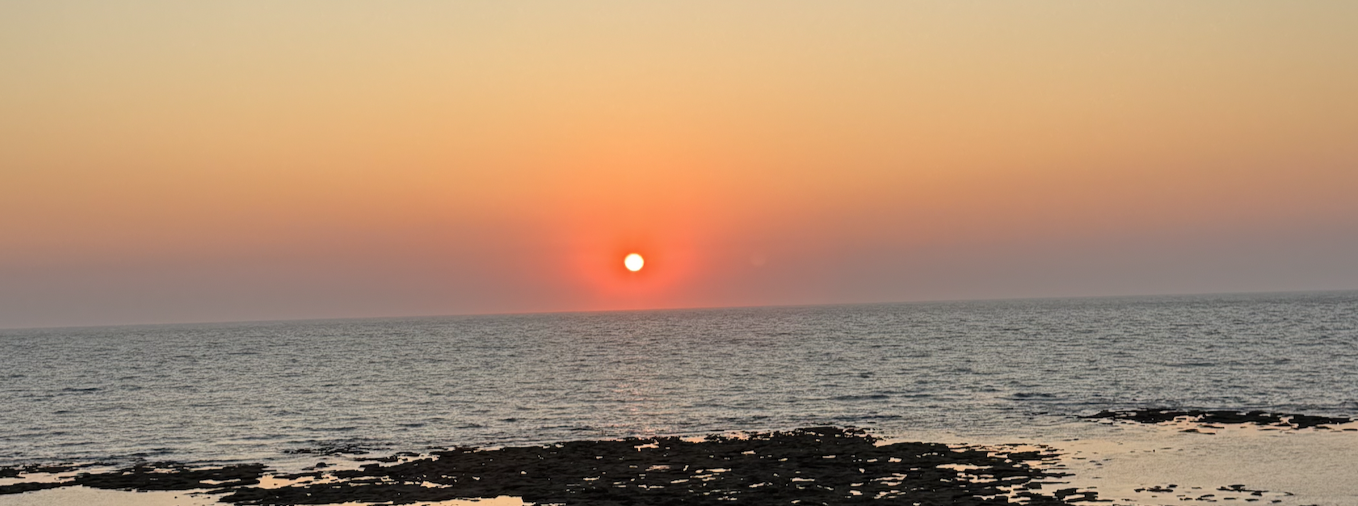
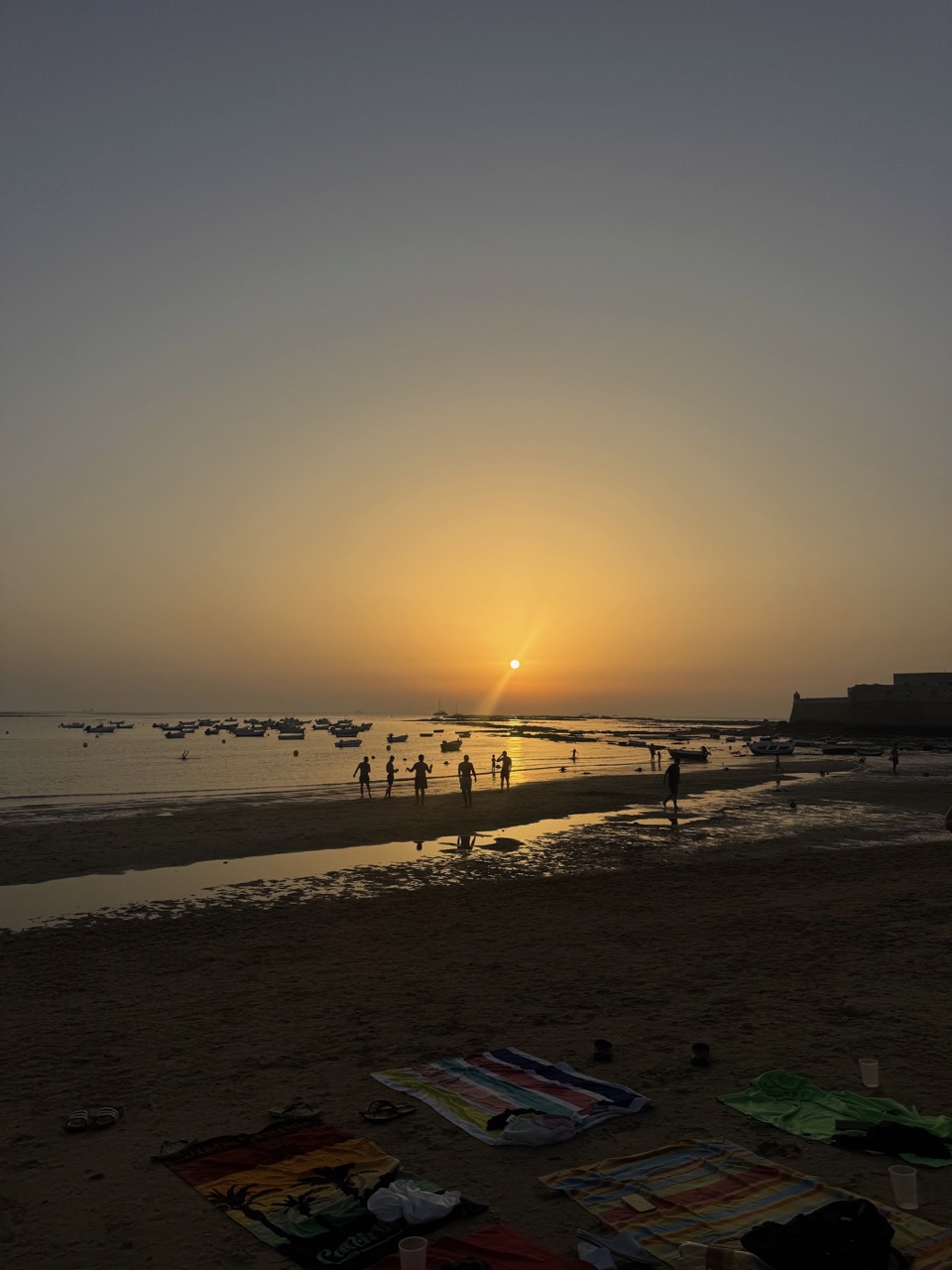
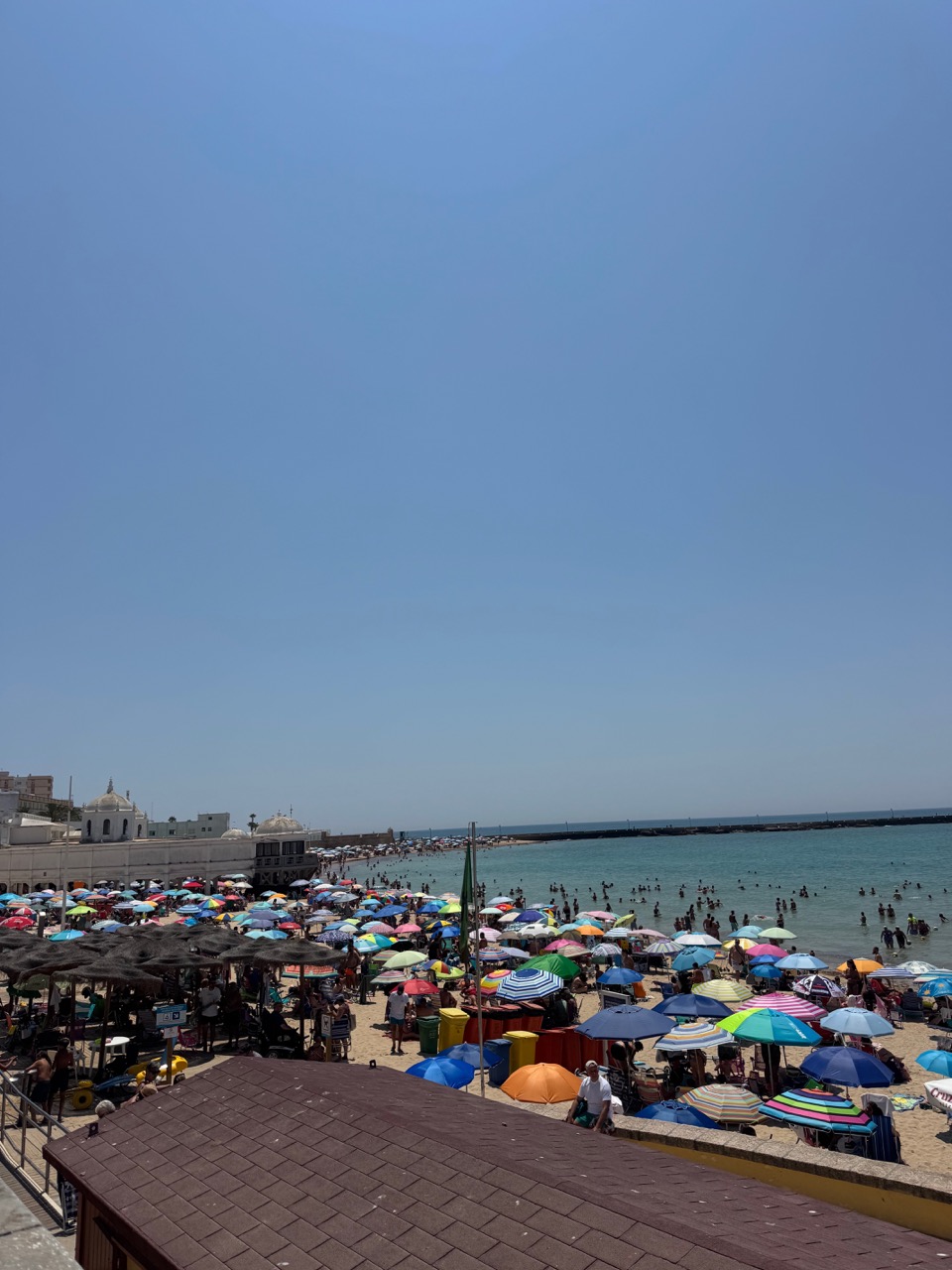
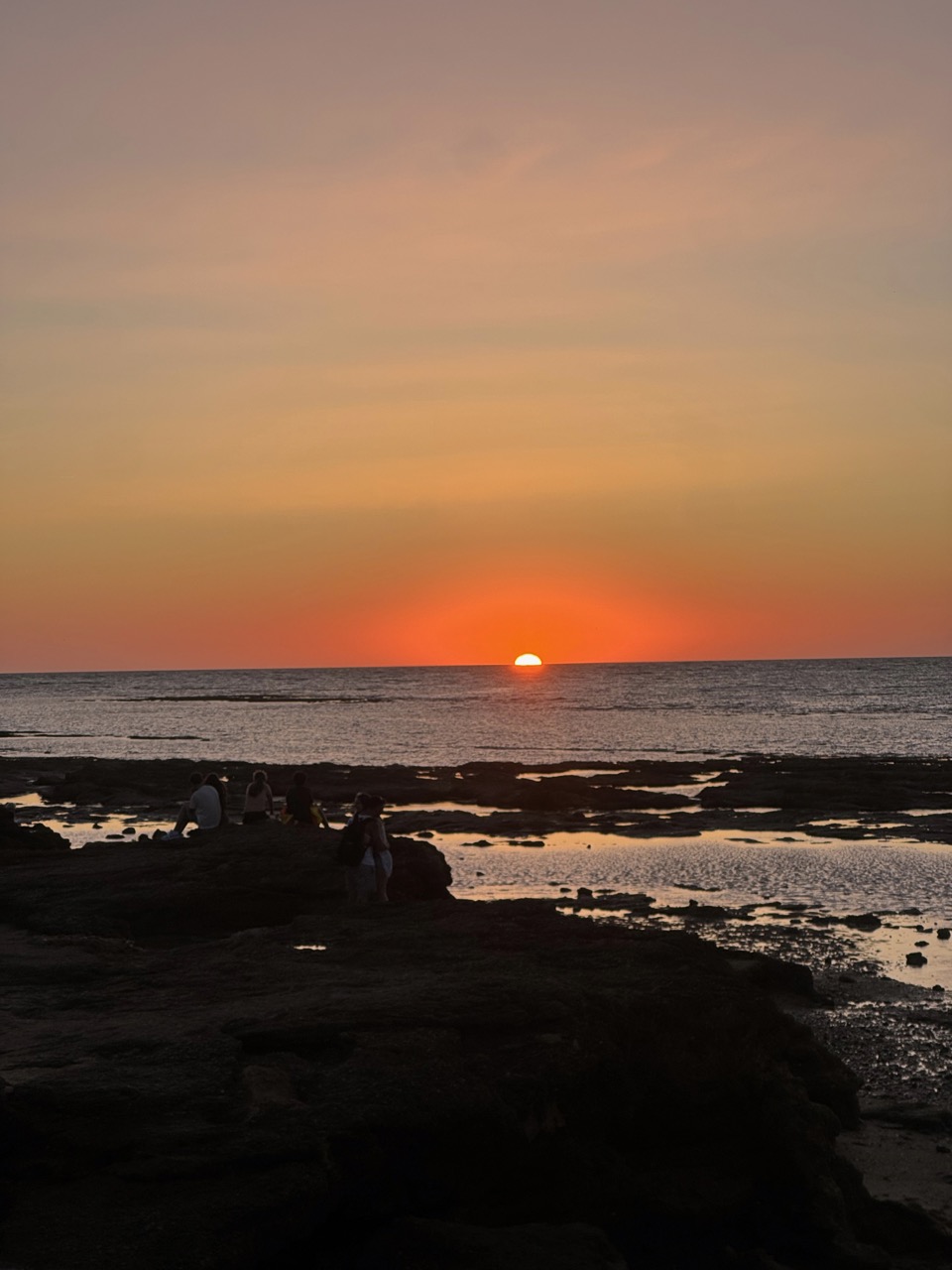
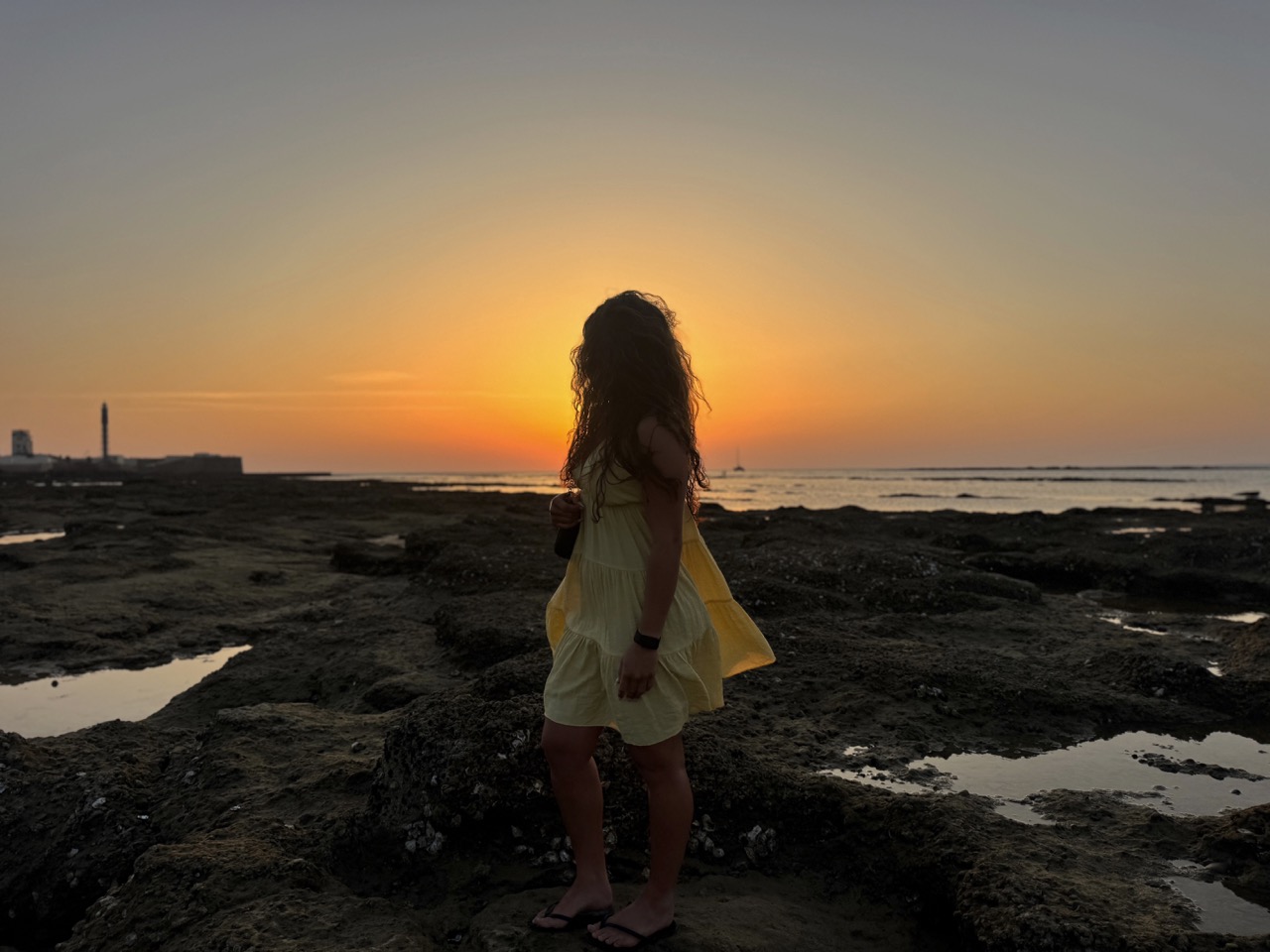
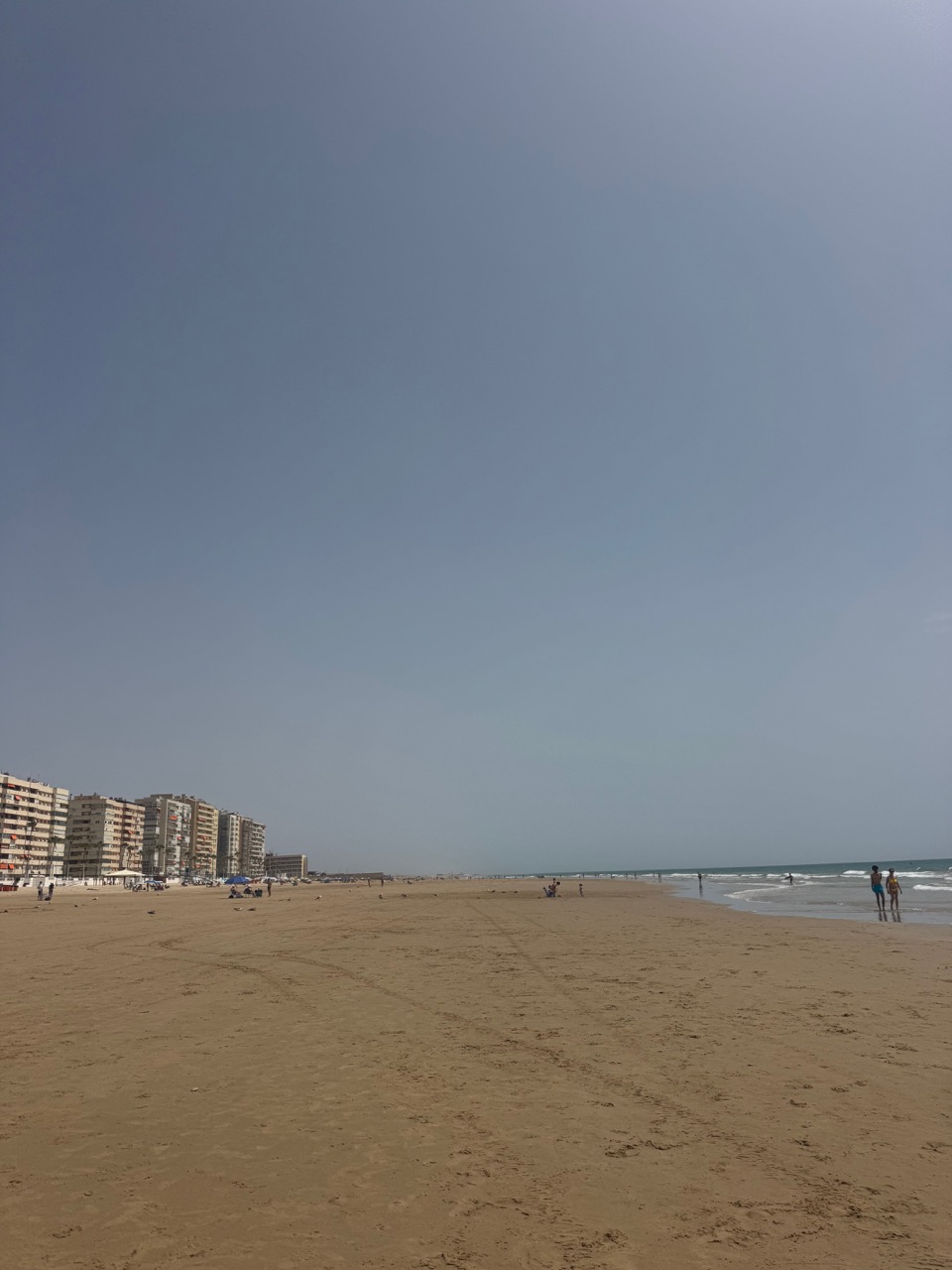
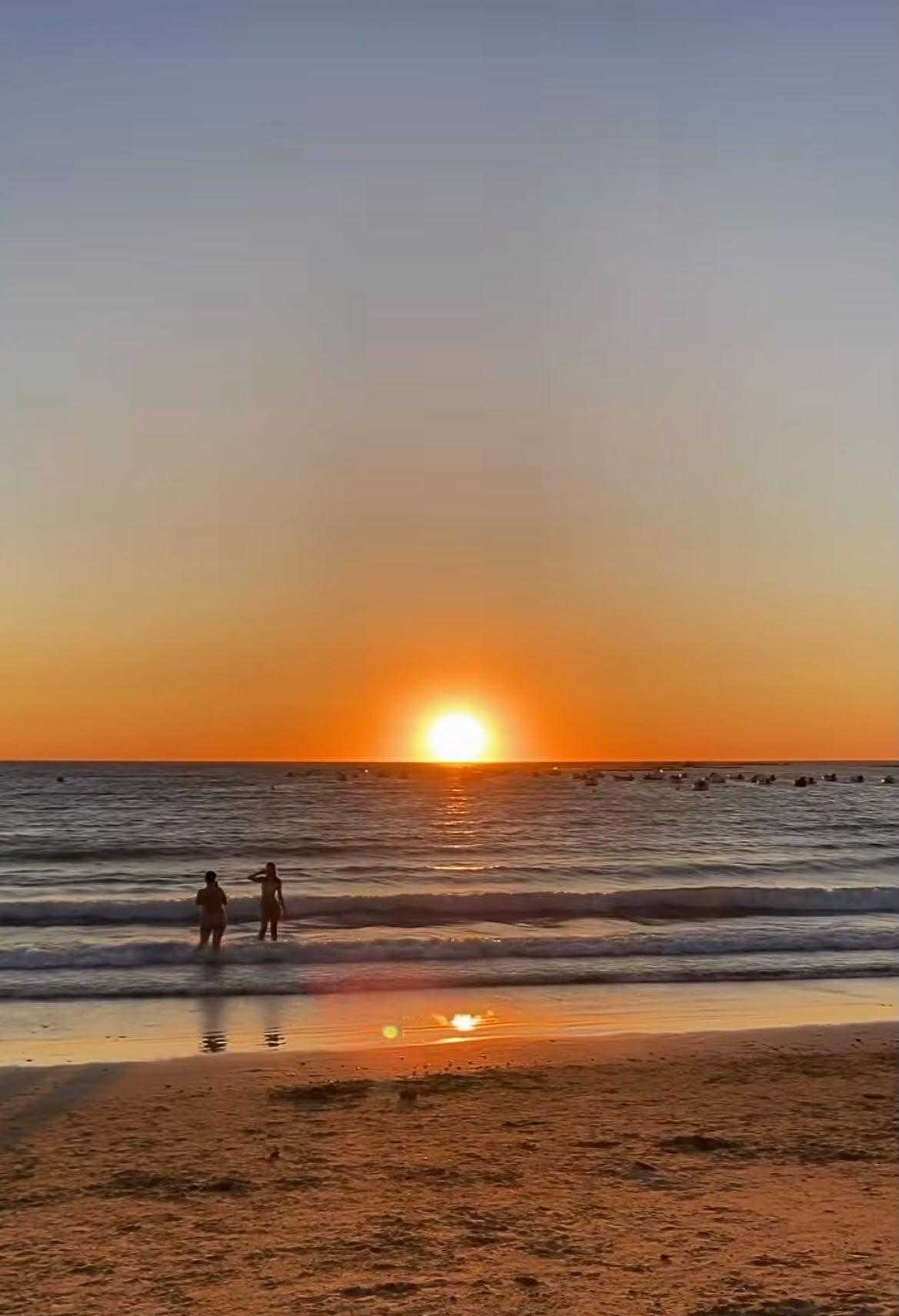
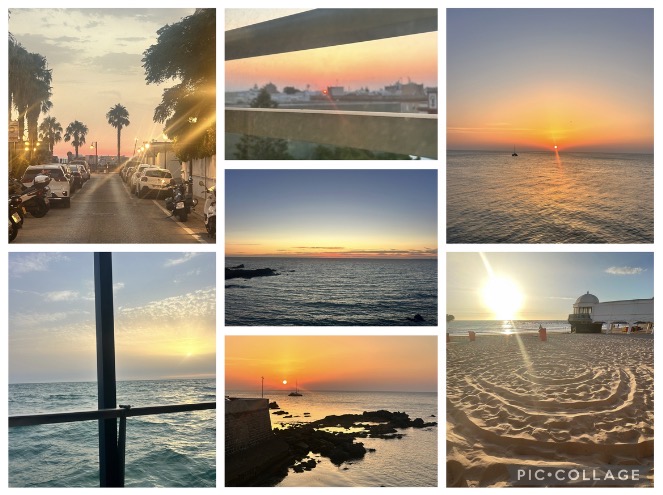
The beaches in Cádiz are beautiful. They are maintained every night by garbage collectors, so there is never any trash on the sand. The water was the perfect temperature for a swim and a beautiful blue. Every evening, the sunset on the beach was a sight to see. I’ve never seen anything like it where I’m from.
Sunset from aboard a cruise boat.Sunset from the beach
Cooking in Cádiz
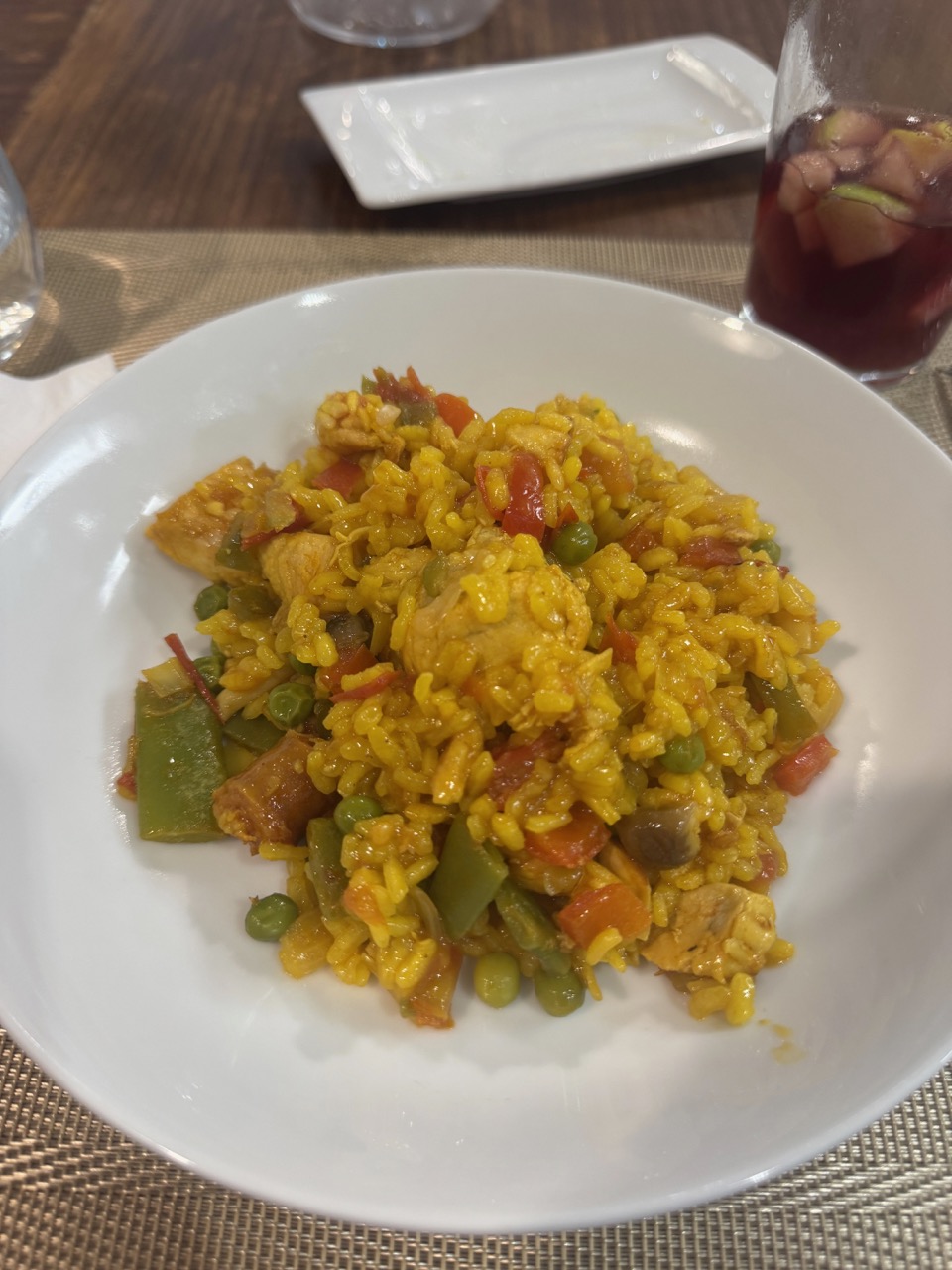
During our trip, we got the chance to do a cooking class. We made a traditional Spanish dish called paella. It is made with rice, meat (usually seafood), and an assortment of veggies. We all helped to make the dish, and we even made sangria on the side. It was very delicious, and I now want to attempt to make it at home.
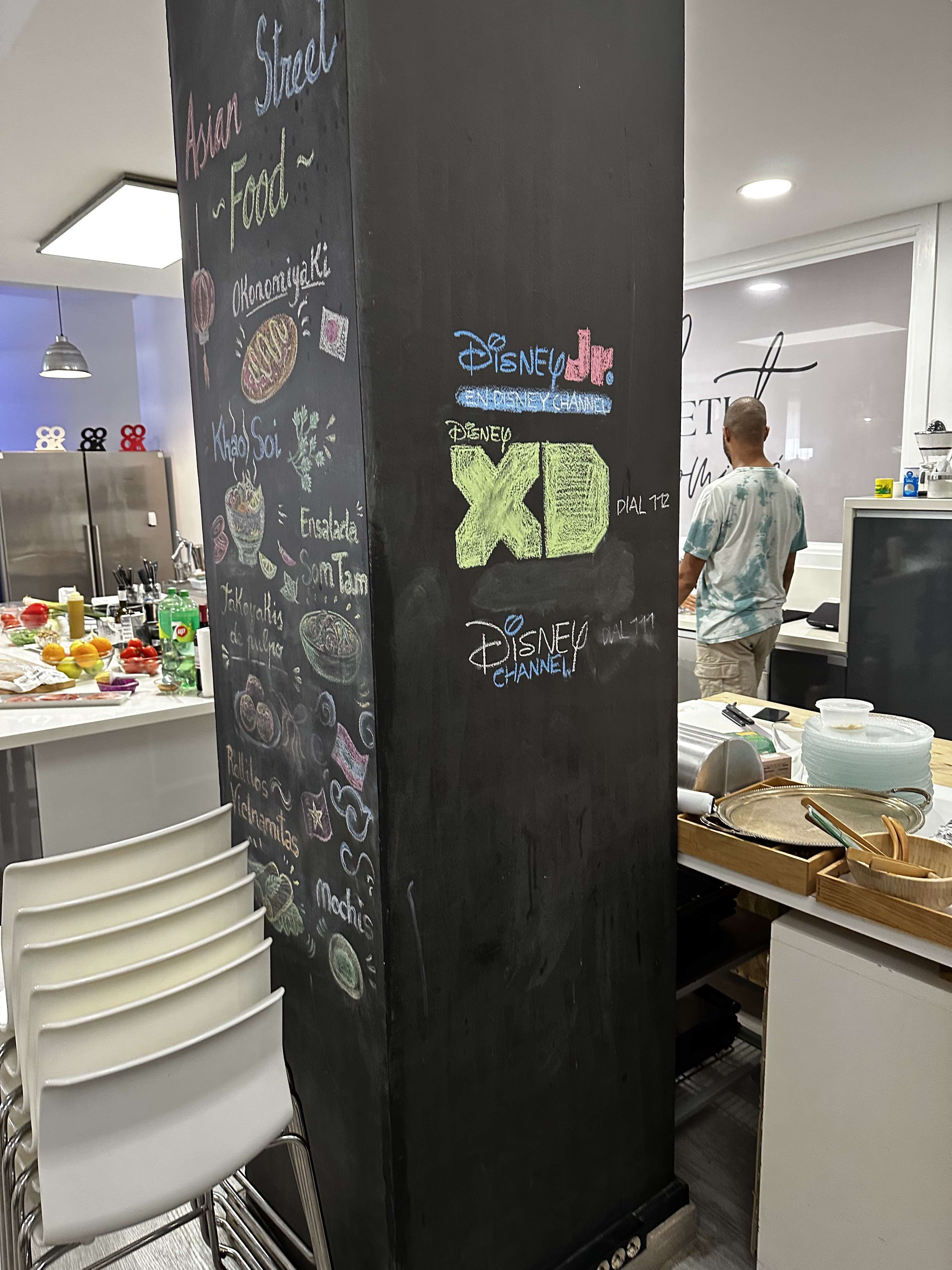
Artwork from the cooking classThe paella we made, along with a vegetarian version on the right.
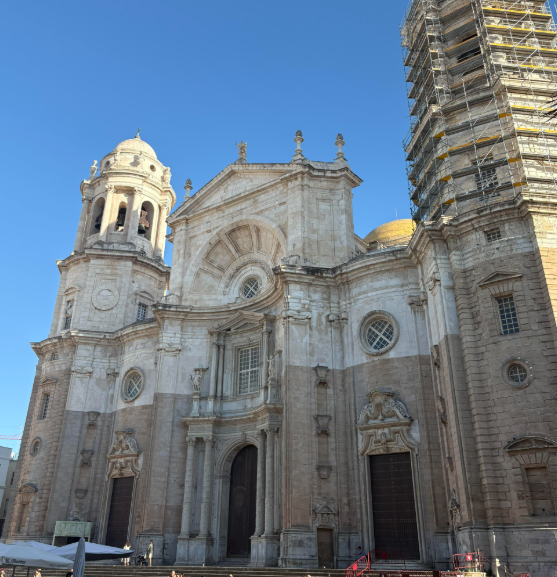
The Cathedral of Cádiz
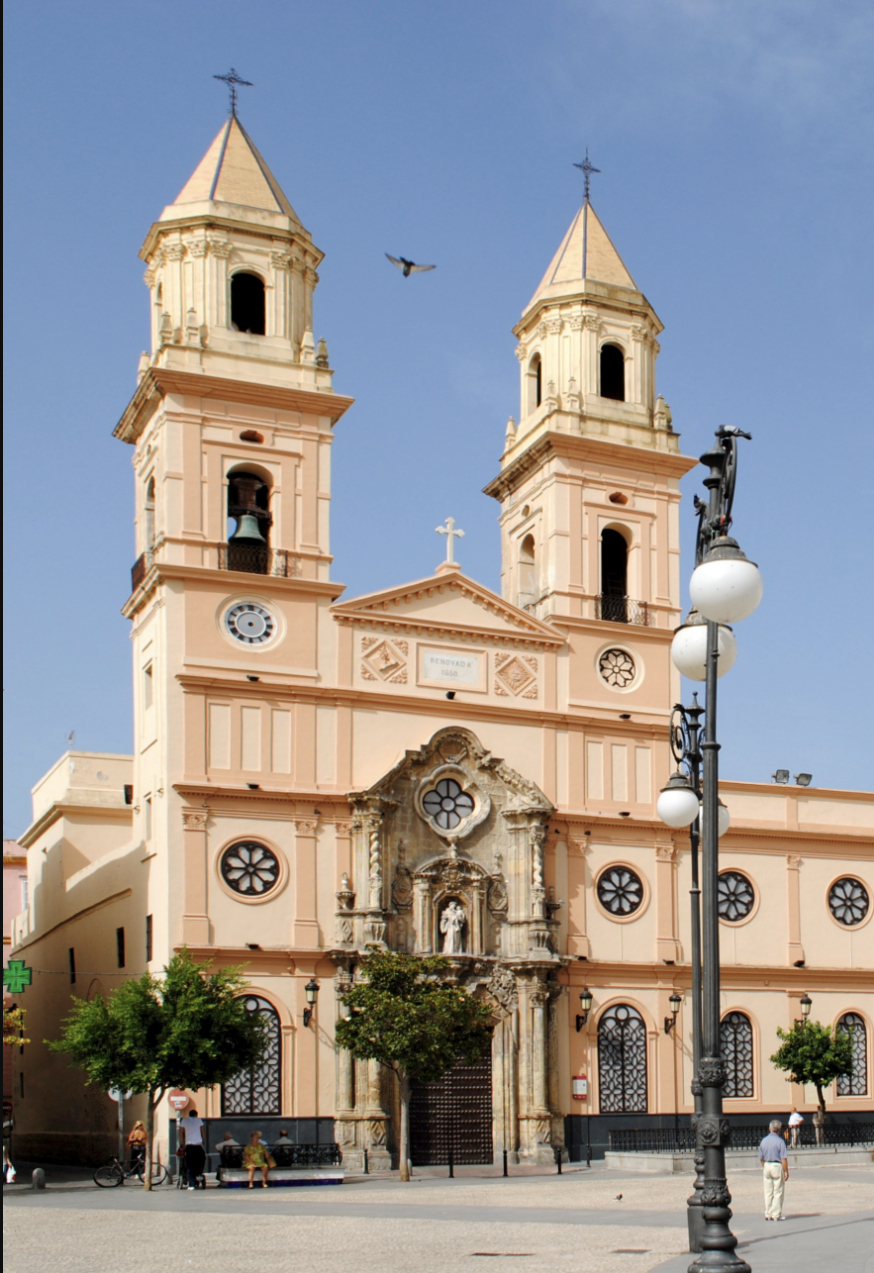
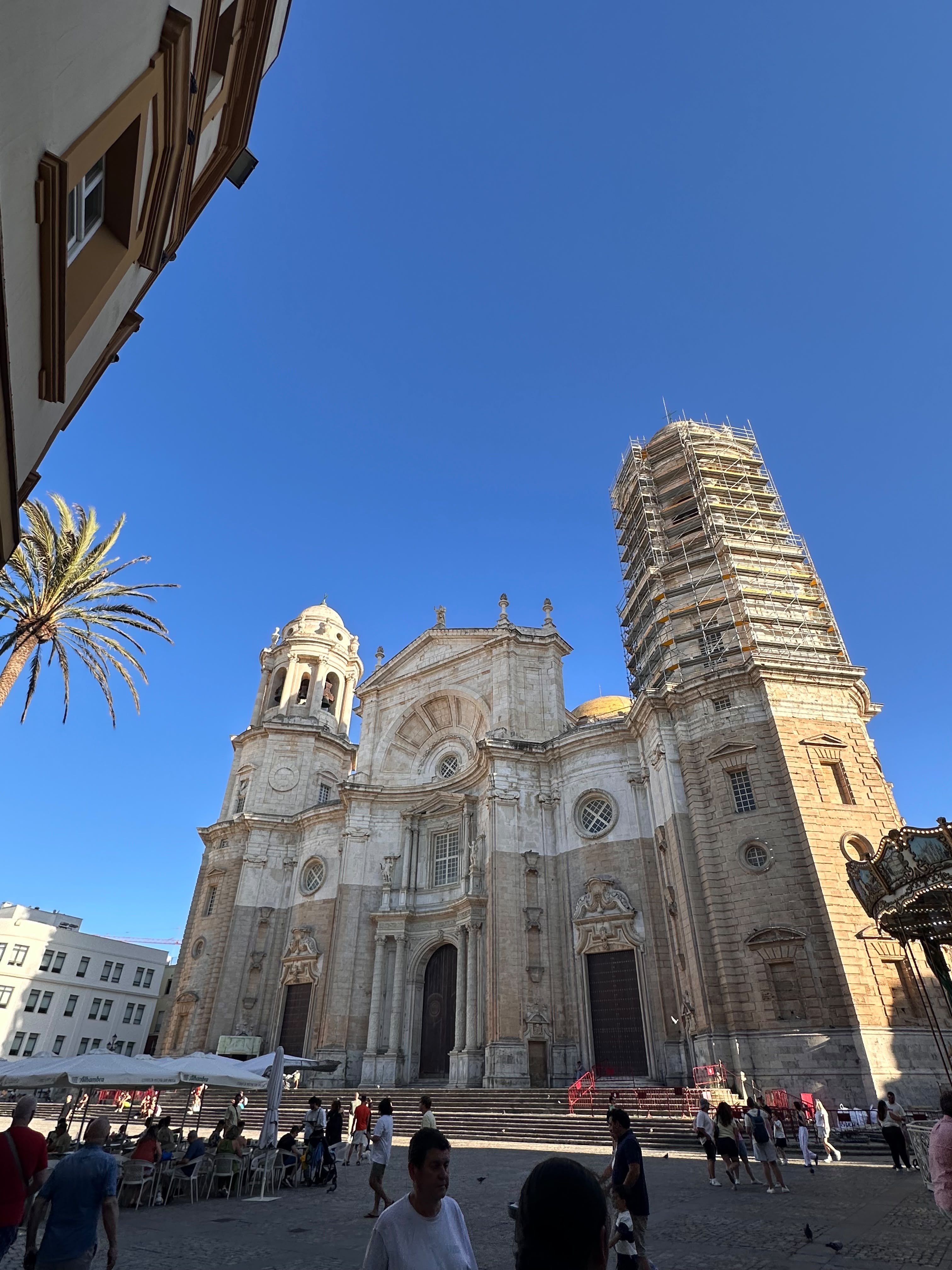
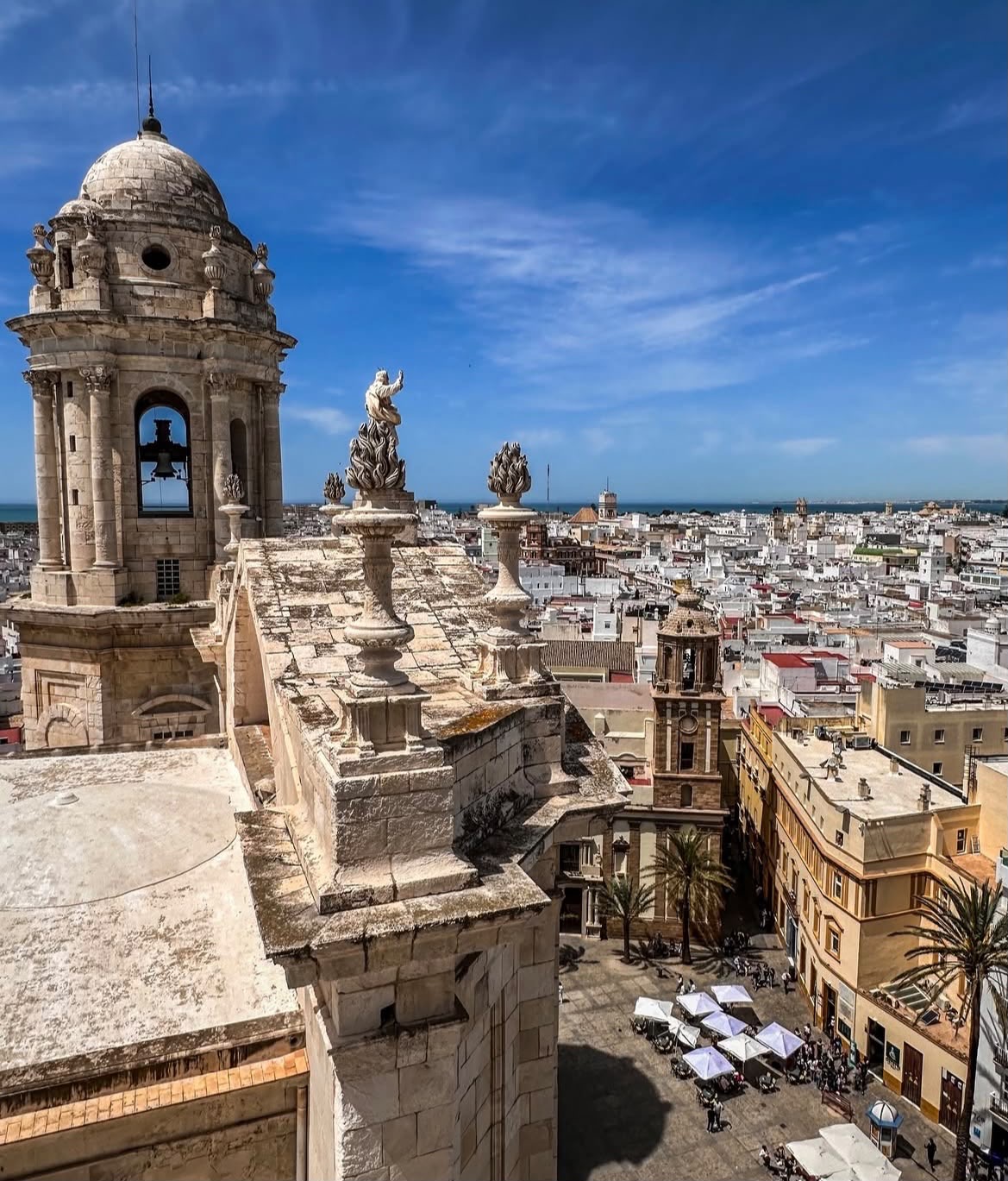
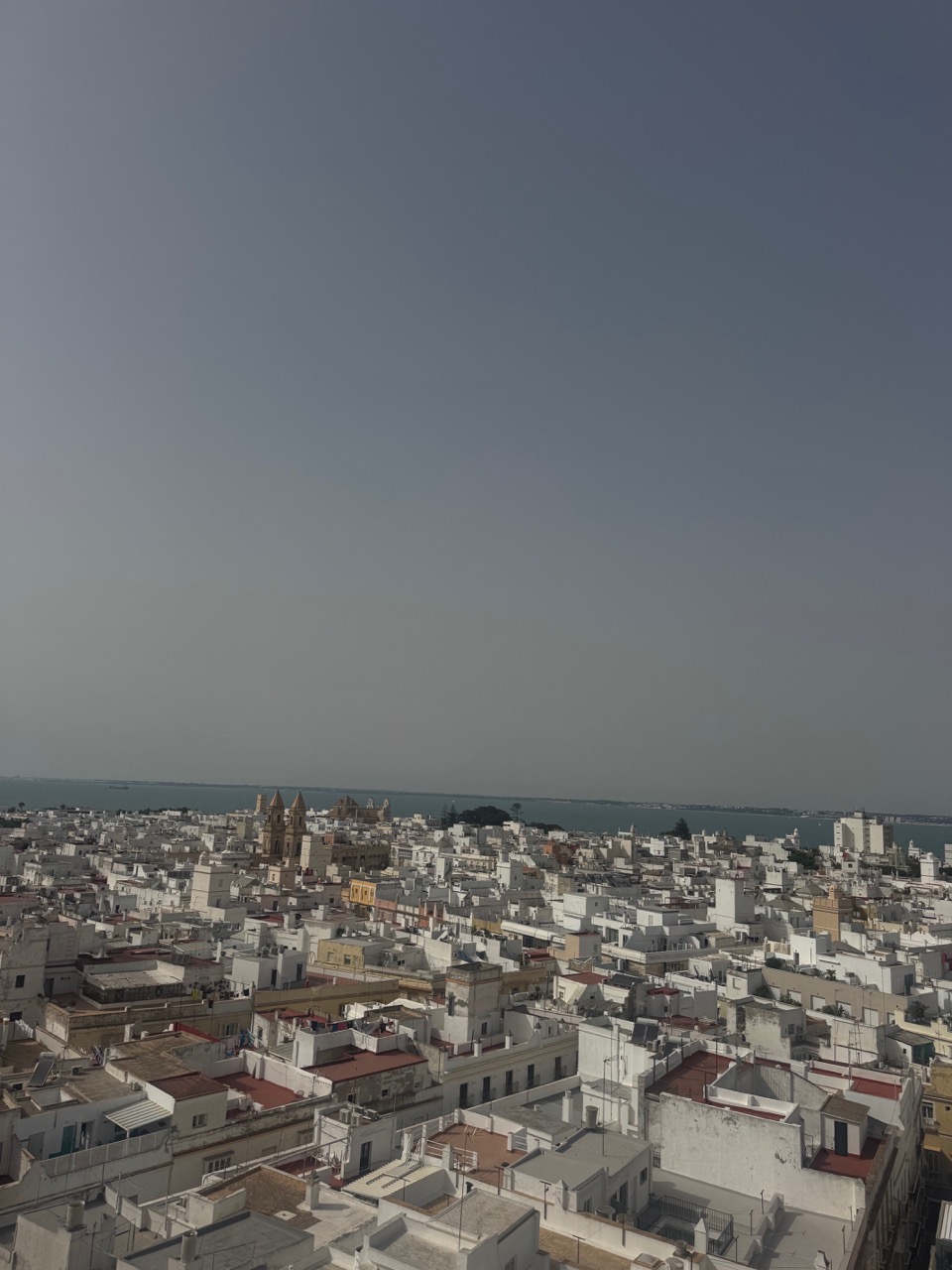
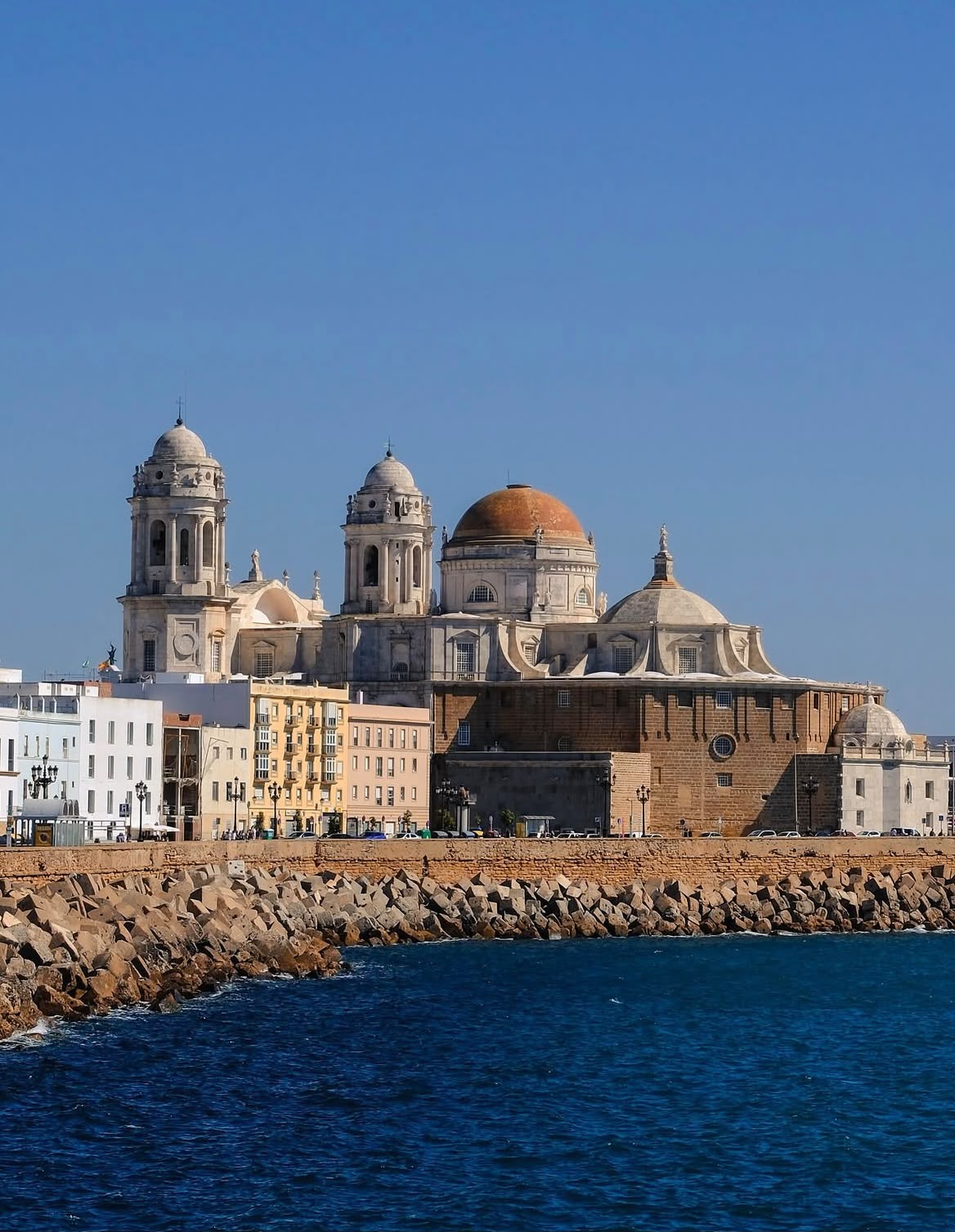
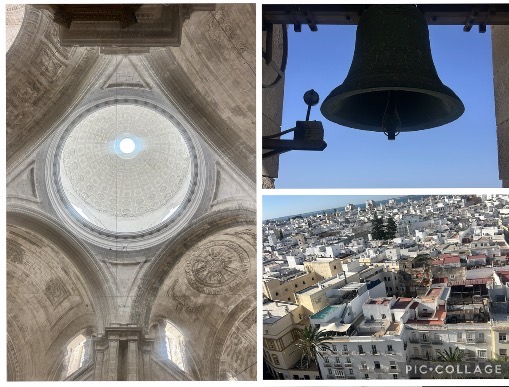
One of our stops in our study abroad was the Cathedral of Cádiz. It is a huge structure that overlooks the entire city. The interior is restructured to be a museum retelling its history. It contains many old artifacts and very realistic dioramas. The view from the top of the cathedral is unmatched. It is the best view in the city and you can really see the intricate and historical design of the city from above.
Exterior of the cathedralView from above the cathedral
Reflection
Cádiz is a beautiful city with much to explore. There is great food, and even better people. The views are amazing, and I will always remember those beaches. This was truly an unforgettable experience that I would recommend to anyone considering traveling to Spain.
Something I loved about Cadiz was seeing all the different ways you can expand your mind in a new place. There is only so much you can see in your own country. You can go deep into your country’s history or literature or art but when you go to another country you get to see first hand that there is so much more to learn, see, feel, and experience.
For example you get to see lord of the rings in spanish, which may not be one of the most exciting to most but still is very cool. While you stumble upon some Spanish Tolkien you also discover a book on origins of Spanish literature, you get to know more poets that you would only have heard about through an American perspective.
On the note of history, seeing monuments you only just touched upon in history class has been one of the coolest experiences. I loved seeing everything like I was there when it happened. There’s something to be said about experiential learning because being in the location where something big happened where people you learned about in history books stood really helps you understand the significance of the hours you have spent in classrooms learning.
Another way the whole group got to participate in experiential learning was when we all got to make paella. Eating food out is one thing but when you do it yourself there is an extra level of intention in how you learn. Instead of just getting paella in a restaurant we got to learn how to make paella in Spanish. Working together to create and learn about a meal from Spanish culture was such a unique and cool experience.
The beach was another great experience, especially at night because you got a chance to see all the energy and life there was once the sun sets. This is not just for young adults but for families too. People would sit along the wall by the beach and play guitar, games or just sit and laugh together. It was a beautiful way to see a snippet of everyday life in Cadiz.
Just like in the states there are interesting historical locations here and there that are worth making a day trip to. It could be easy to stay in the one location you visit, like Cadiz, but by one quick train or bus ride you have the opportunity to see even more new and exciting things like Sevilla with its beautiful castle and grand Cathedral!
Though staying inside and studying can feel like a necessity with taking classes it is important to go outside and experience things or even plan a daytrip on a weekend because there is just as much to learn outside the classroom as there is inside. I did this when I visited Sevilla on my first weekend and I am so glad that I did!
Another important thing I learned is that you have to make time to relax! Yes you are busy taking classes and they are very important but if you are not getting enough sleep or are not taking time to unwind it can make learning more difficult and less fun. Learning another language is such a cool thing and it should be exciting even when it is hard. This is why taking a break even just to go for a quick walk in the garden across the street and saying hi to some local people is so important! You will remember how exciting it is to be there and you will be making the time to take a walk in a beautiful city!
Before coming to Spain, I thought my favorite memories would be the famous landmarks, museums, or excursions. Those were all amazing, but by the end of my three weeks in Cádiz, I realized it was the little things that made Cádiz so special and memorable.
It wasn’t just one place or one experience, it was the lifestyle. Cádiz has a slower pace that encourages people to spend time outside, be with friends and family, and enjoy the moment instead of always rushing to the next thing. Those everyday moments are what I’ll remember most.
Life Happens Outside
One of the first things I noticed was how much time people spend outside in Cádiz, which enhances socialization. Whether it was the beach, a plaza, or a sidewalk café, there were always people outside. Families ate dinner together, children played until late, older couples sat on benches talking, and friends met after work just to spend time together.
In the United States, it often feels like everyone is rushing from one place to another. In Cádiz, people seem to enjoy where they are. No one looked like they were in a hurry, which made it a more relaxing environment.
Every Walk Was an Adventure
One of my favorite things to do in my free time was walk.
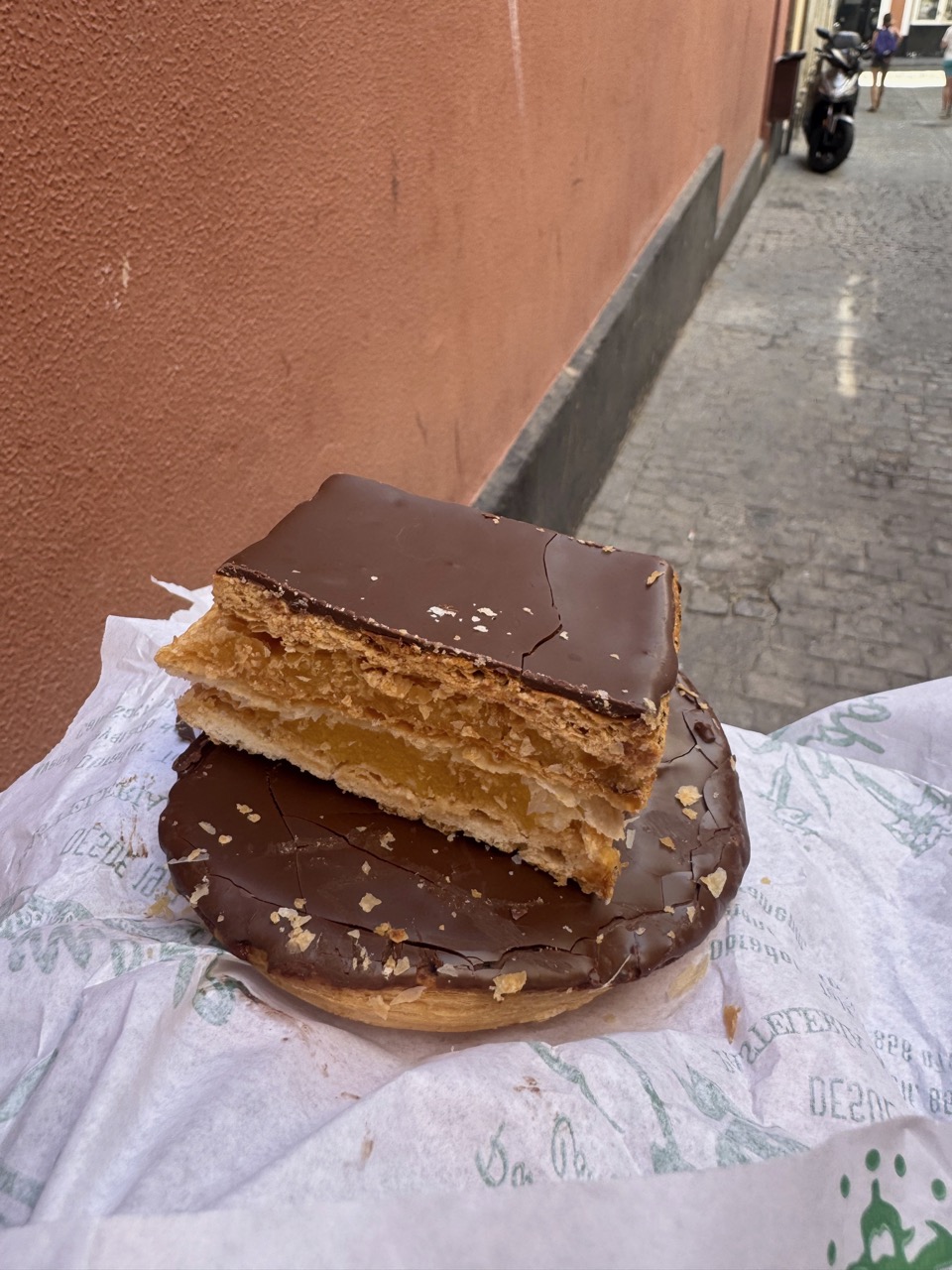
Most days I didn’t even have a destination. I’d leave the residence/dorm and end up discovering a new plaza, a small bakery, a gelato shop, a local market, or a street I hadn’t seen before. I found something new every day.
There Was Always Something To Do or See
One thing that surprised me was how many free events were happening around the city. We often came across live music, dancing, festivals, and performances while walking around.
Some of my favorite memories weren’t planned at all, they were the places and events we stumbled upon by accident.
Food is More Than Just Food
I also loved how food brought people together.
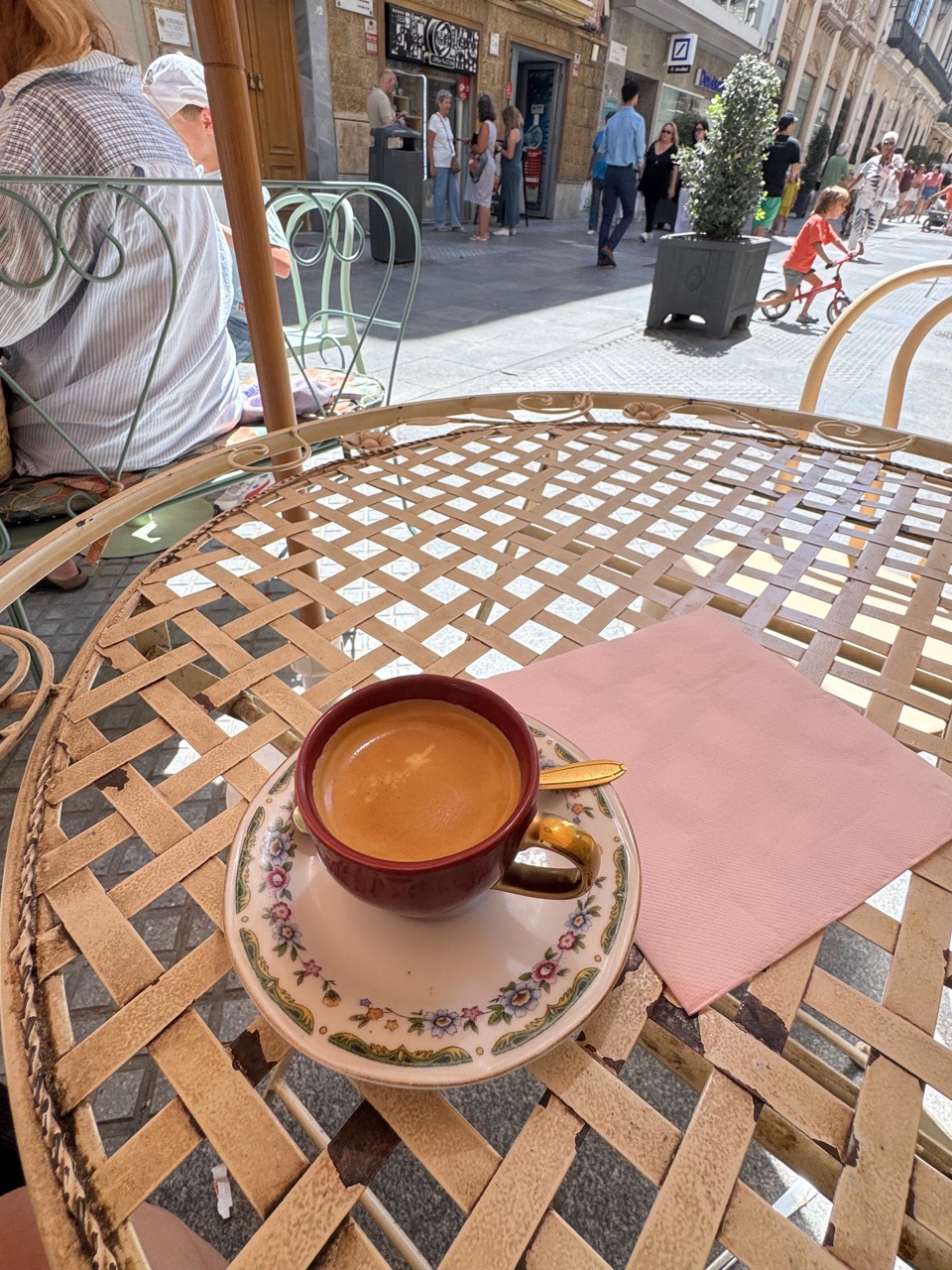
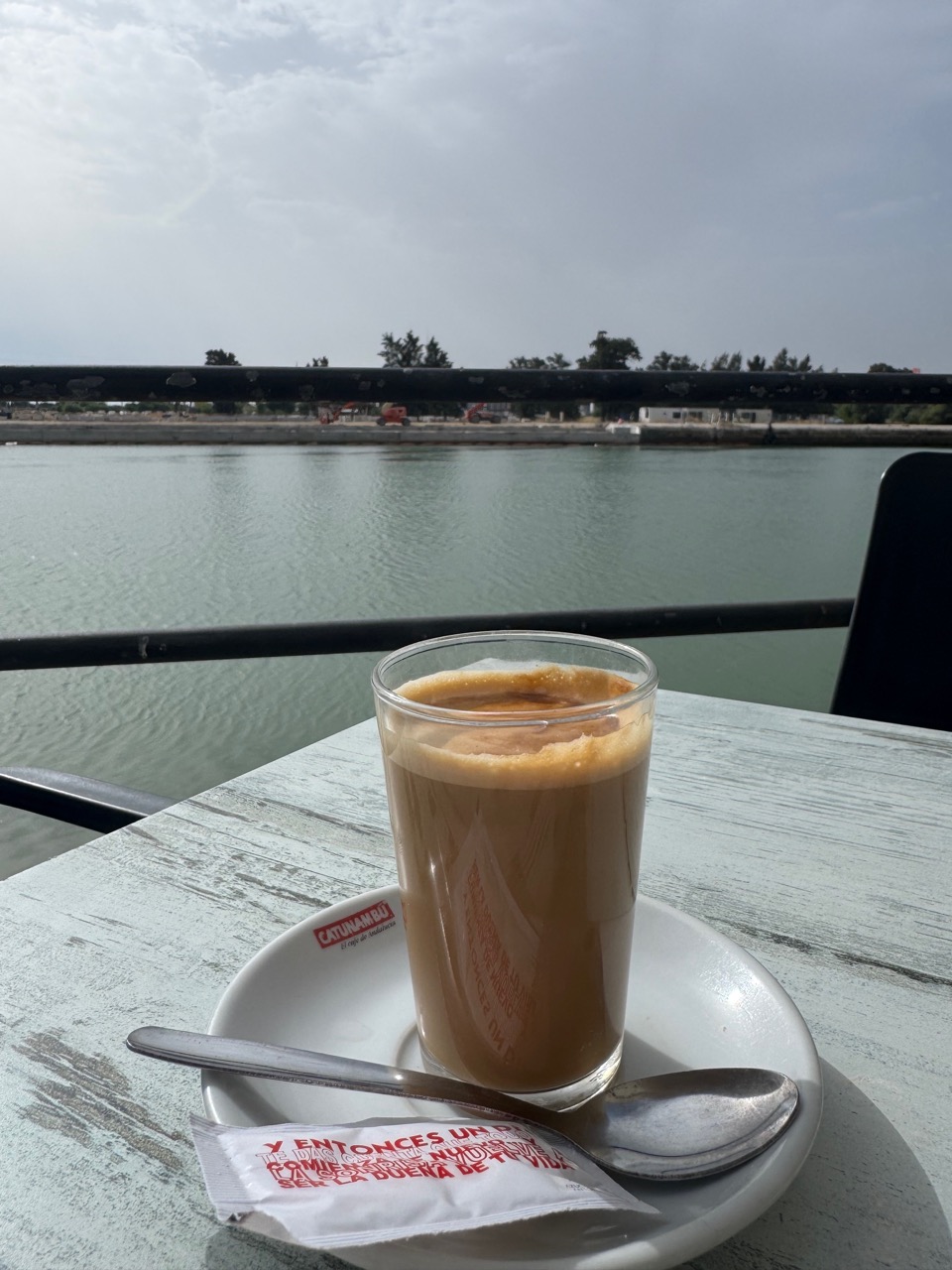
Whether it was stopping for coffee, buying fresh fruit at the market, sharing tapas with friends, or ending the night with gelato, meals never felt rushed, they were appreciated. People stayed at restaurants long after they finished eating, just talking and enjoying each other’s company.
Additionally, the quality of their food was always fresh, which made it even more delicious.
Learning Spanish Outside the Classroom
Of course, I learned Spanish every day in class, but I practiced Spanish even more outside of it.
Ordering at a cafe or bakery, shopping at markets, asking for directions, or talking with locals in Spanish is what increased my confidence little by little. I definitely made mistakes, but everyone was very patient. Instead of immediately switching to English, they slowed down their speaking, smiled, and helped me learn. Those everyday conversations helped me improve more than I expected.
A Celebration I’ll Never Forget
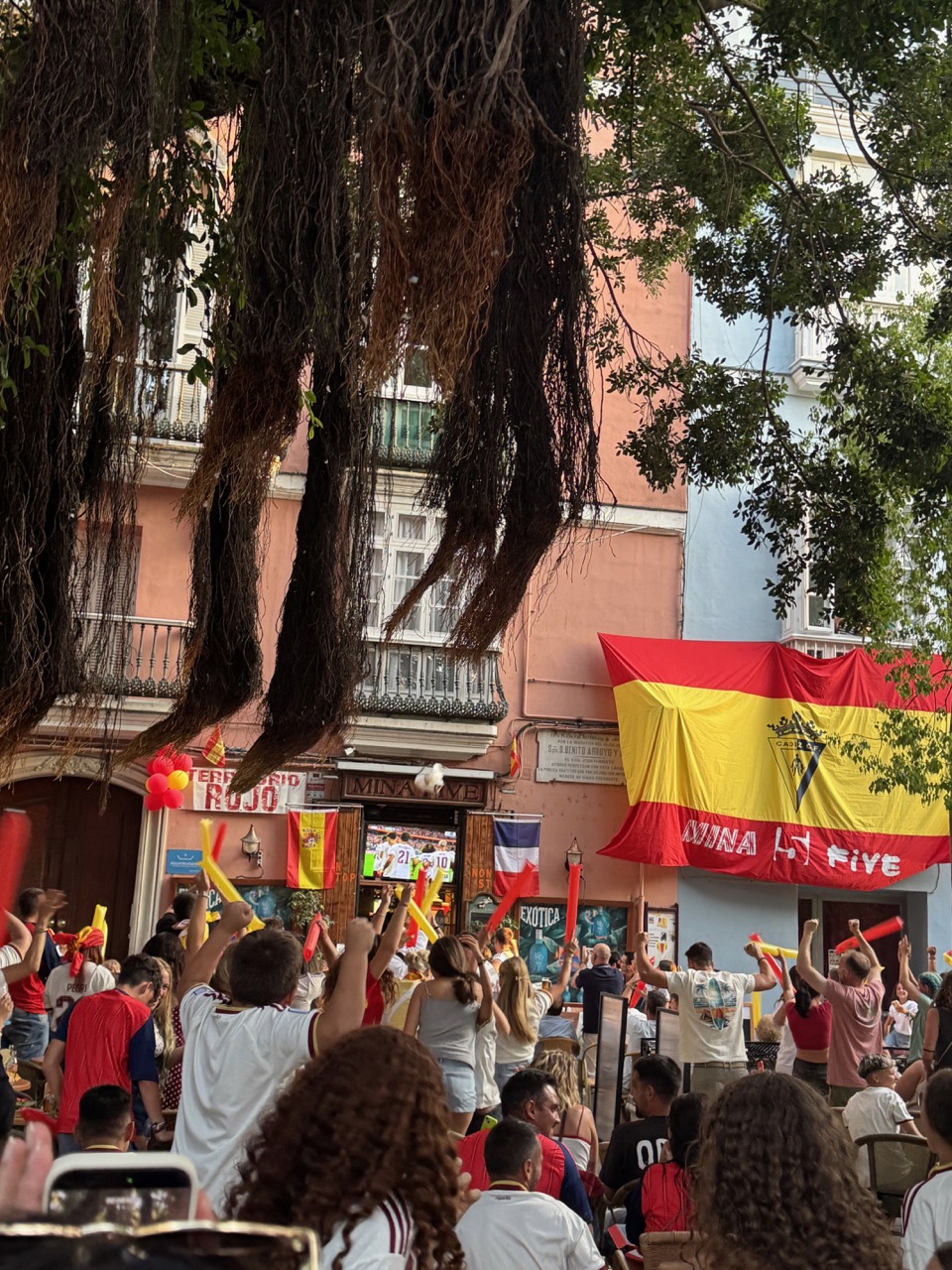
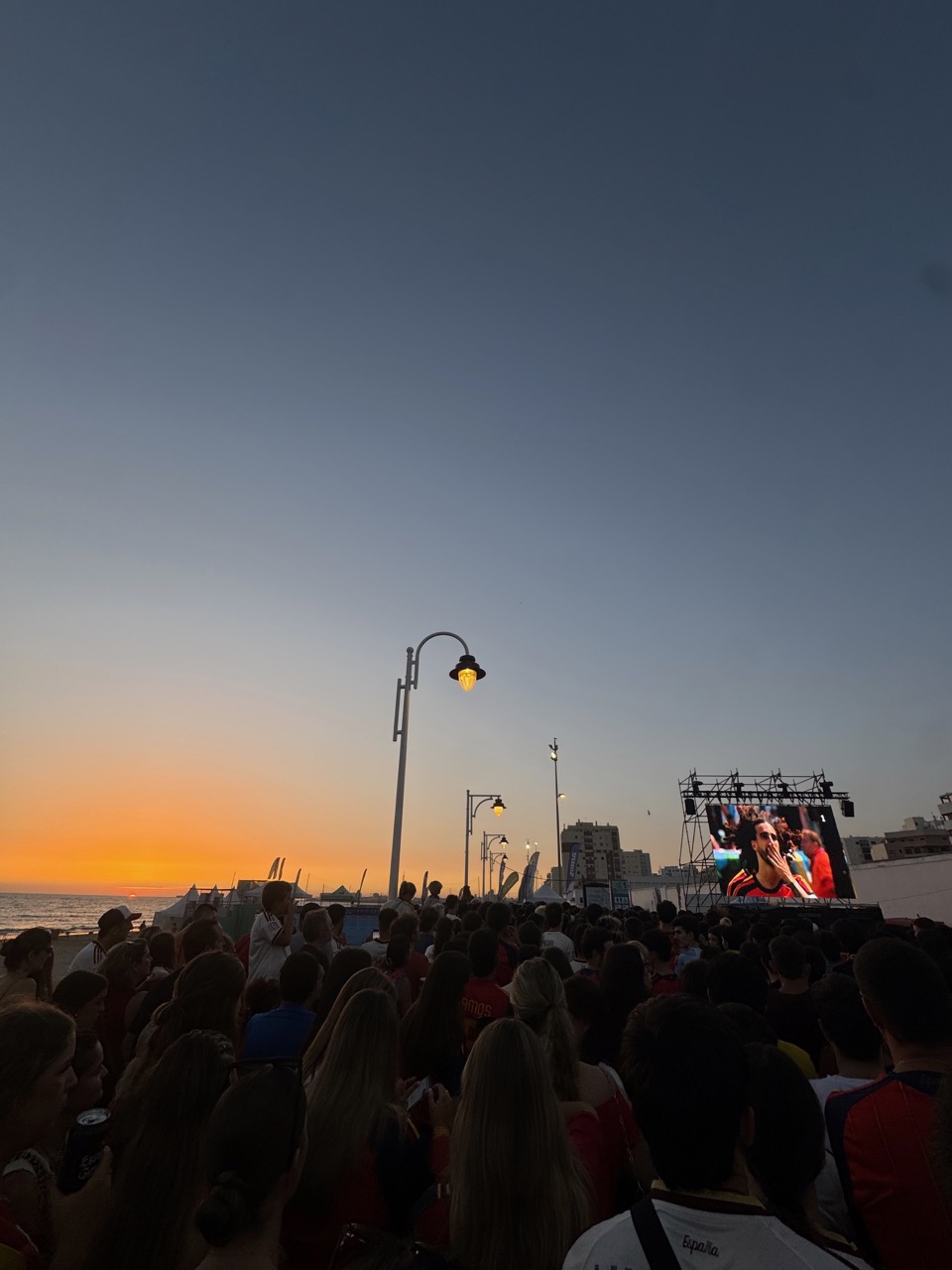
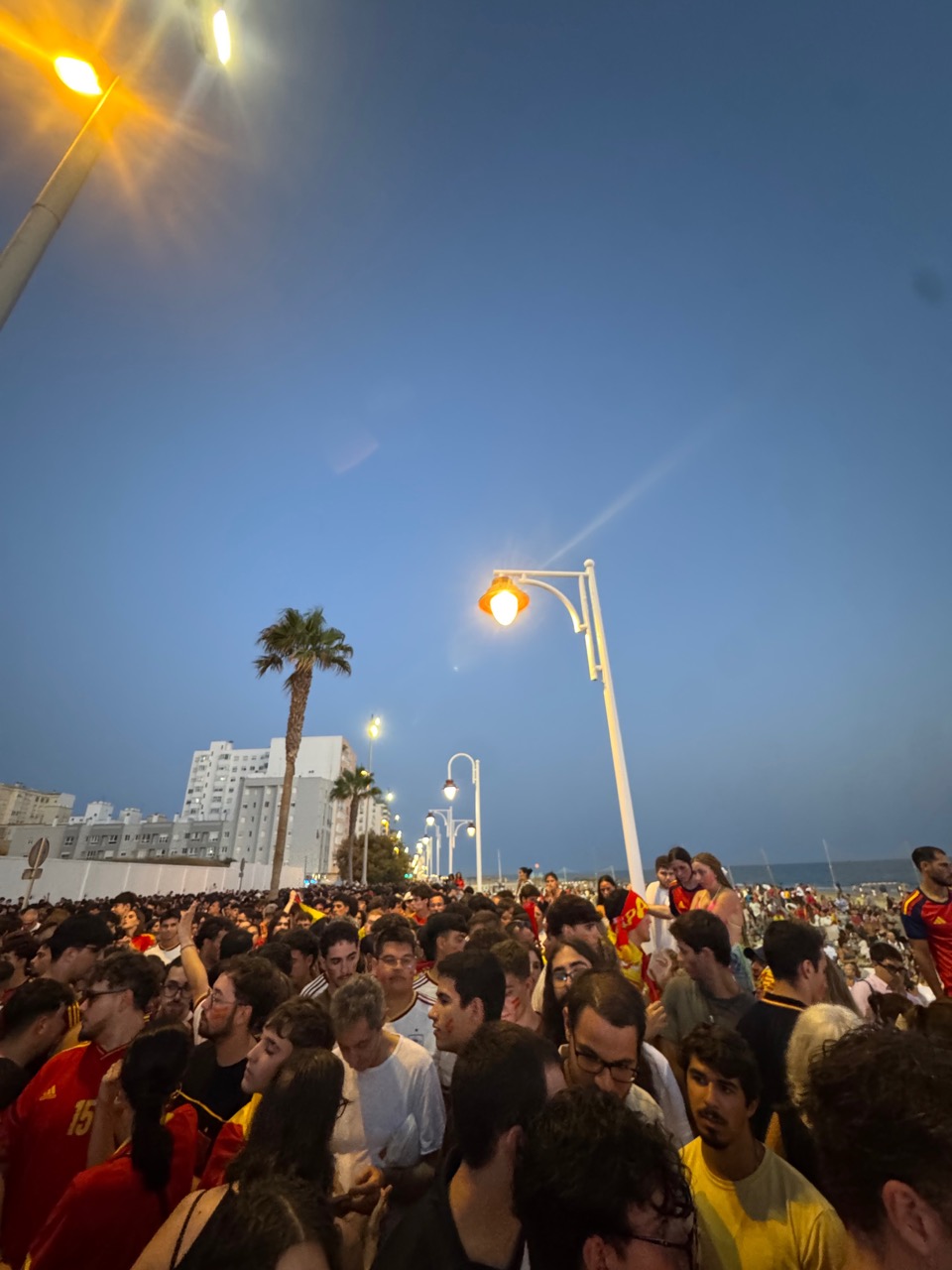
Nothing compares to watching Spain win the Semi Final & Final games of the World Cup in Cádiz.
The entire city came together. Thousands of people filled the plazas, streets, and beaches, waving Spanish flags, singing, cheering, hugging strangers, and celebrating for hours. I’ve watched big sporting events before, but I’ve never experienced anything with that much energy and national pride. It wasn’t just about soccer, it was about community, and I felt like I was part of it too. It was easily my favorite memory of the entire trip.
I’ll Miss the Lifestyle Most
When people ask me about studying abroad, they’ll probably expect me to talk about the main events and excursions. I’ll definitely remember those. But what I’ll miss most is something much harder to describe: walking everywhere, watching the sunset almost every evening, going to the beach any time of day, hearing Spanish all around me, discovering a new café or plaza, meeting friends just to spend time together, and feeling the energy of a city that truly enjoys everyday life. Those little moments are what turned Cádiz from a place I visited into a place I’ll always miss.
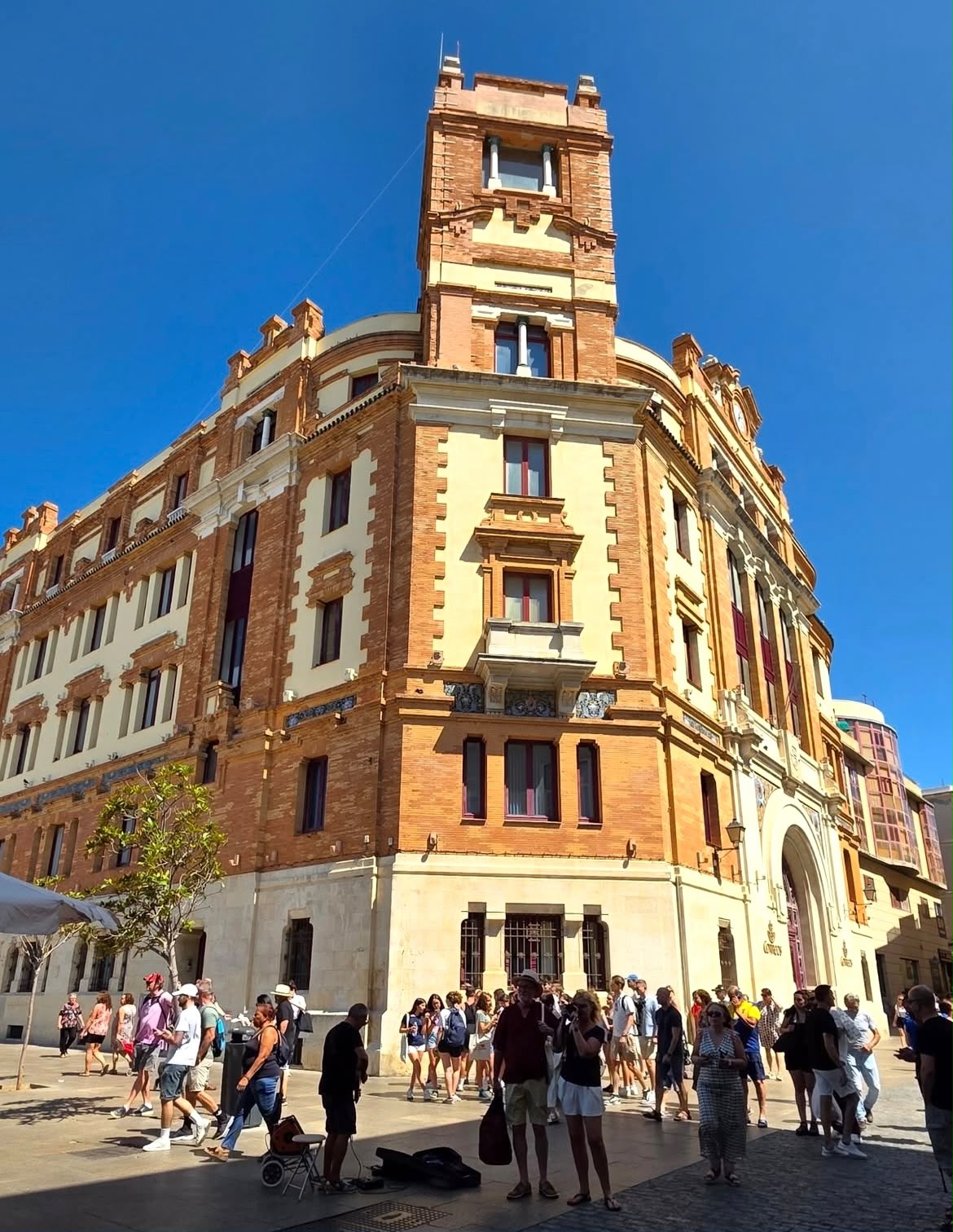
Cádiz is a city that skillfully combines history with coastal appeal, with golden beaches, centuries-old walls, vibrant streets, and boundless vistas of the Atlantic. Every stroll through its winding alleyways, one of the oldest continuously inhabited cities in Western Europe, exposes a new tale just waiting to be uncovered.
First Impressions Along the Waterfront
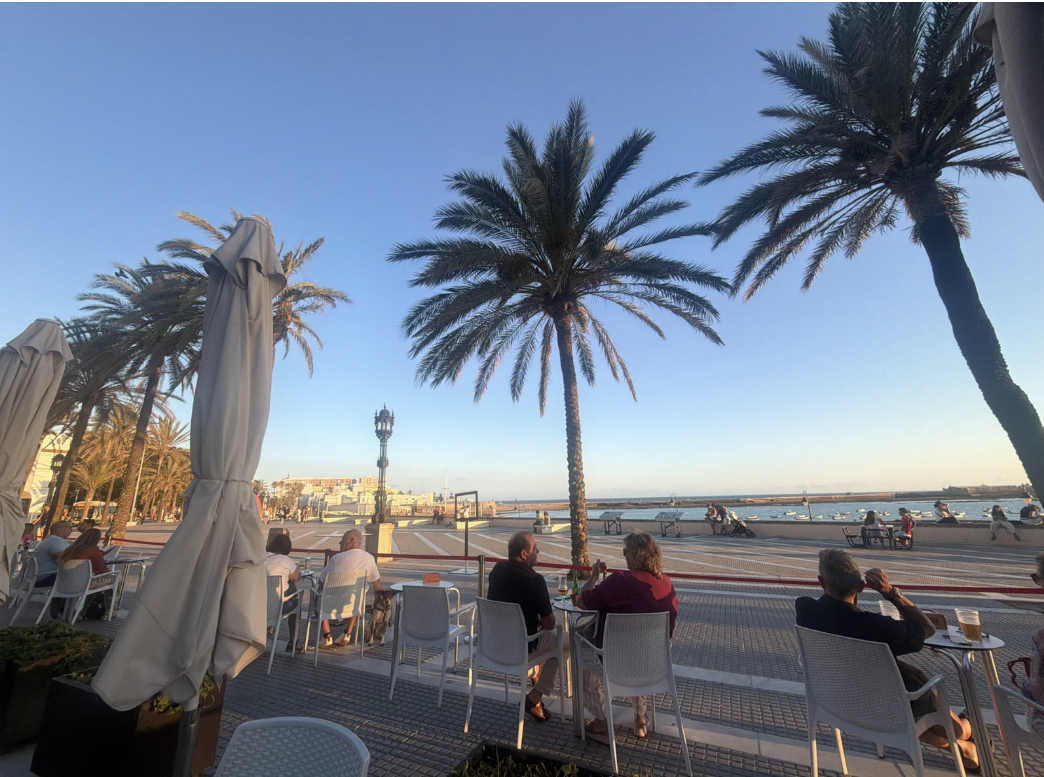
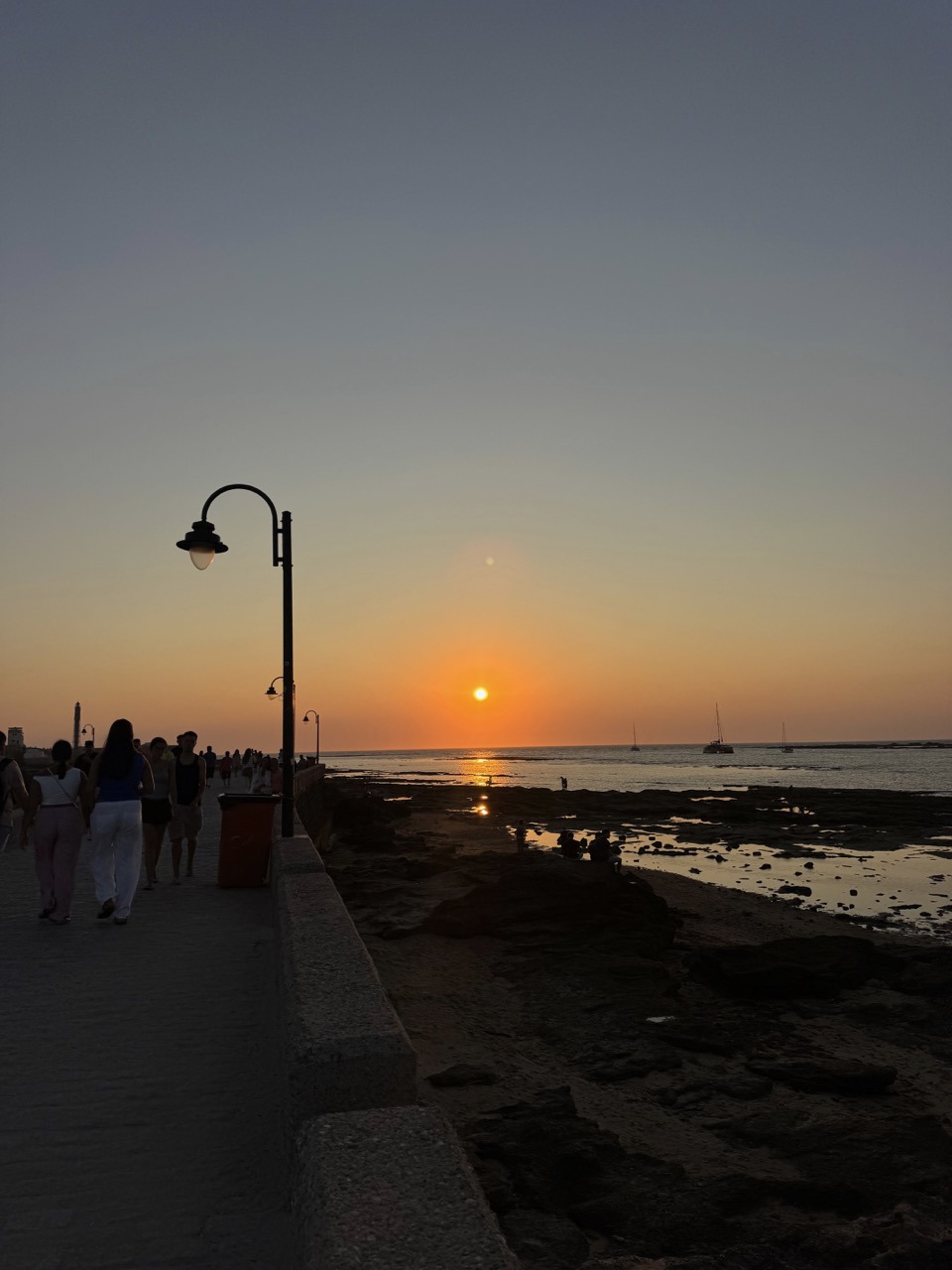
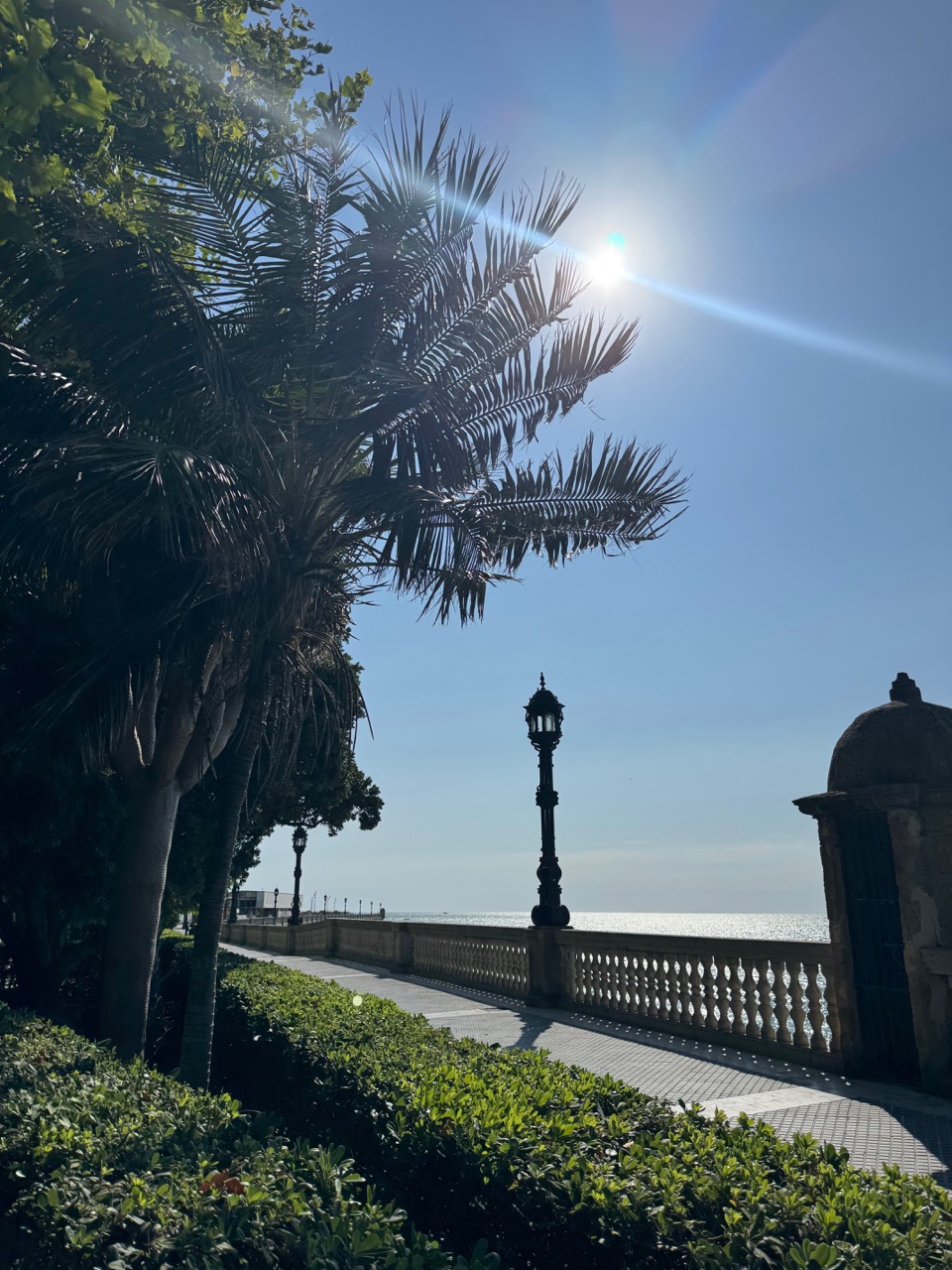
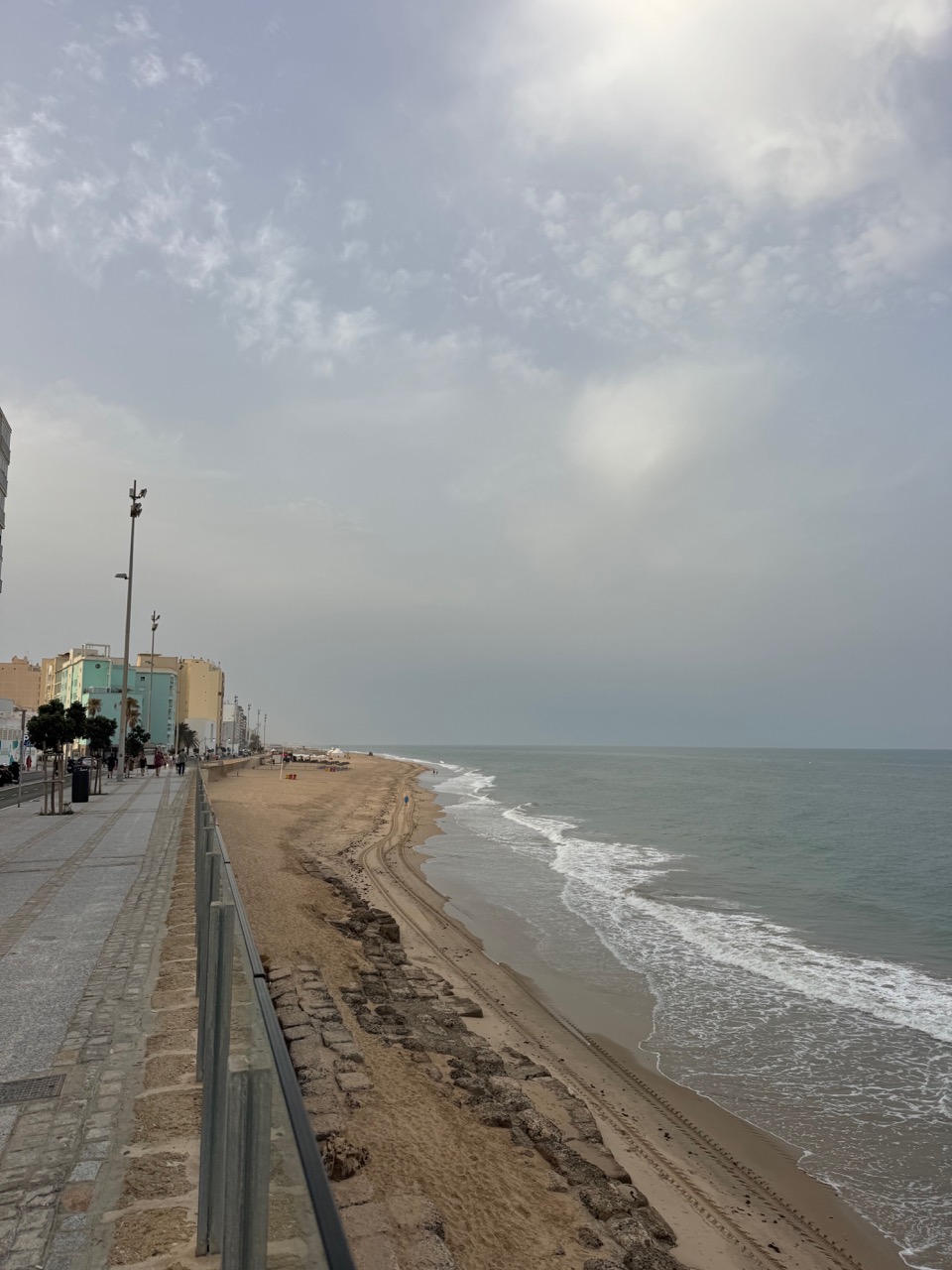
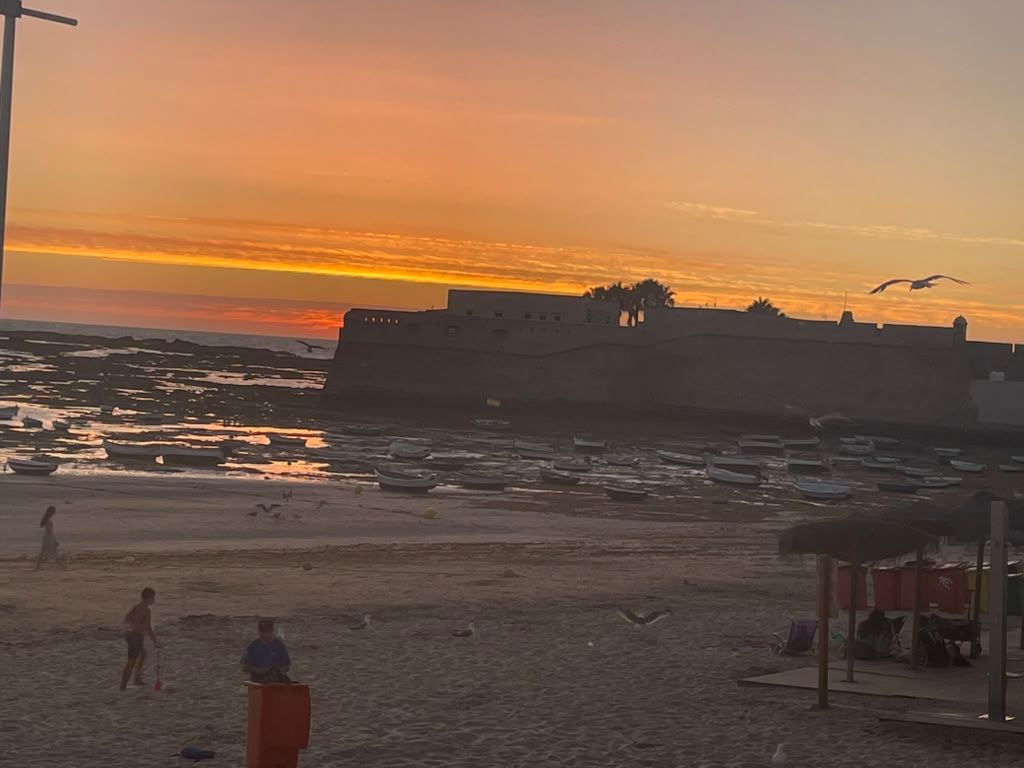
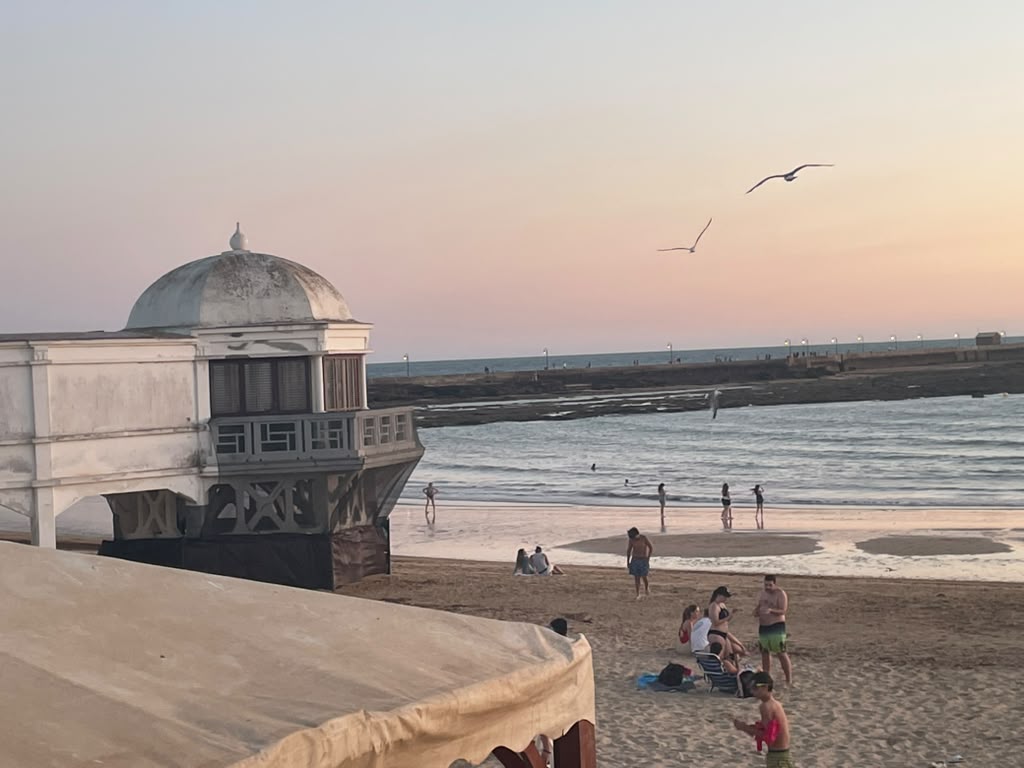
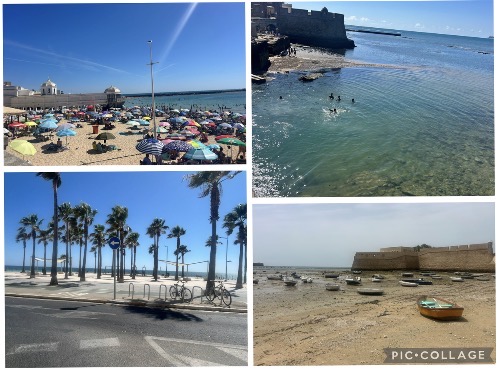
One of the best ways to experience Cádiz is by simply walking its waterfront. As the sun sets, the city’s promenade comes alive with locals enjoying evening strolls while the Atlantic sparkles in the background. Palm trees line the coast, creating a relaxed atmosphere that perfectly captures southern Spain’s lifestyle.
The Cádiz waterfront offers a peaceful place to walk while enjoying cool ocean breezes during the day and night.
Charming Streets Full of Character
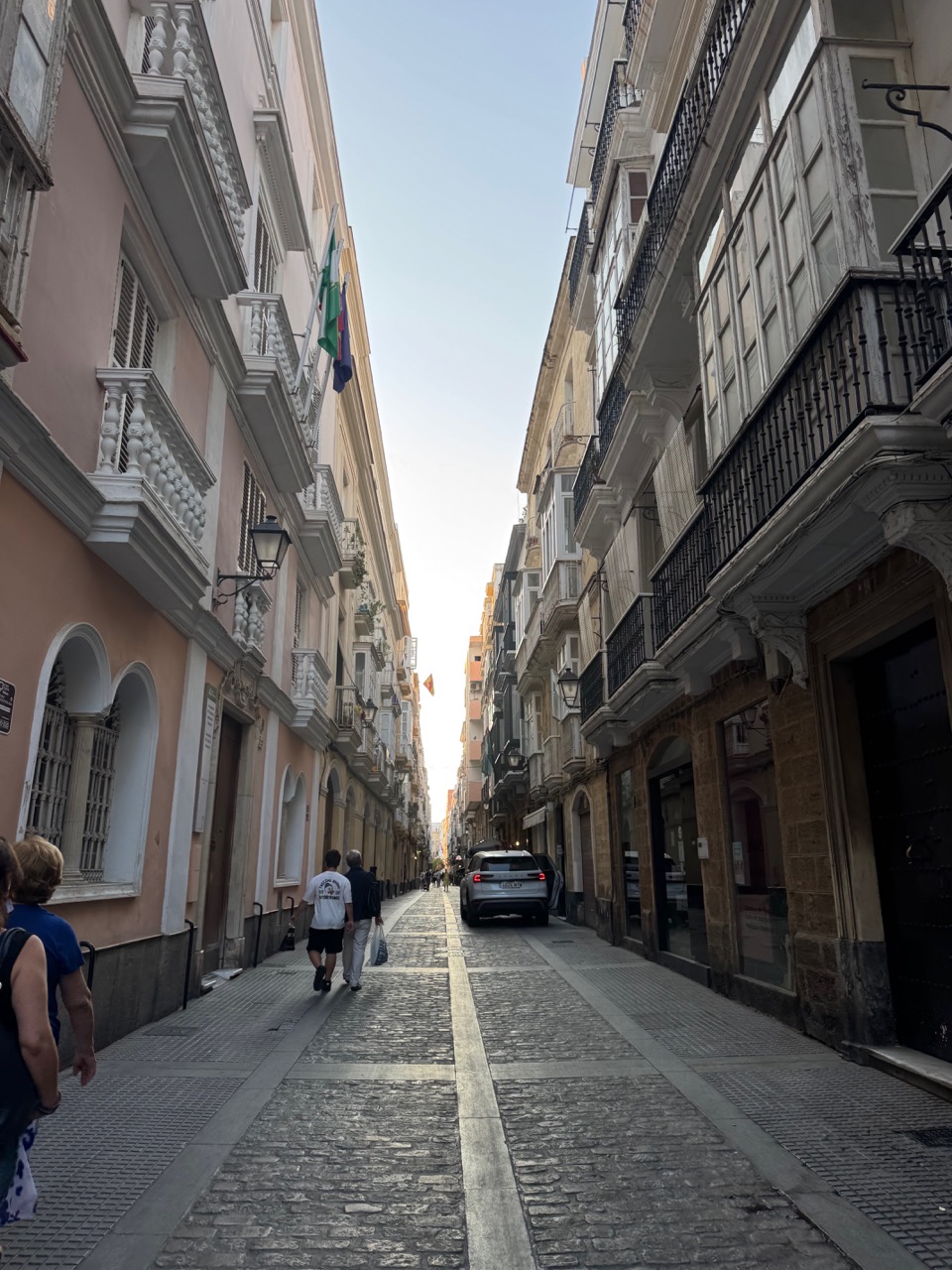
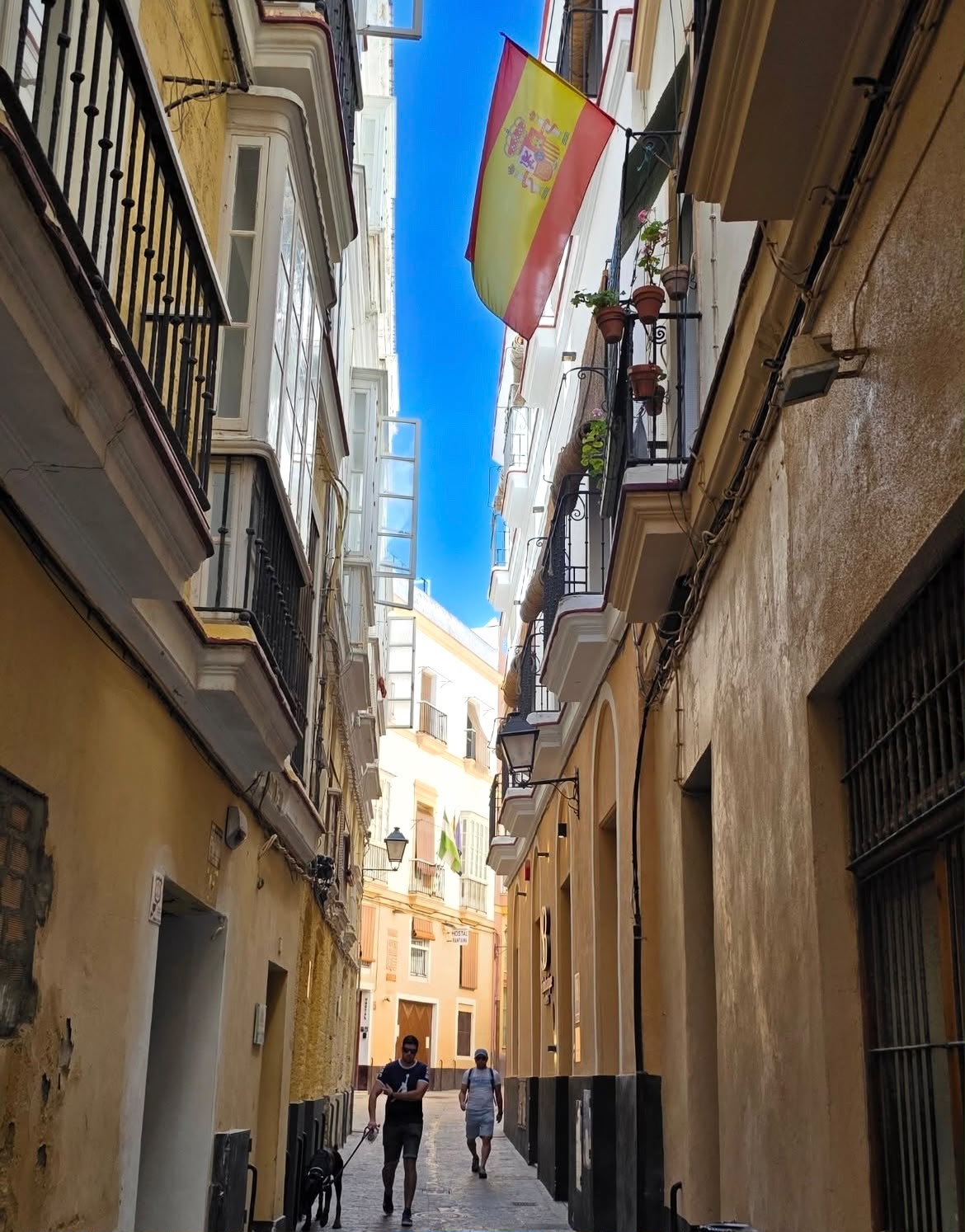
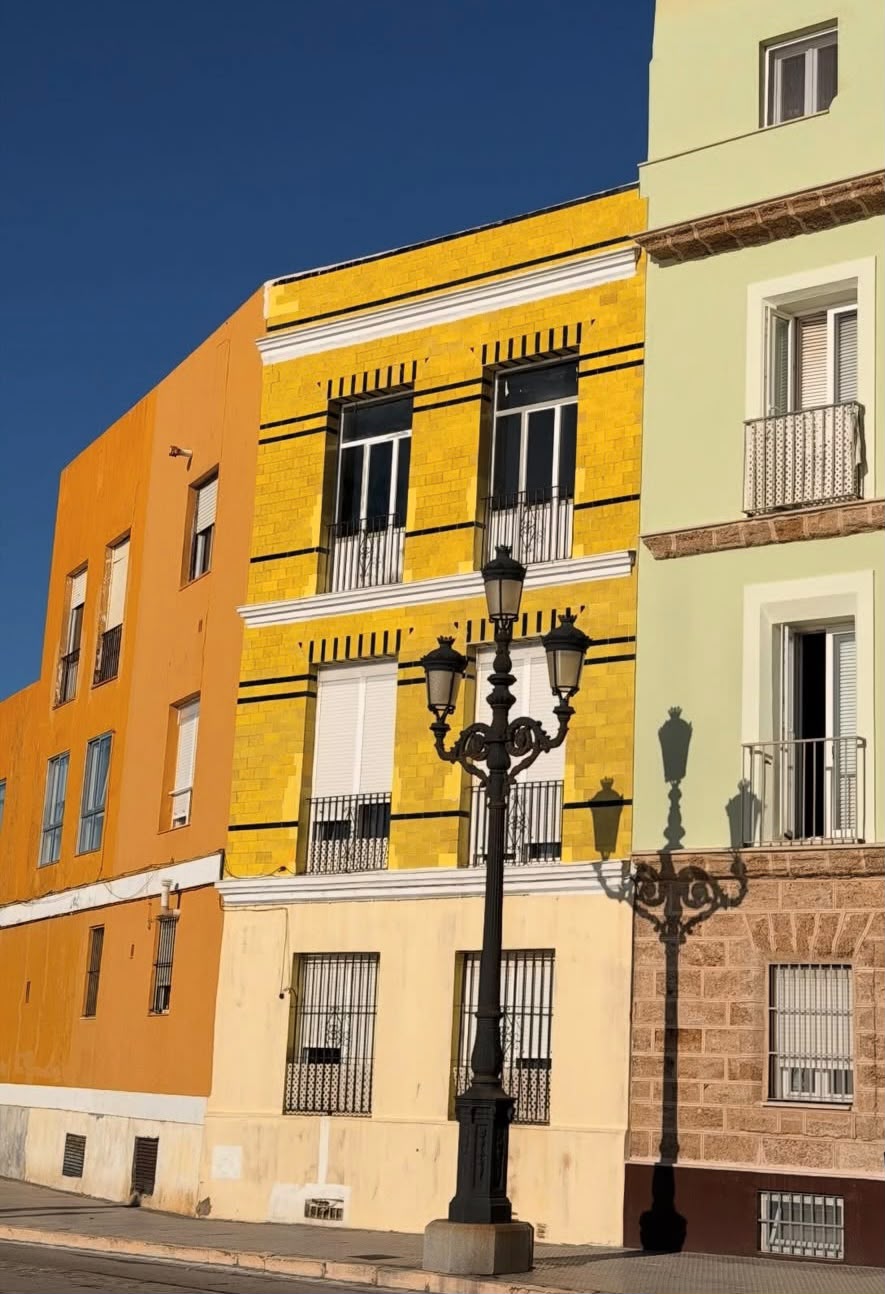
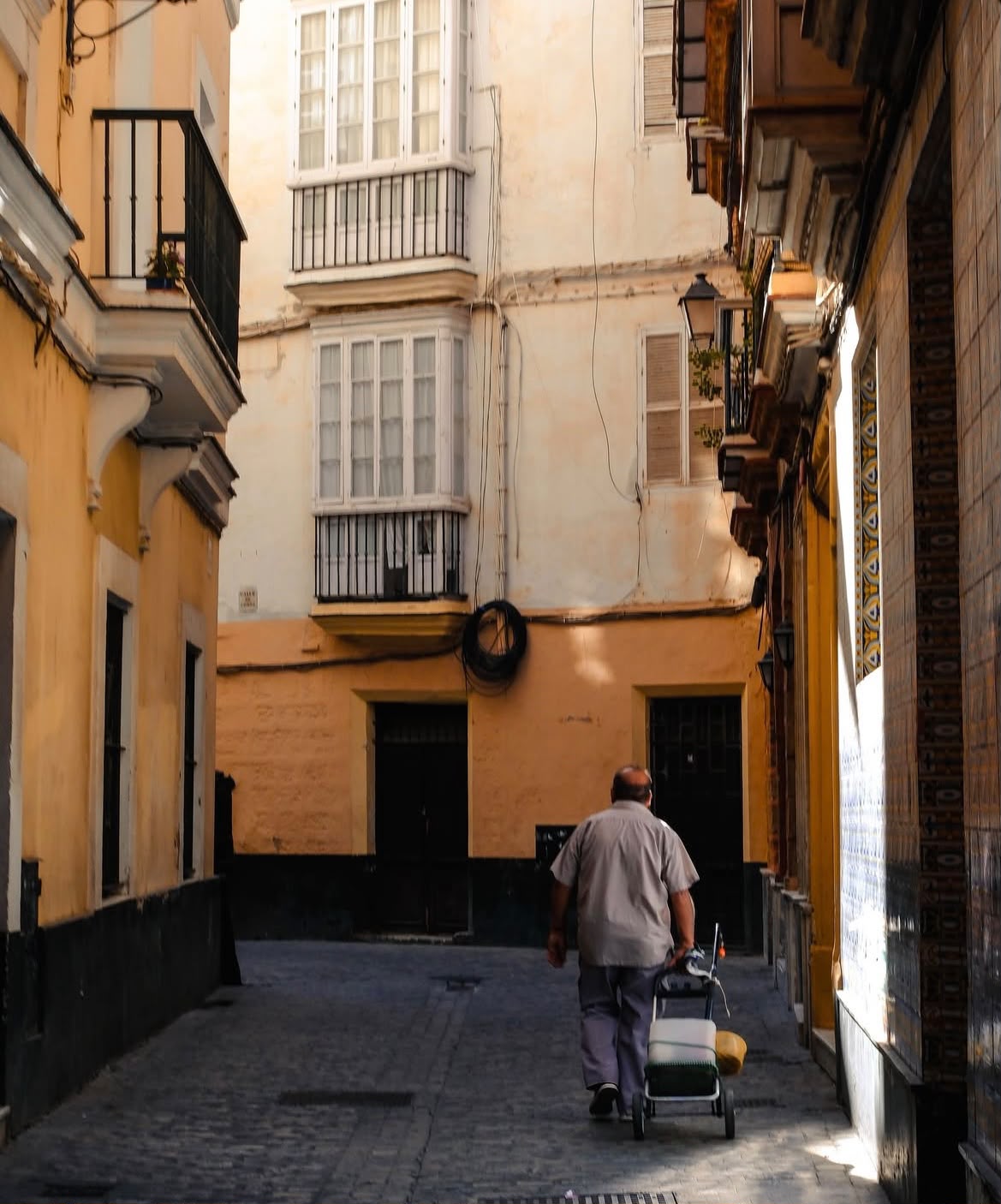
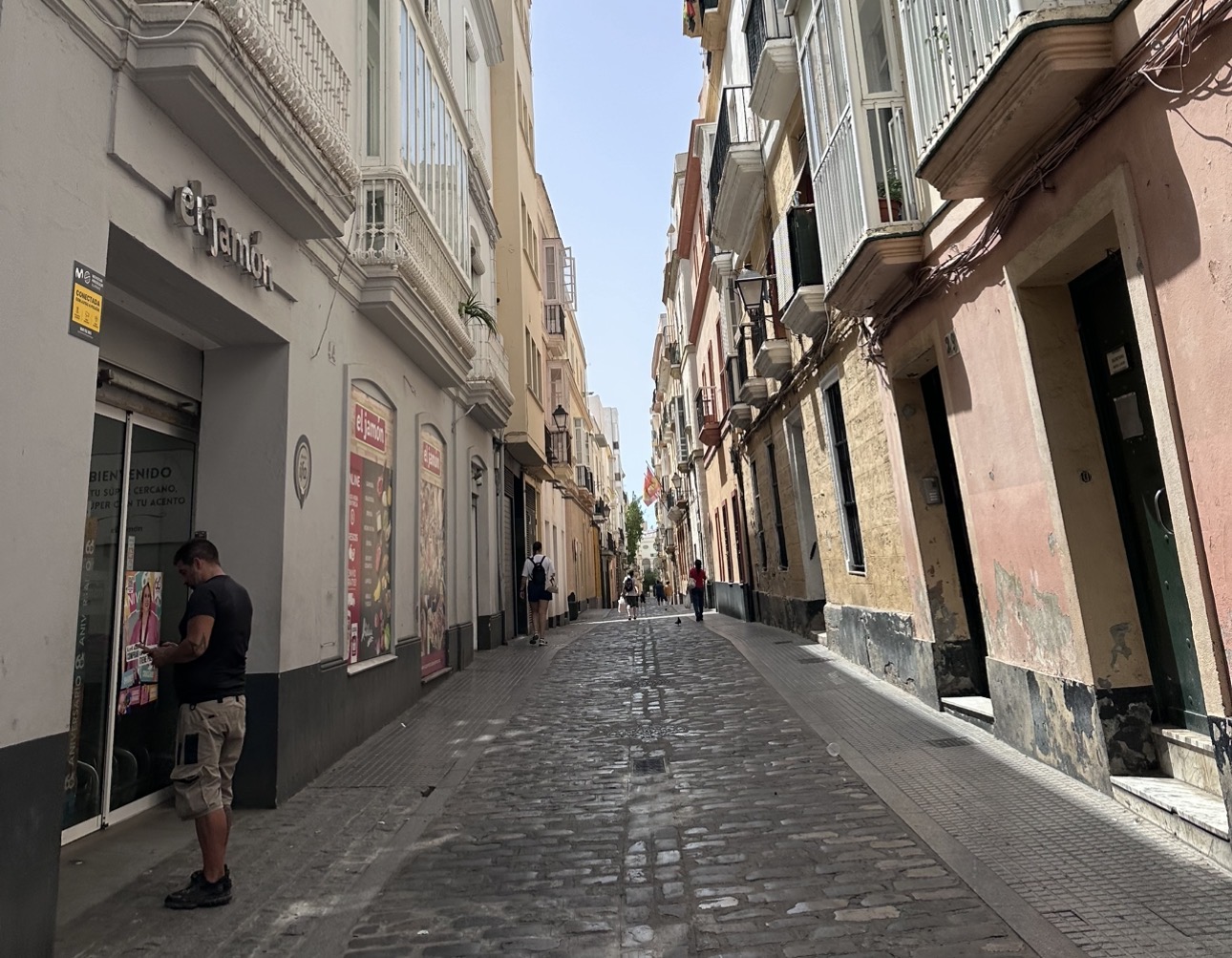
Colorful houses, wrought-iron balconies, secret courtyards, and traditional ceramic artwork abound in Cádiz’s winding alleyways. Unplanned walks can result in surprising finds, such as serene residential alleyways adorned with Spanish flags and flowers or exquisite tile murals. Every street has a genuine feel to it, allowing tourists to witness daily life amidst centuries’ worth of stunning architecture.
The narrow streets of Cádiz are perfect for exploring on foot.
Coastal Views Around Every Corner
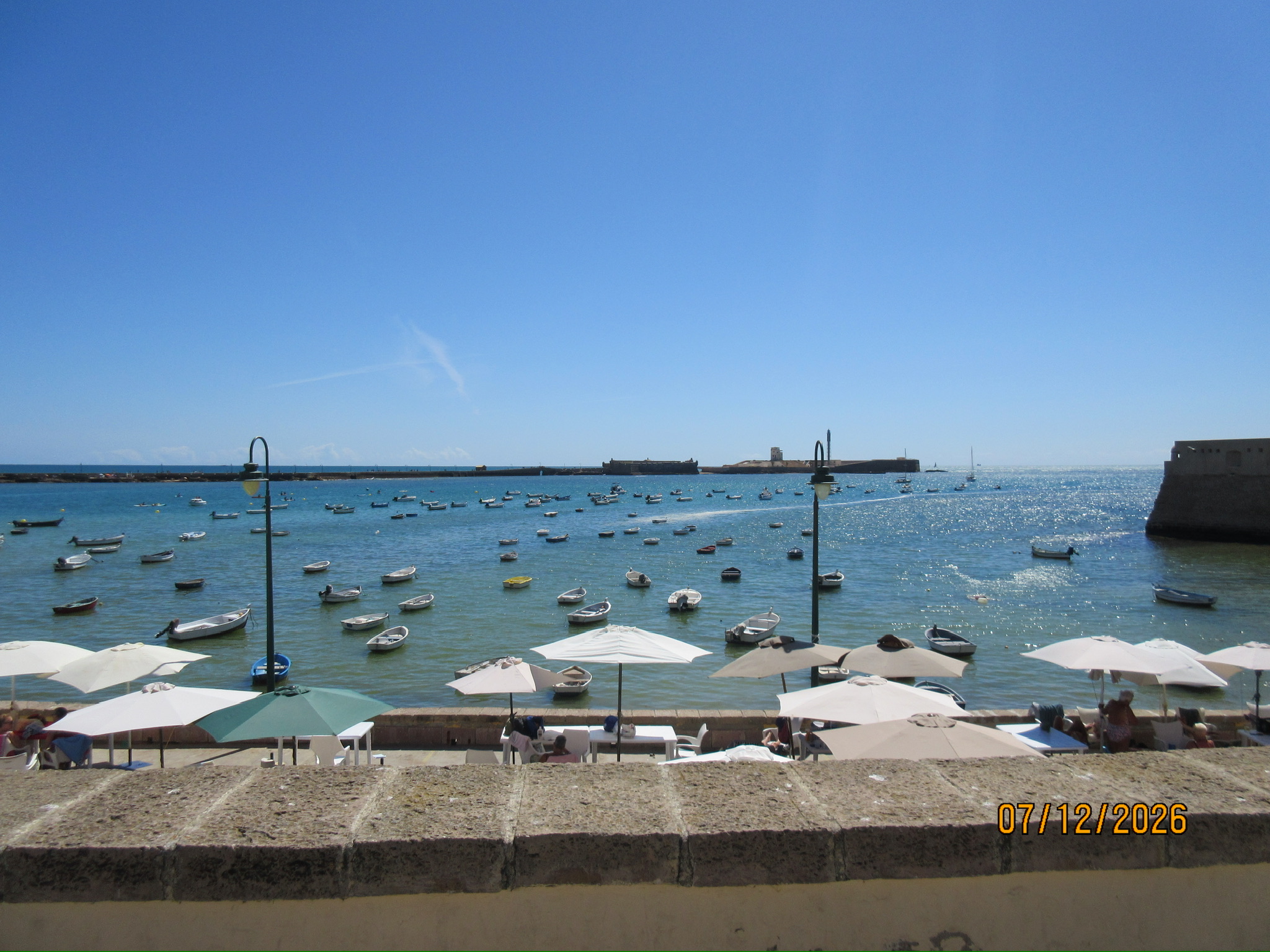
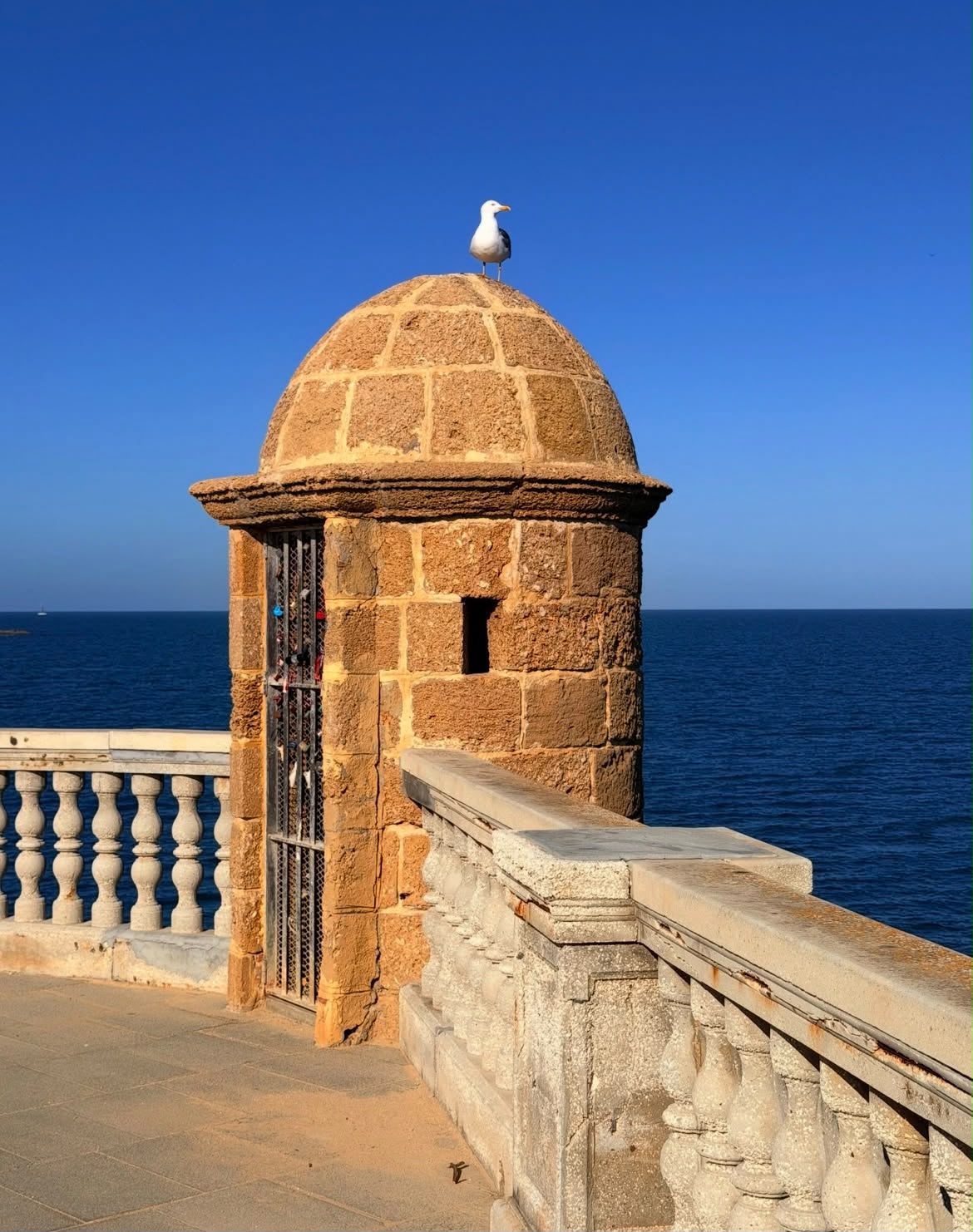
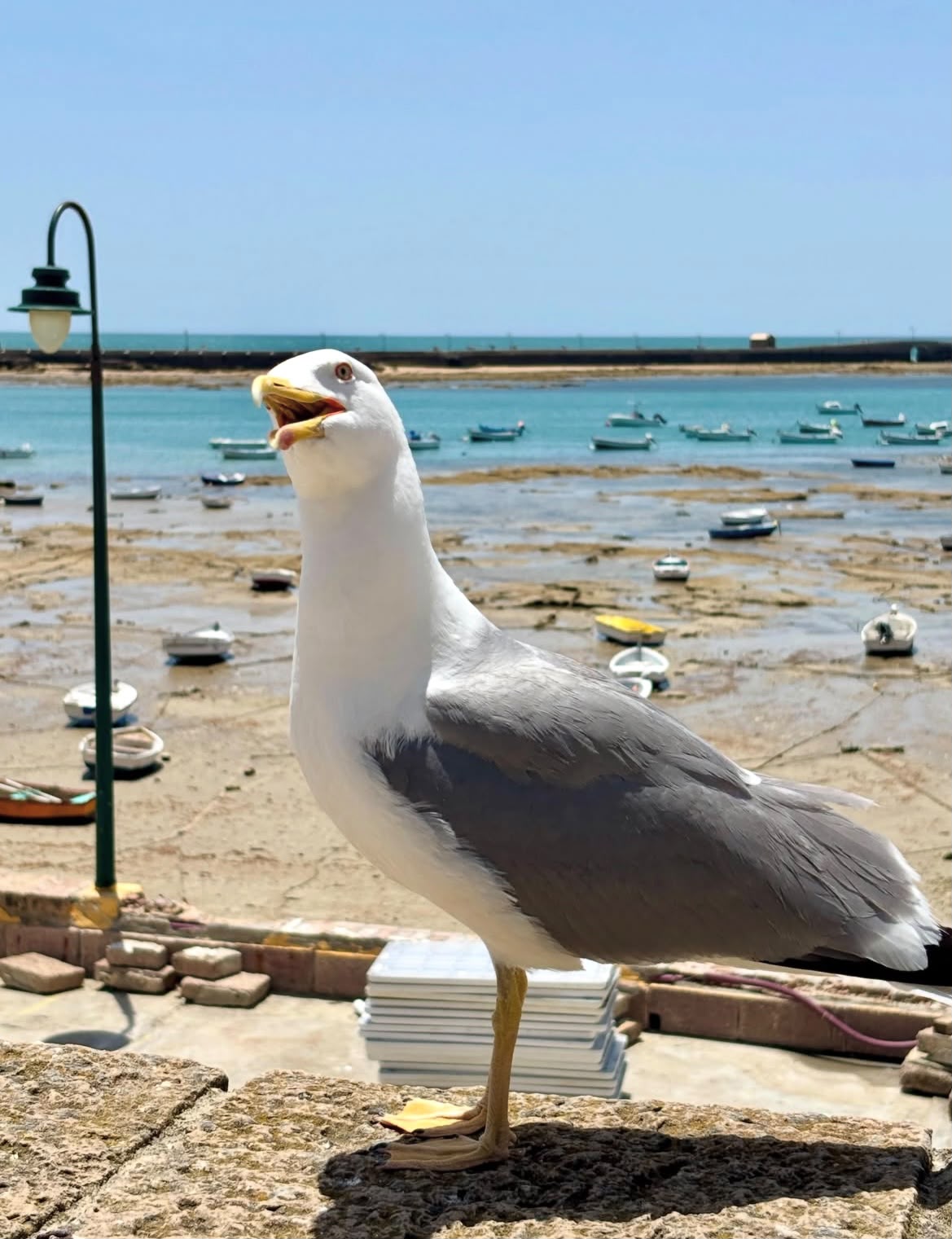
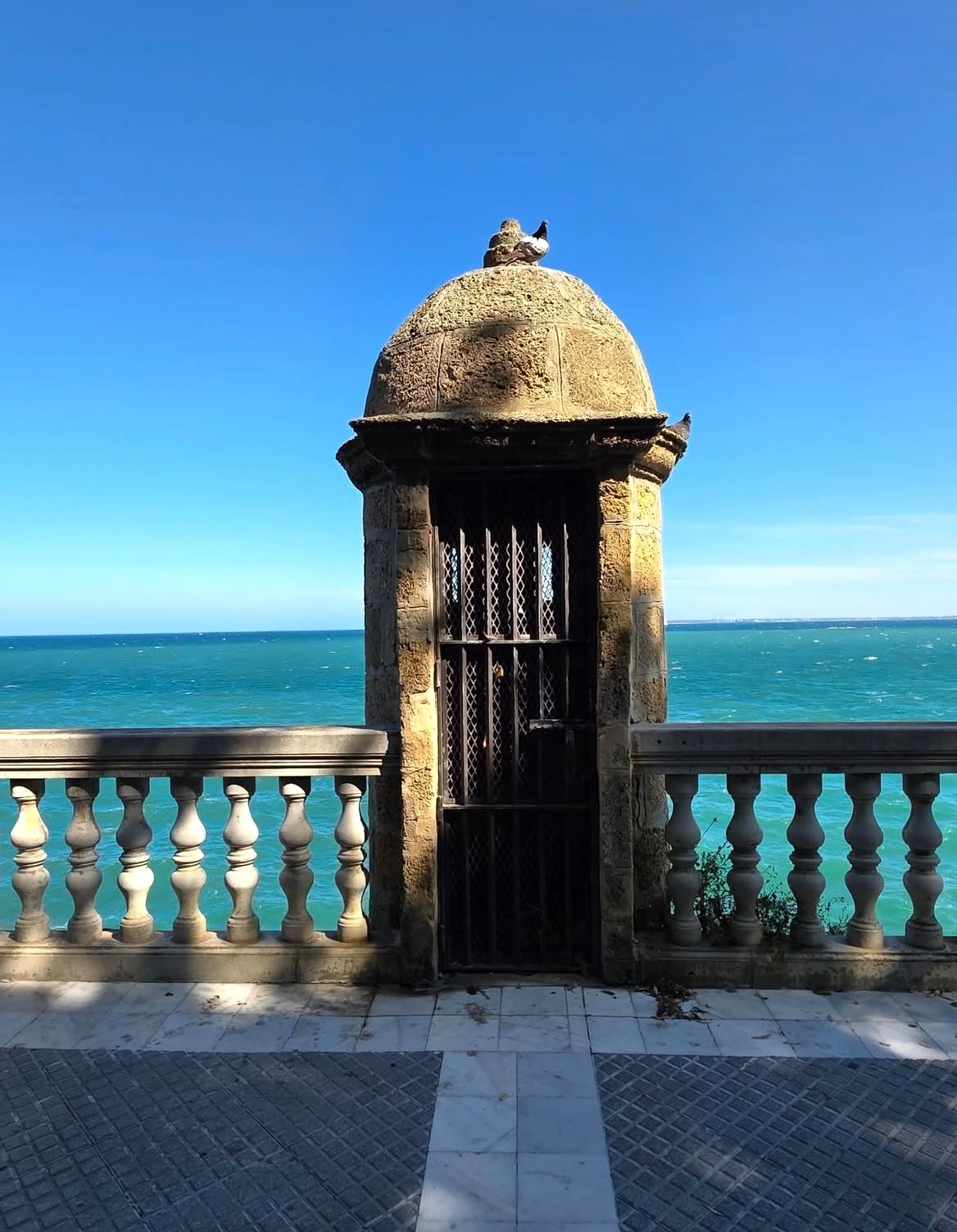
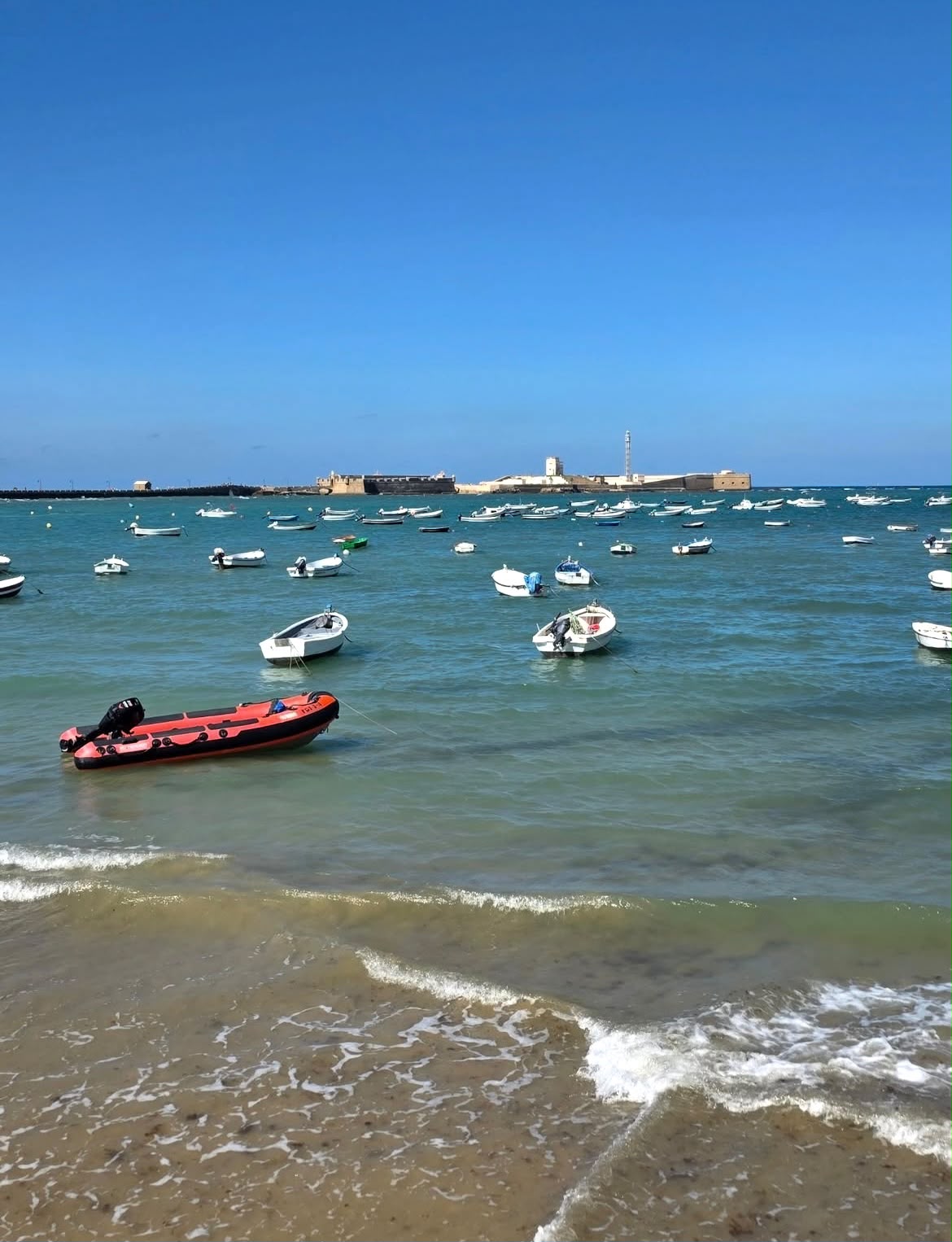
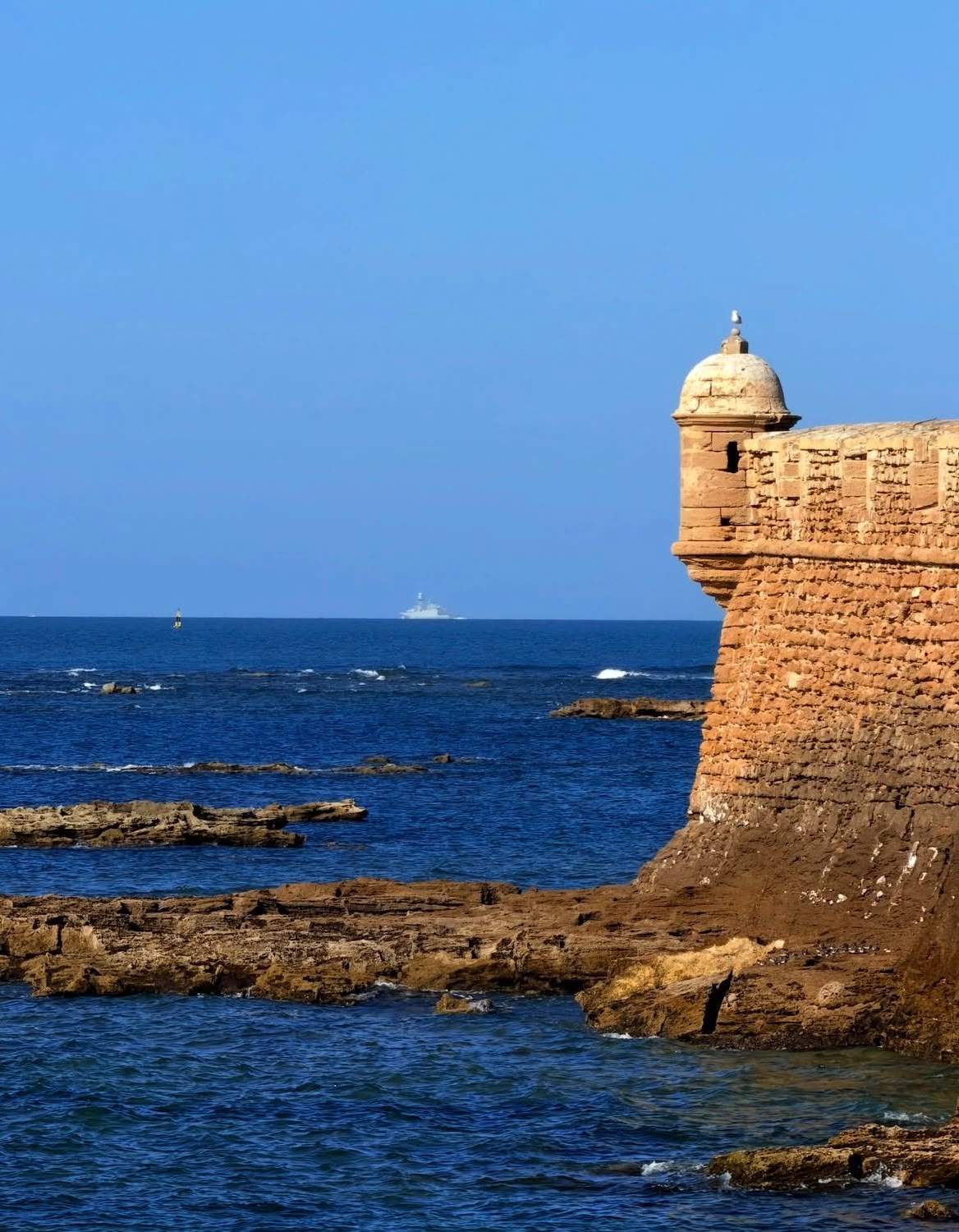
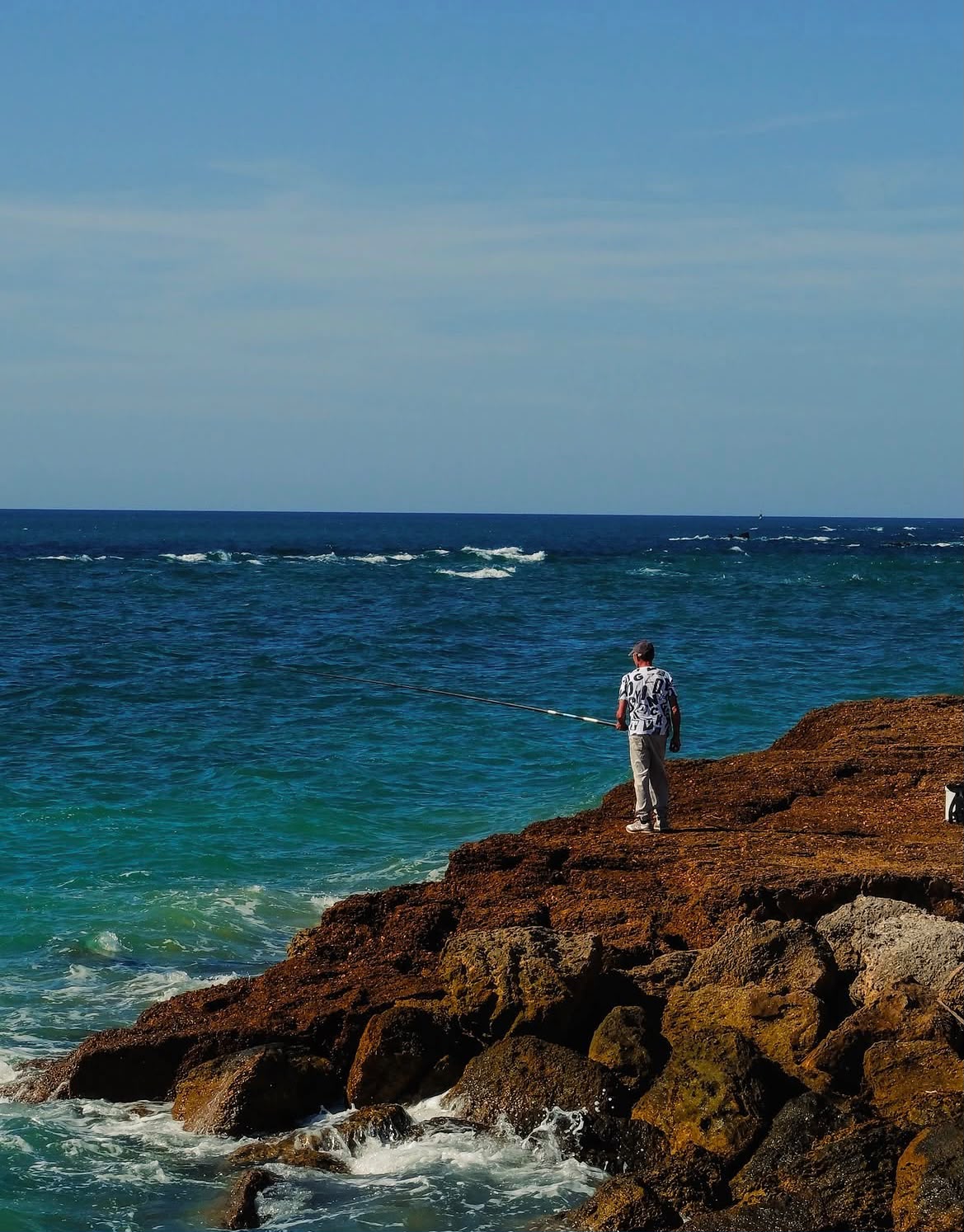
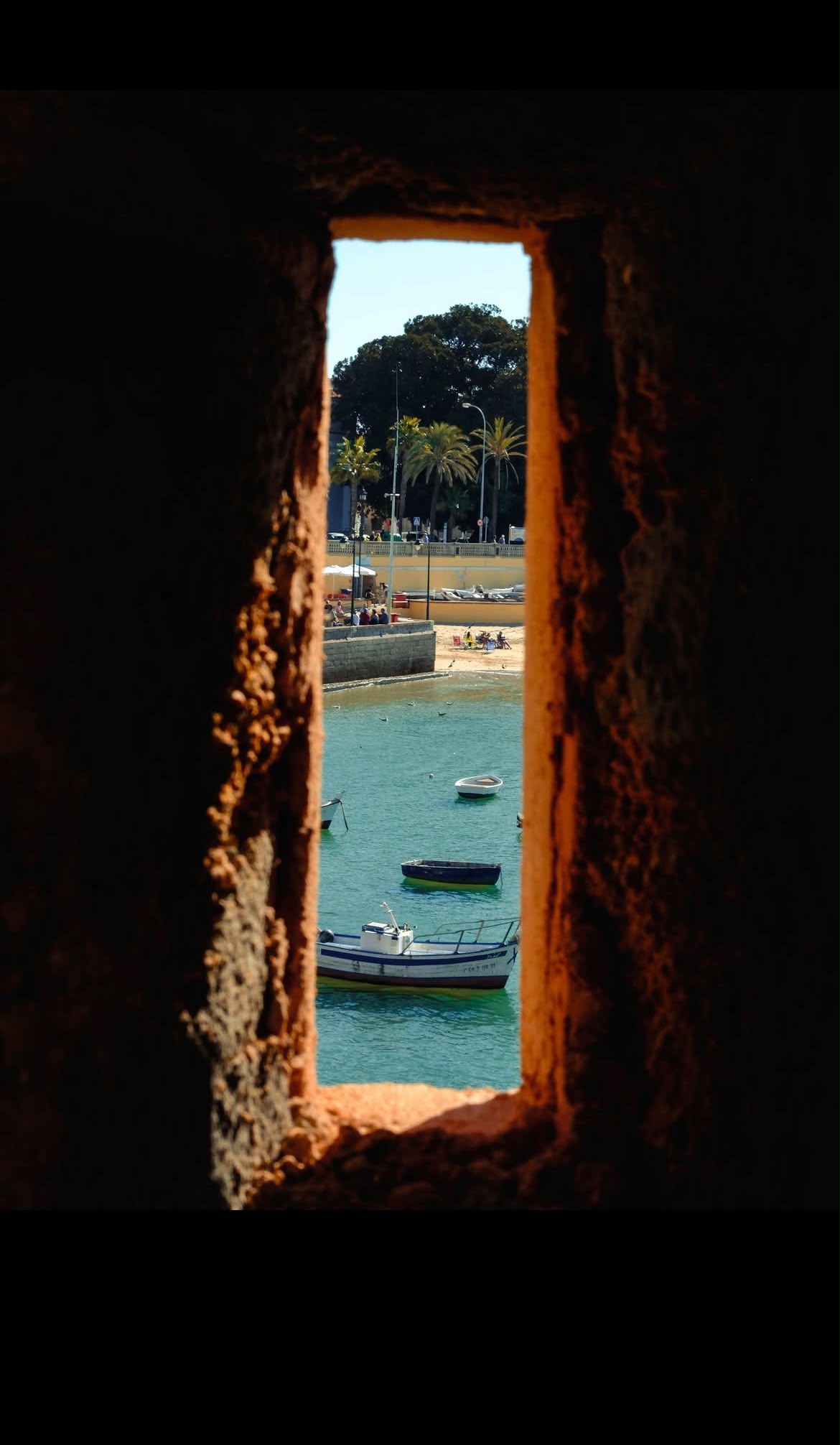
Being surrounded by the Atlantic Ocean means Cádiz offers spectacular views almost everywhere. Historic watchtowers, defensive walls, and stone guard posts overlook turquoise waters dotted with fishing boats. The city’s famous fortifications remind visitors of Cádiz’s strategic importance while providing some of the best viewpoints in Andalusia. Whether standing beside the old sea walls or relaxing along the shoreline, the ocean is always part of the experience.
Historic coastal defenses overlook the Atlantic Ocean and the city’s picturesque harbor.
Final Thoughts
Cádiz is a place where the Atlantic Ocean, architecture, and history all coexist together. The city provides something special around every turn, whether you’re taking in centuries-old fortifications, exploring vibrant neighborhoods, unwinding by the sea, or finding undiscovered architectural treasures. Its walkable layout, welcoming atmosphere, and stunning coastal scenery make Cádiz a destination that leaves a lasting impression long after your visit ends.
He visto el puesto del sol muchas veces frente a Colegio Mayor. Yo he corrido al lado de la playa de la tarde y he visto allí. ¡Es muy bonita sobre el mar! Yo puedo ver el amanecer en la mañana por la ventana en los dormitorios de el colegio mayor. Pero, no me he levantado el mismo hora del sol y he visto sola un poco veces.
El Colegio Mayor
Me gusta viviendo en colegio mayor dormitorios porque tengo un habitación sola y un baño sola para mi.
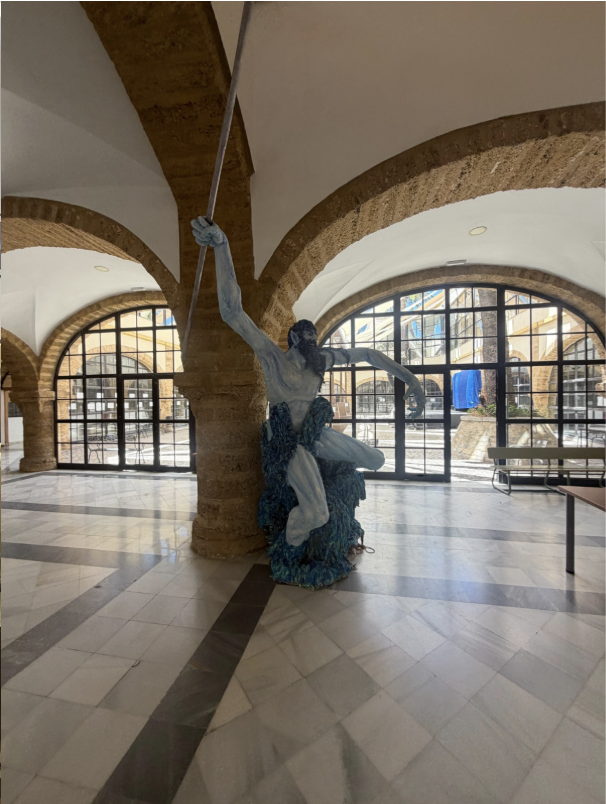
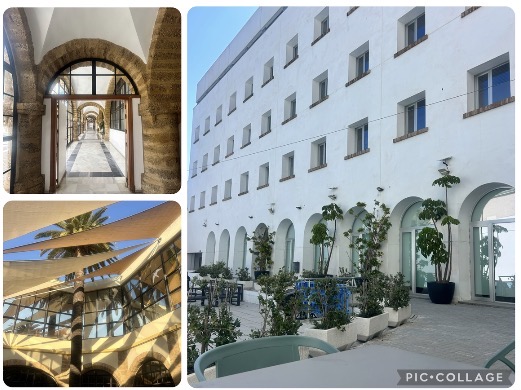
La edificio de mis clases en colegio mayor es muy bonita. Me gustan los arcos también.
Las maestras, Mercedes y Inez son las mejoras. Ellas son simpáticas, atentos, y amables! Ellas me ayudan mucho.
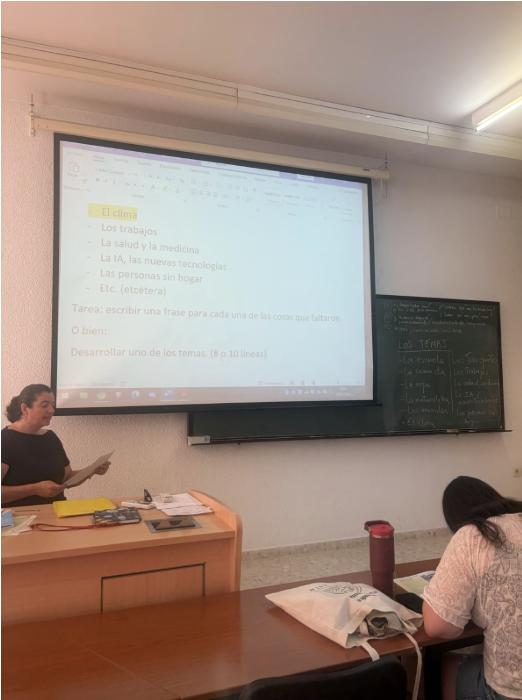
Aprendemos muchas cosas, incluyendo el pretérito perfecto, pretérito indefinido, pretérito imperfecto, el vocabulario de profesiones, el vocabulario de comida, el vocabulario de vacaciones, ser y estar, para y por, y el repaso de presente irregulares. Hemos practicado hablar, escribir, y escuchar en español.
The Cathedral of Cadiz
Fui a la Catedral de Cádiz con nos grupo. La próxima domingo yo fui a mass a las doce en la catedral. Me gustan la arquitectura, el simbolismo, las estatuas, y las pinturas. He caminado a la arriba de el torre.
Las Playas
El primer es la playa Caleta más cercana a nosotros. En los días mucha gente se relajaban en la playa. Yo pienso que La Playa Victoria es la mejor playa porque era mas tranquila y había menos personas. Los edificios blancos, las palmeras, y los barcos son muy bonitas.
Painting the Spanish World
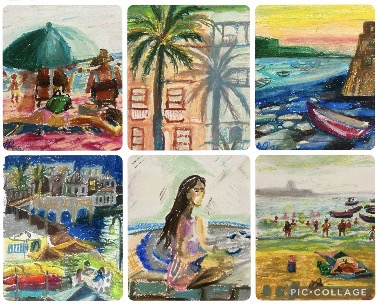
Yo he pintado mis experiencias en Cádiz con la pintura de al óleo. Cuando hace mucho calor la pintura ha se fundido y fue más fácil mezclar colores.
El primer es la Playa de Santa María. El segundo es los edificios en catedral de la luz en las palmeras. El tercero es la puesta del sol en Playa Caleta. El cuarto es Playa Caleta durante de la noche con la gente ha jugado las cartas. La quinta es mi amiga Sureela. El última es la pintura de la playa Santa Maria cuando las olas y el sol han estado fuertes.
Hay muchos vendedores de arte en España. En tres casos les pregunté , “Quién es el artista?” Y el vendor contestó , “Este es mi mujer.” Este es interesante!
Typical food
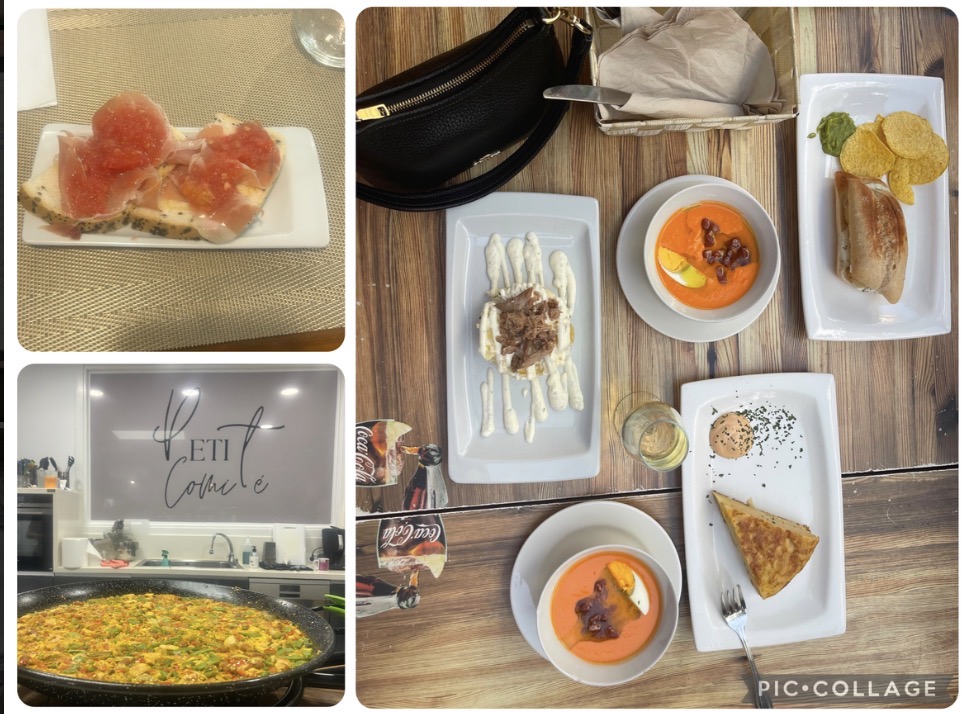
Yo he cocinaba algunos platos de España, incluyendo paella, sangría, y pan con jamon y tomate, con mis compañeros en una cocina se llama Petit Comité Cádiz. Este es comida típico en España. Tortilla de Patatas es un plato de huevos con patatas, y aveces lo tiene cebolla. Salmorejo es mi favorita tapa, este es sopa frio que tiene tomate, pan, y aveces tiene jamón y huevos encima de el sopa.
Plaza de España
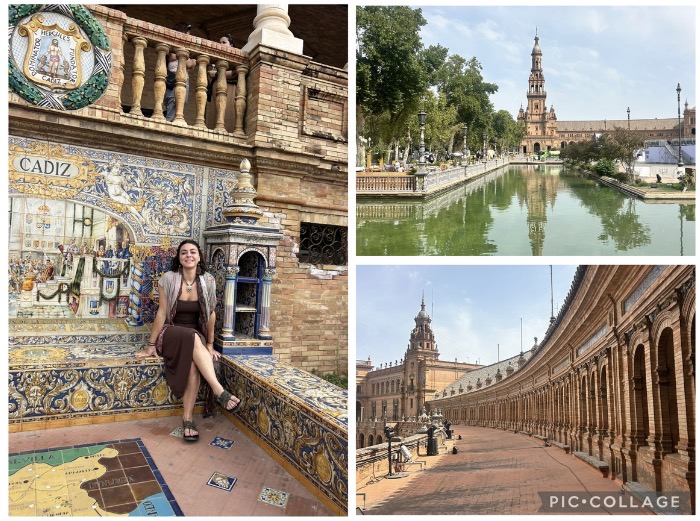
En el primer sábado fui a Seville con mis amigas Sureela, Daniela, Sarah, y Mariella. Seville hubo calor como un orno. Visité la plaza de España, y encontré el mural de Cádiz. Después, visitamos Alcázar y la Catedral de Sevilla. Yo pienso que la Catedral en Cádiz es mejor, porque no había pinturas del rey allí. Transporte es fácil y te recomiendo visitar Seville y Cadiz también!
When visiting Cádiz, the first thing you will notice is its pedestrian accessibility. You can make your way from one edge of Old Cádiz to another in 45 minutes, or circle the entire city perimeter in two and a half hours!
After living here for three weeks, I’ve compiled a list of the closest to farthest strolls from our dorms in hopes to guide future students on how to best explore this beautiful Andalusian province!
1. Parque Genovés: Just Outside Your Front Door
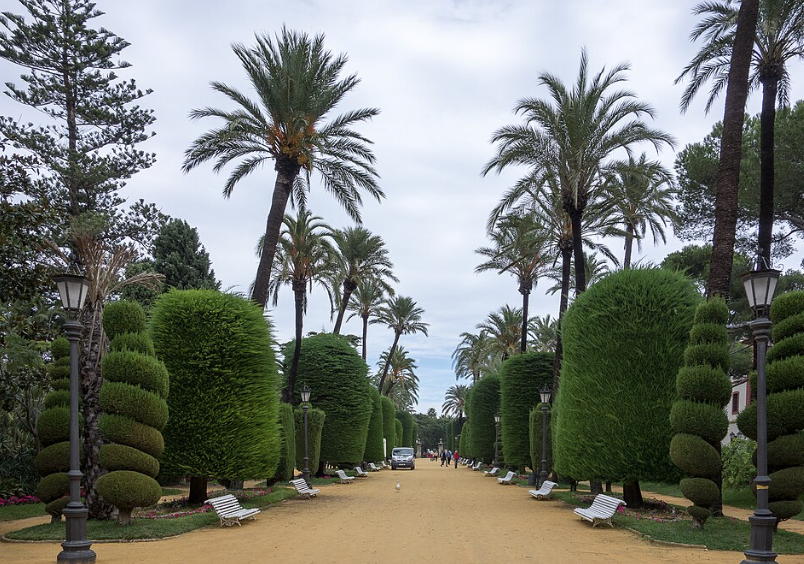
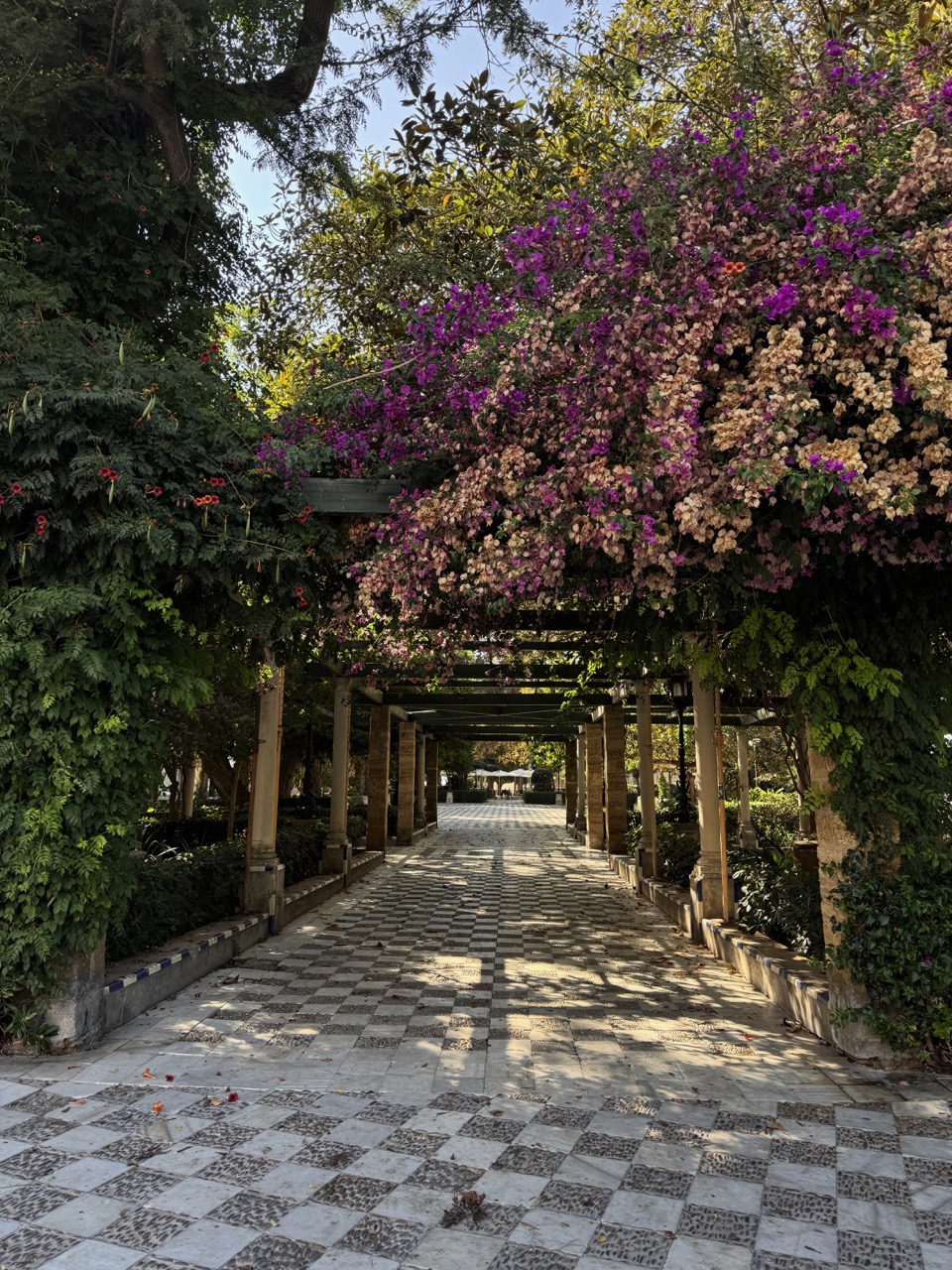
For those staying in Colegio Mayor, Parque Genovés will be the shortest stroll you’ll take in the city, totalling an entire 20 seconds to cross the street! The park provides an escape from the surrounding city life, housing 150 imported plant species and a cascading, man made waterfall.
2. Mercado Central: The Perfect Mid-walk Snack Stop
Just five minutes into the city, you’ll find yourself at a bustling market filled with fresh produce, meat, and seafood sold from local vendors, along with food stalls offering traditional Spanish meriendas and tapas.
3. La Caleta & El Castillo de San Sebastián: A Picturesque Coastal Walk
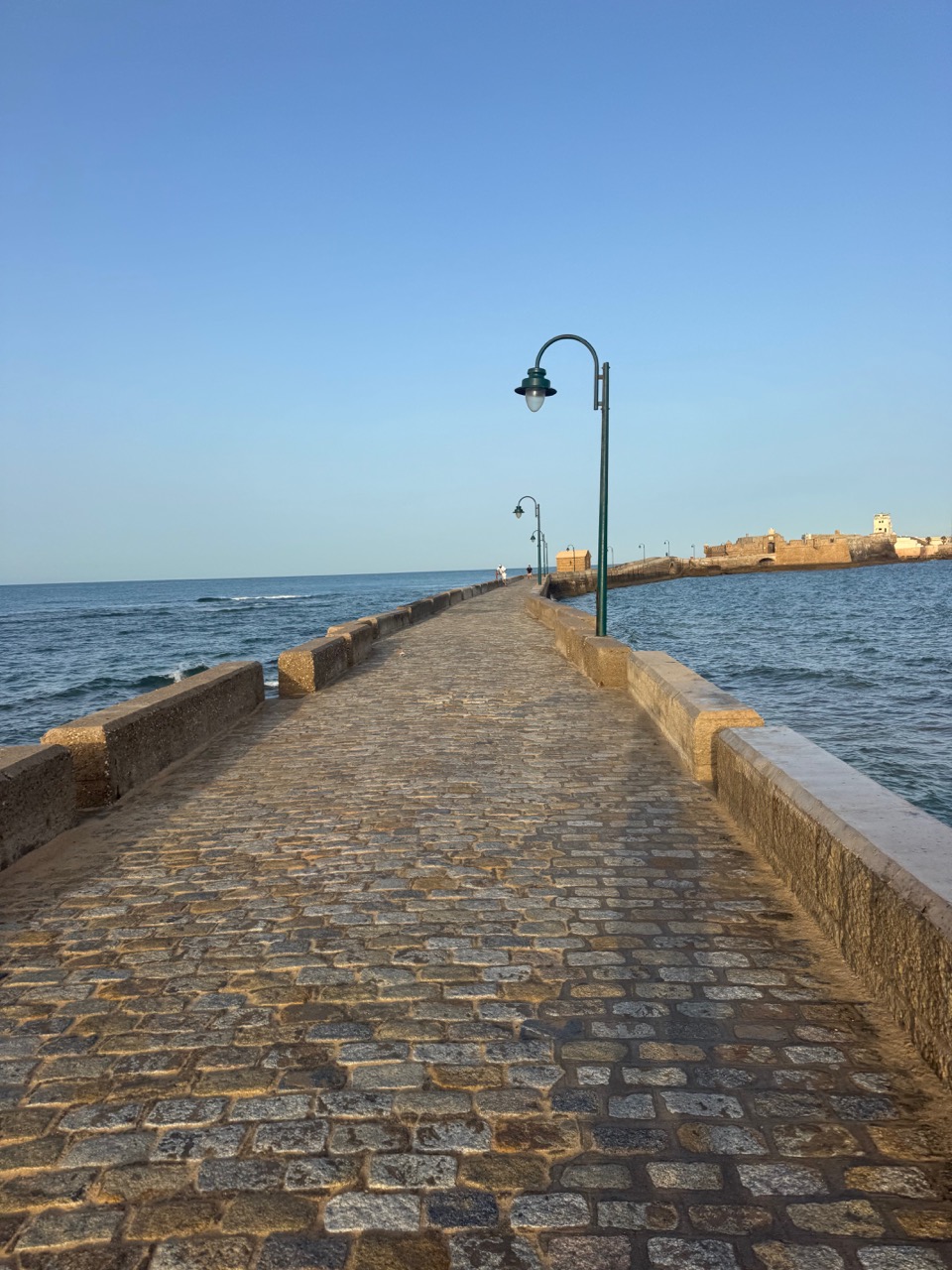
A six minute walk past Parque Genovés leads to La Caleta, one of the smaller yet always lively beaches in Cádiz. Walking down the beach, you’ll stumble upon a cobblestone pathway leading you to the historic monument, El Castillo de San Sebastián.
4. Torre Tavira: Your Vantage Point of the City.
Turning back around into the city, you’ll reach Torre Tavira in seven minutes, one of Spain’s oldest camera obscuras that utilizes a mirror and lenses to project images of the city. Initially used for trade and military purposes, it’s one of the most interesting tourist spots in Cádiz.
5. Catedral de Cádiz: The Historic Heart of the City
A fifteen minute walk brings you to the steps of La Catedral, a grand vision with some of the most intricate architecture just waiting inside. You will thank yourself after buying a ticket to take in the views this building has to offer.
6. Momart Club: On the City’s Edge
If you are looking to get a glimpse into the nightlife of Spain, look no further than the port! Twenty minutes along the coast, Cádiz’s clubs are settled on the water and make perfect pitstops for some nighttime activities.
7. The Transit Finale: From the Seaside to Shopping Centrals
While walking into New Town Cádiz only takes you from forty minutes to an hour, the city provides inexpensive public transport that will easily take you from Colegio Mayor in under twenty minutes. Here are some of my “bus hop” options for you!
→ El Corte Inglés
Hop on a bus and make your way to Cádiz’s very own three story department shopping mall filled with regionally produced clothing items, food, books, and much more. A great place to stop and grab some souvenirs!
→ Mercadillo del Paseo Marítimo
An open air market that highlights local, handmade accessories and jewelry, offering a real glimpse into the city’s fashion just 20 minutes away from El Corte Inglés by the beach.
I can not recommend visiting Cádiz enough for any students who are hoping to study abroad during their university experience. I hope you all have as much fun exploring the city as I have, as it truly is a once in a lifetime opportunity!
My name is Mariela, and I’m a psychology student studying Spanish at the University of Cádiz, in Cádiz, Spain, through UML (https://www.uml.edu/international-programs/programs/university-of-cadiz.aspx)
While living here this July, I’ve had the opportunity to immerse myself in the Spanish culture, which also includes experiencing culture shocks about how different America and Spain are.
America knows Spain as a country famous for its architecture, art, and rich historical ties; however, many Americans don’t realize that Spain has a more relaxed, traditional, and warm culture.
Here are my top 5 cultural shocks I have experienced so far while living here:
1. Siesta Time
A photo featuring a closed shop during siesta.
In Spain, it’s completely normal for many shops to close in the middle of the day for siesta. This break usually happens between 3:00 PM and 5:00 PM, giving workers time to rest, nap, or even have lunch. Spanish culture is much slower and calmer than American culture, where everything feels like it’s constantly moving without a pause. Many stores, or tiendas, close during this time. While some places like supermarkets (Carrefour) or pharmacies (Farmacias) stay open, most shops close. The majority of stores also close all day on Sundays.
2. Lunch and dinner begin later than in America
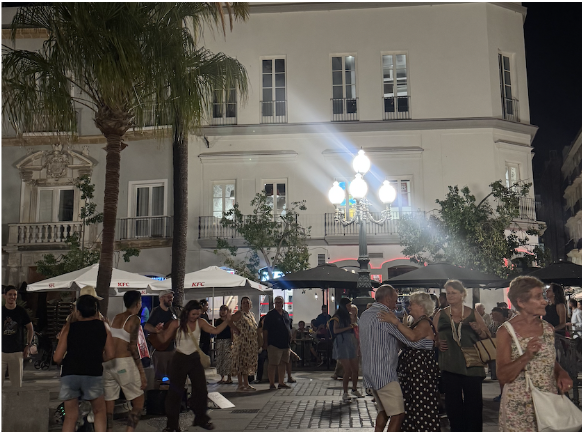
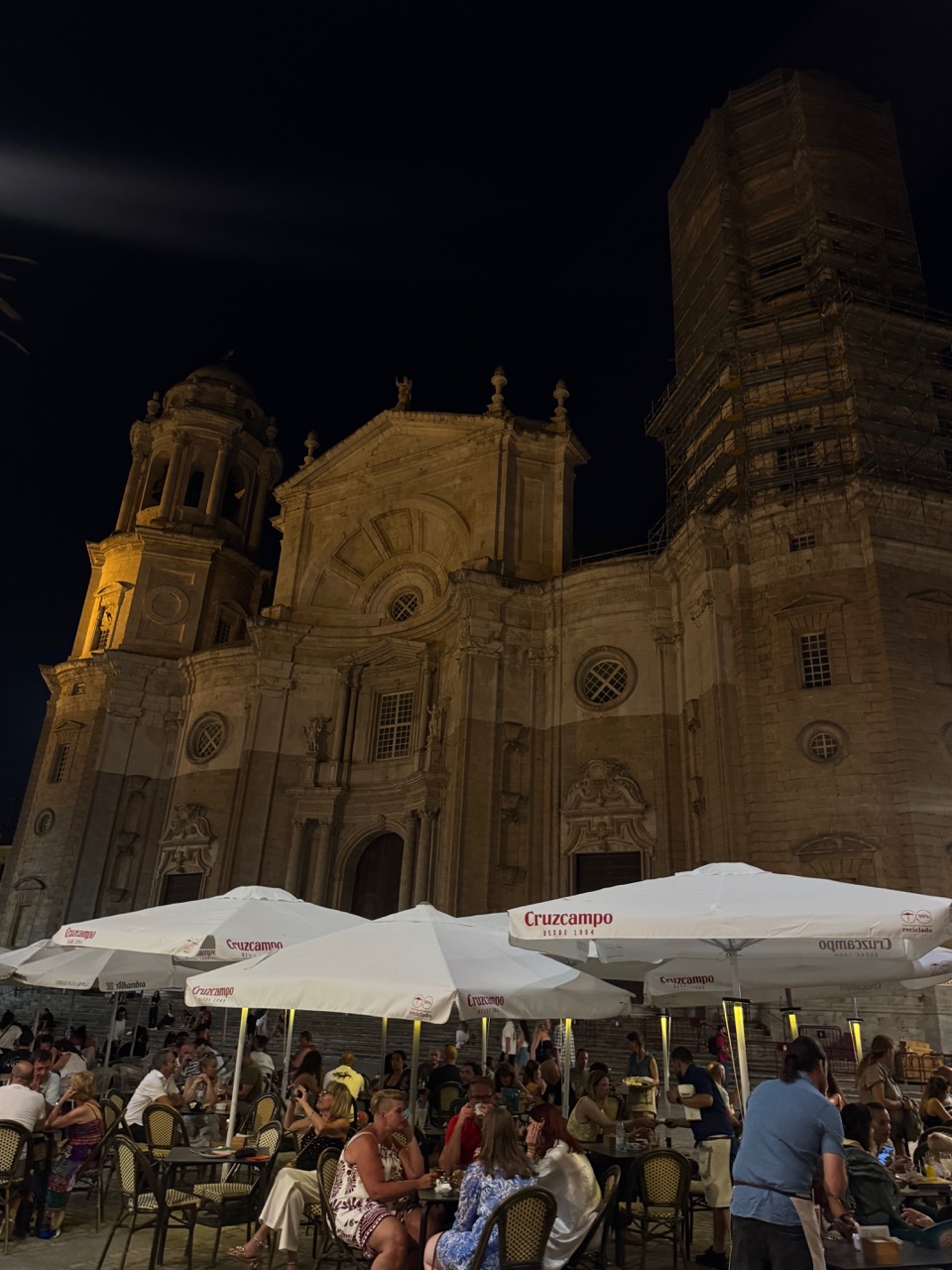
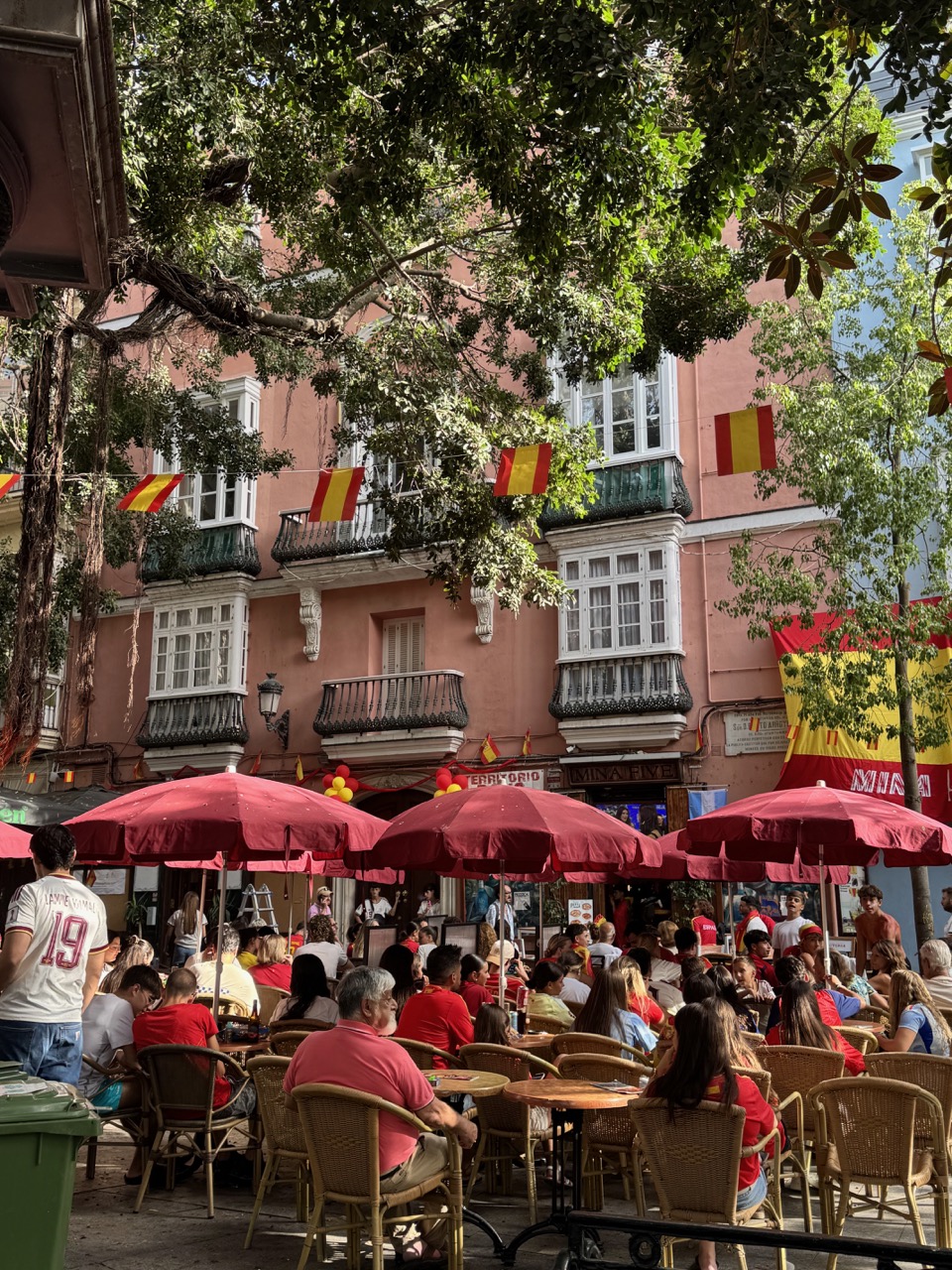
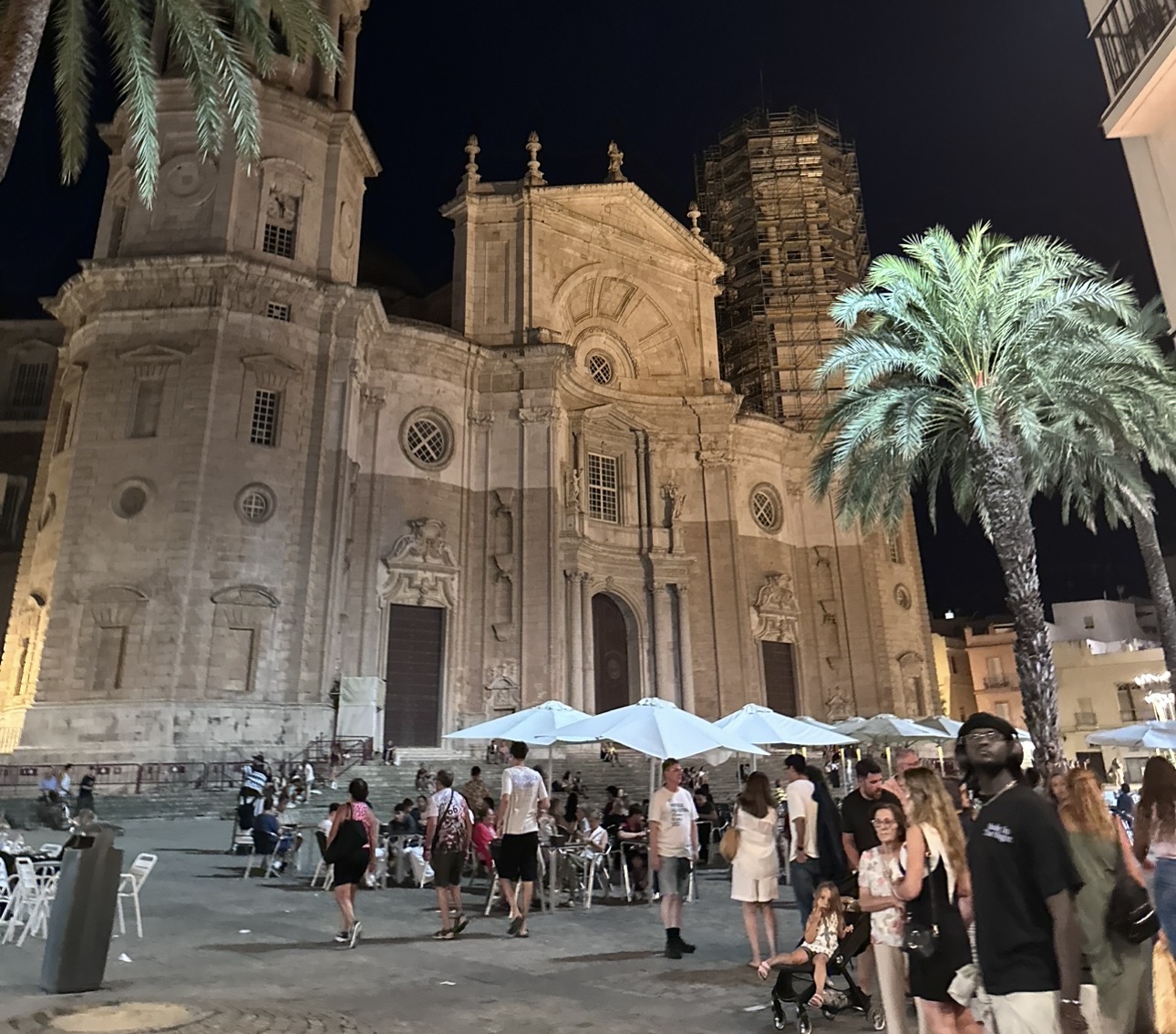
Photo of bustling restaurants at 9 PM next to the Cathedral.
Finding lunch to eat during Siesta can be difficult; unfortunately, patience is key, because it starts no earlier than 5:00 PM, while dinner begins at 8:30 PM. This isn’t just because of siesta; it’s also because the sun sets much later in Spain (around 9:30 PM in Cádiz). Even while eating in restaurants in Cádiz, the check never arrived until we asked for it. It’s considered incredibly rude for servers to rush guests out of the restaurant due to sobremesa, a tradition where people often stay for an hour or more after finishing their meal to chat. Additionally, tipping culture doesn’t exist in Spain!
6. Having dryers is rare
A phto of clothes hanging on balconies and clothes lines
In Spain, most people don’t own a dryer. In Cádiz, it’s common to see clothes hanging on balconies or strung up with ropes. In addition, washing machines are a lot more common than dryers, but it’s not unusual for people to wash clothes by hand.
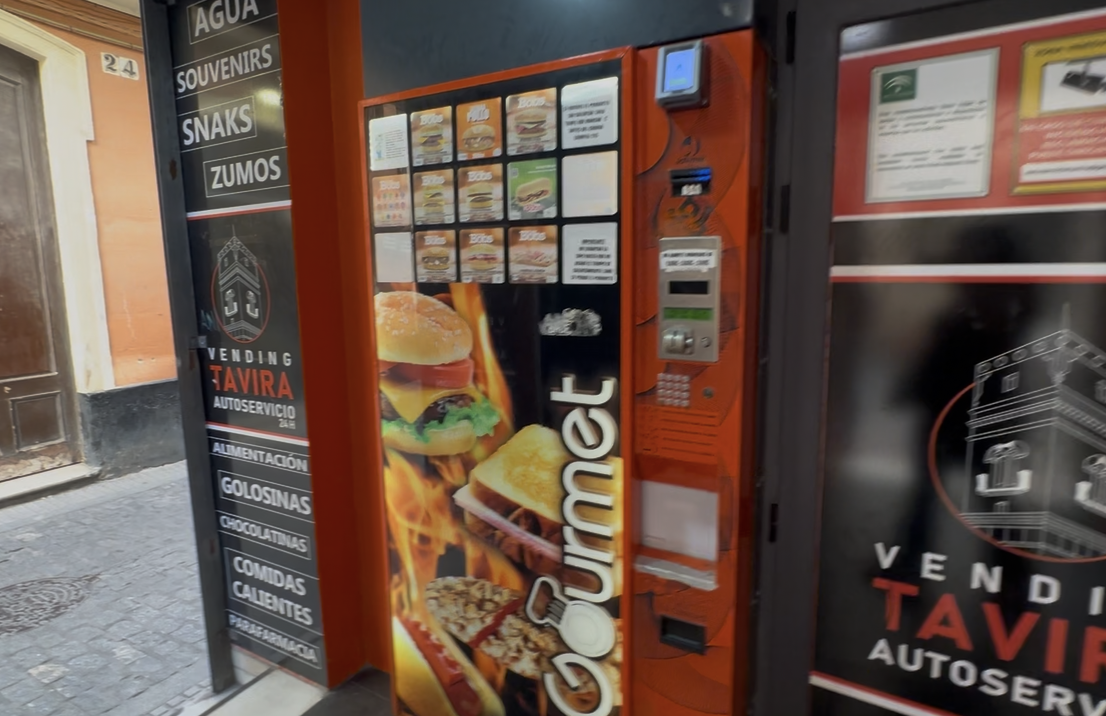
8. Vending Machines have cooked meals
A photo of a vending machine selling cooked meals
On the streets of Cádiz, vending machines are everywhere, and many contain preheated food! Food is first refrigerated, but once selected, it will heat up ready to eat.
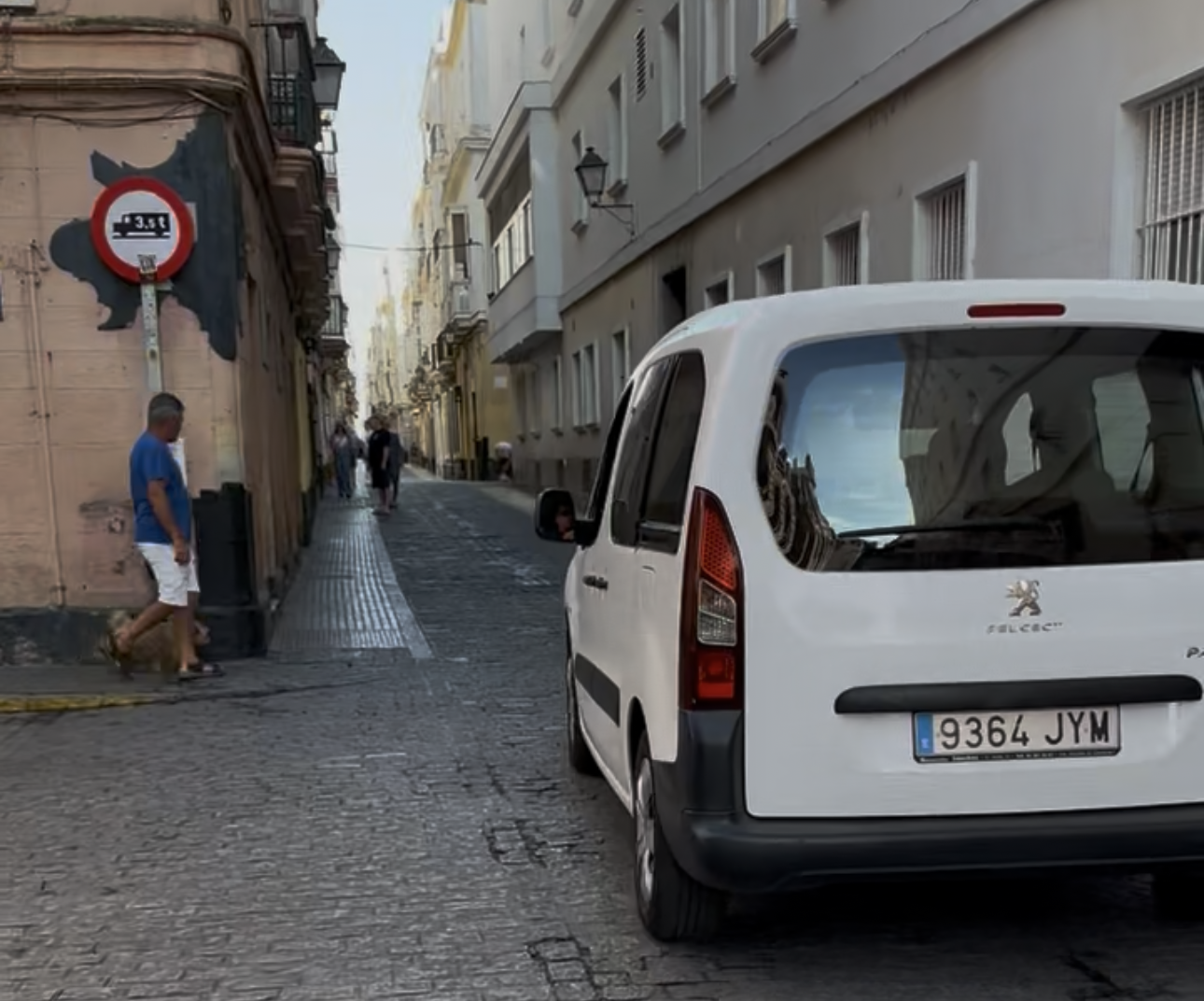
10. Cars drive in small walkways
A photo of a car driving through a small roadin Cádiz
Cars are allowed to drive in alleyways across the city, as long as they drive slowly. In Spain, It’s common to see vehicles squeezing through these tight spaces to reach their destination.
If anyone ever gets a chance to study abroad in Spain, you should seriously take it! Spain has such a different culture in comparison to America, and living in it is the best part.