(And Why Language Learning Outside of the Classroom is 100% Worth It!)
Whether you’re taking Spanish classes as a part of required curriculum or as your major or minor, studying abroad creates an environment for students to embrace uncertainty, and gain a sense of comfort with a language that neither a group presentation nor a textbook exercise can provide.
My first days in Cádiz were a bit disorienting, but eventually I fell right back into the flow of my Spanish skills that I admittedly hadn’t touched since the past Spring semester. This wasn’t because I was back sitting behind a desk listening to a professor, it was because I was in front of a pizza counter ordering my post-flight lunch; it was because I was at the train station asking how to print my ticket; it was because I needed to figure out the hours of the gym and library at the dorms.
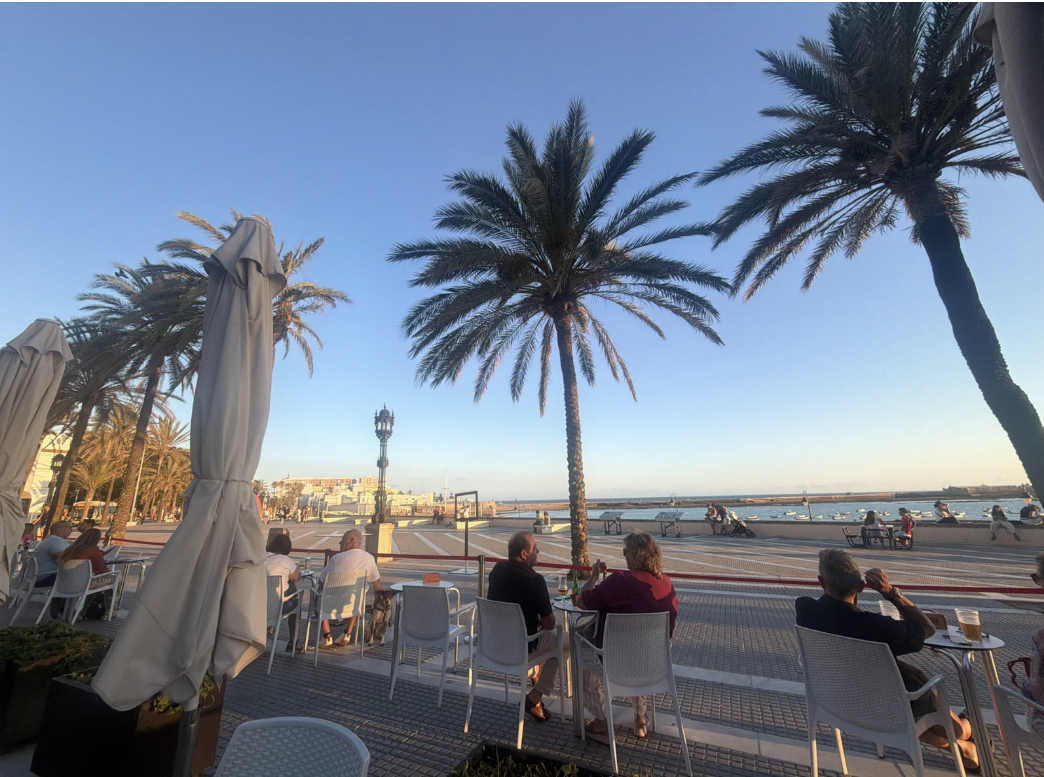
When spending these three weeks in Cádiz, Spain, you are both a student, and a tourist. But what about life in between?
This in-between is where the real language learning happened. Not in the vocab lists, but in the small, everyday moments where Andalusian Spanish did not match what I’d spent years learning at school. Some of it I picked up within days, while other peculiarities took me until week three to stop tripping over. Here are the quirks that stood out most:
Sounds
¿GraCias? No, GraTHias.
One prominent and common vocal distinction in Spain is the use of the sound “th” in place of all “z” or “c” sounds followed by the letters E or I. otherwise used in other Latin American or Spanish-speaking countries. What English speakers “often call the “Spanish lisp” is considered a normal habit in this European culture, and something you may pick up yourself while spending time in the city of Cádiz.
Dropping the Last Letter
Another common vocal quirk that you might notice in Spain specifically is the dropping or replacing of the last letter of certain words.
| END LETTER | NORTHERN/CENTRAL SPAIN | SOUTHERN SPAIN |
| Ending -d | Dropped or swapped to a “th” (verdad → verda/verdath) | Dropped |
| Intervocalic -d- | Dropped in casual speech (comprado → comprao) | Dropped |
| Ending -s | Always pronounced | Dropped (gracias → gracia) |
| Ending -r | Always pronounced | Dropped (cantar → cantá) |
Grammar
Conjugations
As most American students know, it is taught that the “vosotros” conjugation of verbs is mostly used in Spain. While I am able to attest to this, I can also say that it is almost exclusively used in the classroom setting, as professors speak to the students. ¿Entendéis?
Verb Tenses
When using the past tense, we often think to use what is called the preterite indefinite which describes a past action that has started and finished at a specific point in time.
Its endings look like this:
| -ar | -er/-ir | |
| Yo | -é | -í |
| Tú | -aste | -iste |
| Él/Ella/Ud. | -ó | -ió |
| Nosotros | -amos | -imos |
| Vosotros | -asteis | -isteis |
| Ellos/Ellas/Uds. | -aron | -ieron |
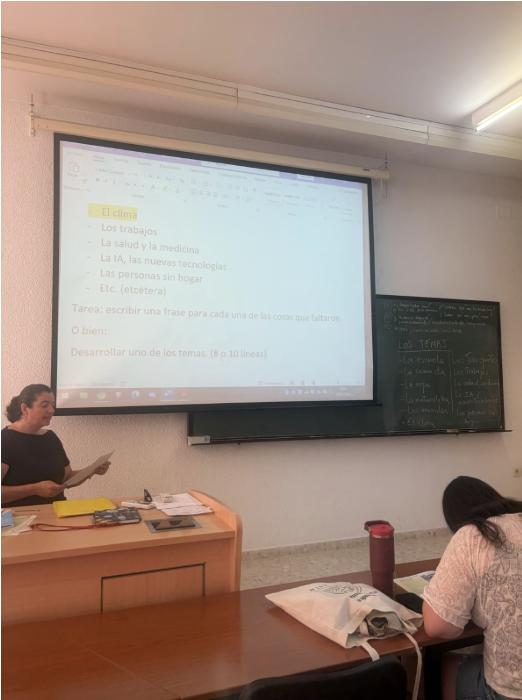
In Spain though, is it much more common to see the present perfect tense when describing something in the past, instead of the preterite indefinite. It is conjugated by using the verb “haber” in front of the past participle of the verb, and is the English equivalent to saying, “I have…” oftentimes used when describing something in the recent past, like this [past] week, this [past] morning, etc.
Its form looks like this:
| -ar | -er/-ir | |
| Yo | he -ado | he -ido |
| Tú | has -ado | has -ido |
| Él/Ella/Ud. | ha -ado | ha -ido |
| Nosotros | hemos -ado | hemos -ido |
| Vosotros | habéis -ado | habéis -ido |
| Ellos/Ellas/Uds. | han -ado | han -ido |
It was important to keep this verb tense in mind, despite knowing how to use other types of tenses appropriately. Because we were in Spain, we needed to make sure we were applying what we were learning properly, and needed to use the present perfect when completing writing assignments or essay tests.
Vocabulary Differences
| Spain Spanish | Mexican/American Spanish |
| Las patatas | Las papas |
| Coger | Tomar |
| El coche | El carro |
| El zumo | El jugo |
| El ordenador | La computadora |
| La entrada | El boleto |