Historical Hike

The Plan

Monday started like any other day. We got up, commuted to the Lacunza school of Spanish by public transportation we had become familiar with, and began our classes. While not the highlight of everyone’s trip, our lessons in Lacunza helped us gain familiarity and pick up Spanish phrases that would end up helping up in day to day activities. Whether it be ordering food at a Pintxo bar or helping a confused pedestrian, these skills proved important during our time in San Sebastian. After classes, we checked out much of what San Sebastian had to offer, typical of one of our afternoons. Just roaming the streets looking for something that would catch our eyes would become a pass time, with fashion stores and food bars alike being keen establishments we’d check out and immerse ourselves in the local culture.

The Journey

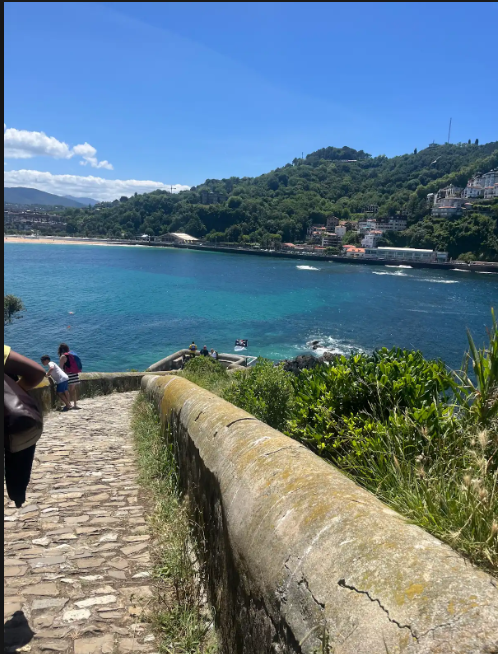
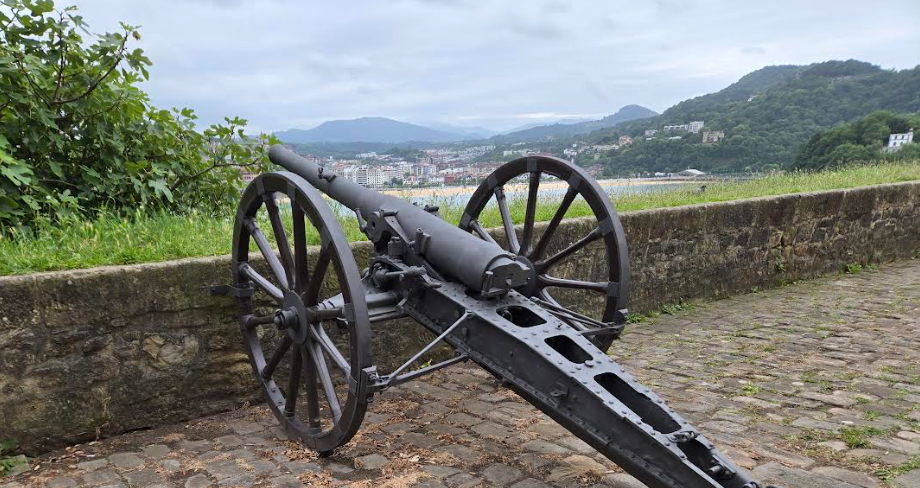
Next came our hike to the top of one of the coastal hills of San Sebastian. The one we hiked is notable for history dating back to medieval times and a large statue of Jesus Christ atop. We took the short and steep route to the top, which started in a place we had become familiar with, the Parte Vieja or Old Town, which also traces its history back centuries. While many of us were not enthusiastic about the idea of a steep hike, the payoff was definitely worth it for everyone. Although steep, our hike was relatively short, ending with a nice view from a spot just below the base of the Jesus statue.
History in Context

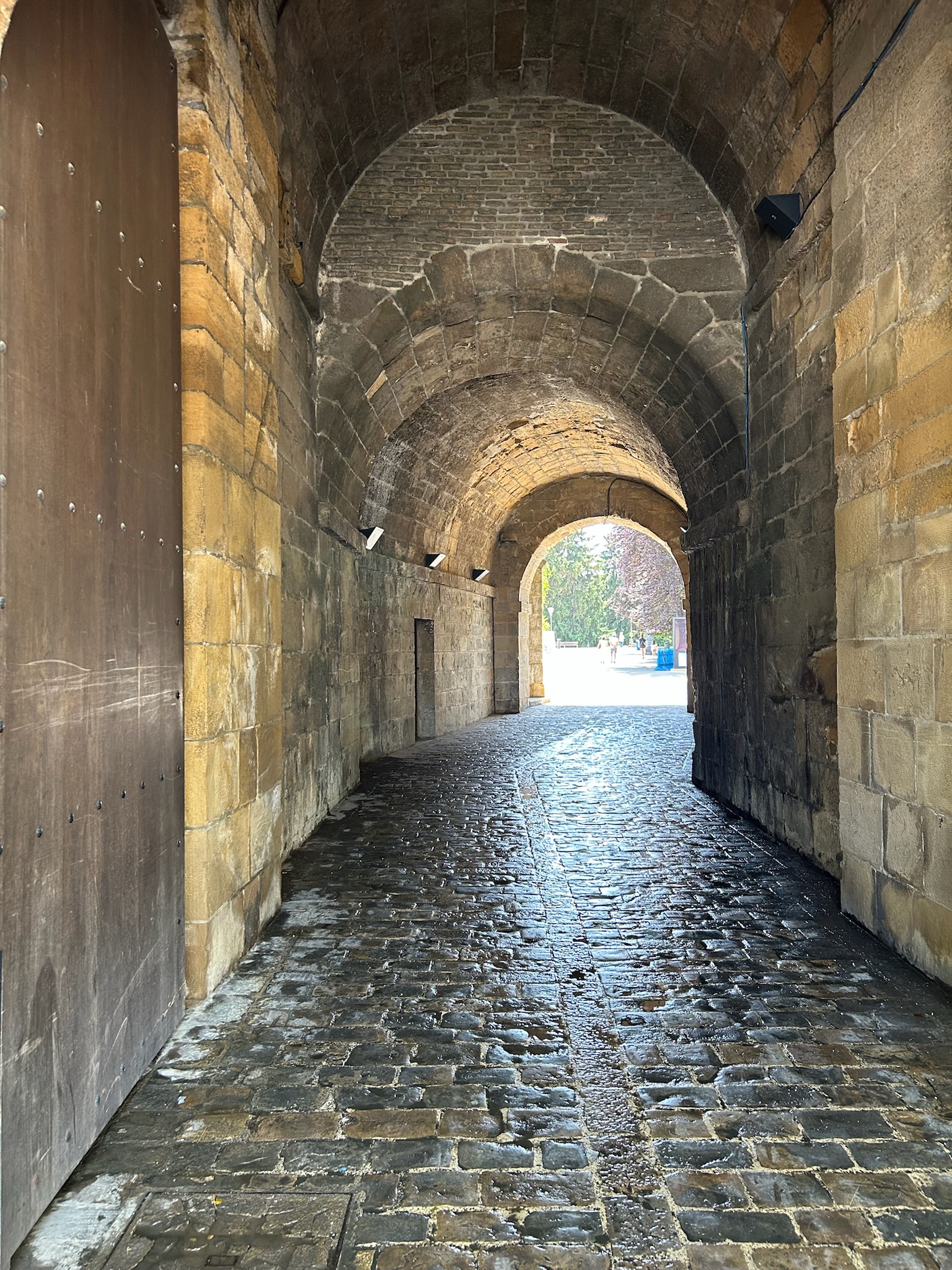
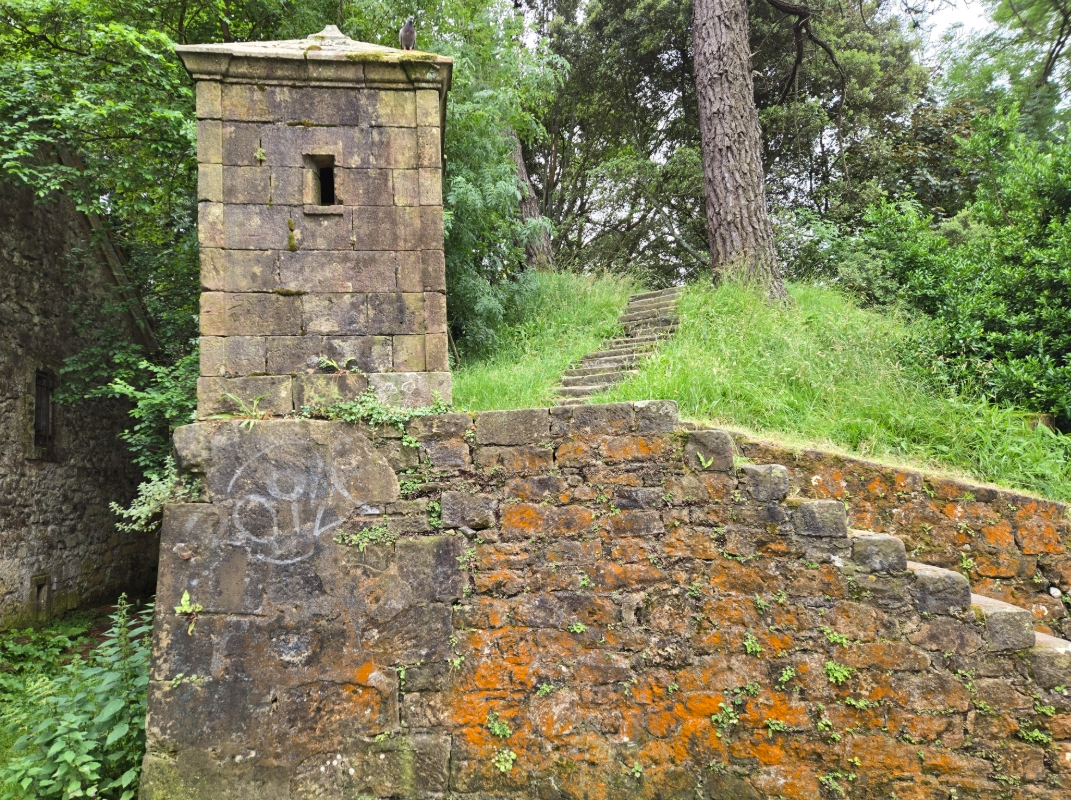
We saw old and ancient architecture, much of which lined our path up and down. At one point we entered through a tunnel staircase to decent, and we had to use phone flashlights! The main event was a conversation as opposed to the typical planned lecture a professor typically tells. Instead, we had a meaningful conversation for several hours at a secluded spot near the top of the hill, where everyone had made themselves comfortable. The topic today was Basque history and political history of the region. This interests me especially since I’ve taken engaging history classes in the past and been intrigued by politics in general.

Cultural Connection

While discussing how the Basque people, a people who with strong independent spirit yet an open social culture fit into the greater calculus. In comparing Basque culture and history to our own, it became an eye opening experience for all of us to see outside our bubbles. We learned about other ways of societal structuring and policy other than those we were used to. Even though some of us had begun to come down with a slight cold, we didn’t let that quell our desire to learn more about the world and it’s people. This part of the experience especially showed me the humanity and complexity of even a small places past and present. After our discussion, we made our ways to a small place with drinks and food, where we relaxed before the end of the day. All in all, the hike and exploration of the Basque cultural and political dynamic enlightened us to an alternative and different way of life than any of us were used to, expand our worldviews drastically. For me, it was quite fun to be able to have such a personal yet relatable conversation!
Farewell Picnic and the Journey Home

Going Home

The sun hadn’t even risen yet, and we checked out of Olarain and headed to the airport in Bilbao. Upon arriving at the airport, we went and got our boarding passes; however, there was a small problem: a friend and I only received one of our boarding passes when everyone else had received two. The people at the help desk told us to worry about the problem in Madrid, so that’s what we did. After saying goodbye to our friends who weren’t on the same flight, we boarded and landed in Madrid, where this small problem would become slightly larger. When we landed in Madrid, we went to a few help desks to find out where to get our boarding passes, and were told we had to leave the airport and re-enter, having to check in and go through security again, resulting in us walking through the Madrid airport for around half of our layover. Throughout our arduous journey to receive our boarding passes, we kept asking ourselves if we would be better off staying in Spain and going back to San Sebastian at this rate. It seemed like the world was trying to keep us there by making us go through all this effort just to get our boarding passes to go home. Eventually, we met back up with our friends and got lunch, and this idea of staying in Spain or coming back later kept persisting. We talked about trying to do other study abroad programs and how much fun our time there was.

The City We Were Leaving

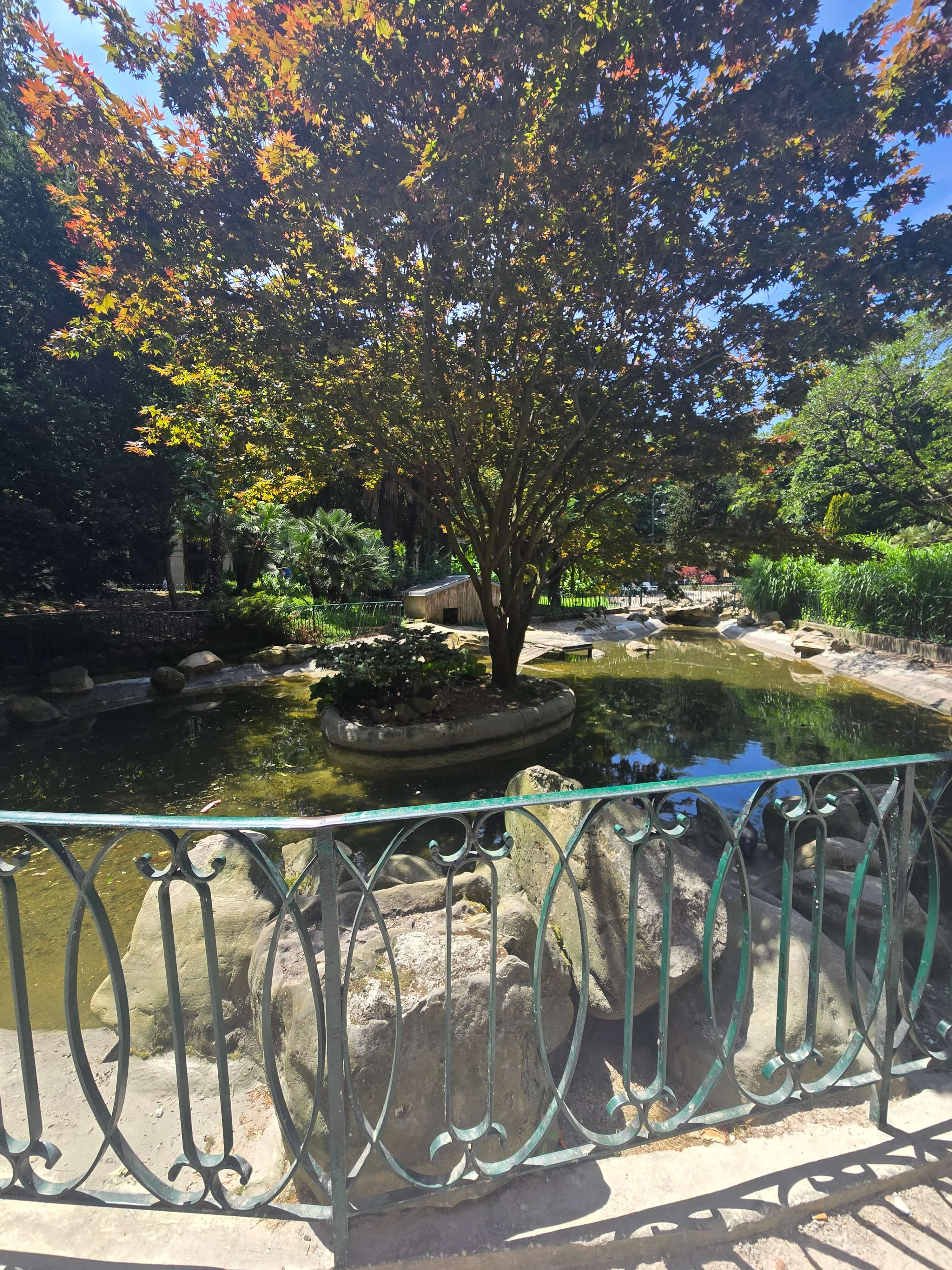
A park in San Sebastian

I don’t think any of us anticipated how much of an impact our time in San Sebastian would have on us. From the get-go, there was something different about San Sebastian. You could turn a random corner and find a little enclave of nature within the city. There would be people everywhere, young and old, spending time with their friends and family, whether they were getting a drink at a bar or taking a walk near the beach. The people and the city itself seemed calmer, like there wasn’t a rush in everything they did. Businesses would open later in the morning and close for lunch, and they wouldn’t even think of being open on Sundays. Being in San Sebastian felt like you could just live life at your own pace and take everything day by day, which is a stark contrast to our lives at home, where it feels like we always have to be doing something productive or we’re wasting time.

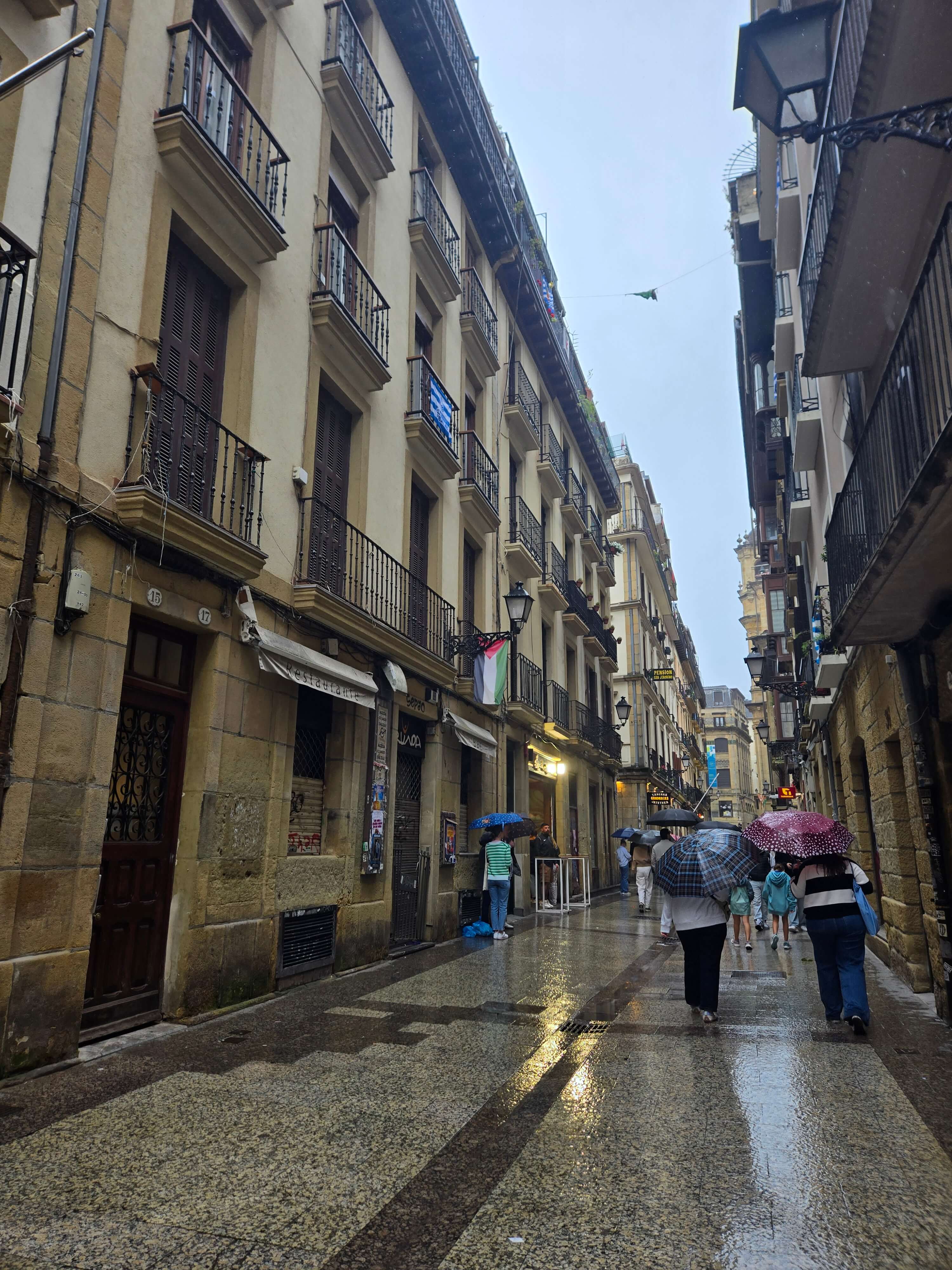
People walking through the Parte Vieja on a rainy day

The Memories We Made

As I’m writing this, I think back to our farewell picnic where we exchanged food and memories, really reflecting on our time in the city: the random streets we’d find ourselves in looking for a place to eat, the beaches we’d see on our way to class, and the gelato we’d share after dinner.  I could’ve never imagined that I would become such close friends with people I met two weeks ago, and for that I am forever grateful to the city of San Sebastian. Whether we were getting caught in the rain looking for gelato, exchanging jokes with each other in our Spanish classes, or playing UNO at night, we were making memories and friends that will last us our whole lives. 

Before I landed in San Sebastian, I was nervous and didn’t really know what to expect. I had read various books about the city itself, giving me an idea of the food and culture, but nothing could really prepare me for the experience I had over the last two weeks. I gained a new sense of independence and tried things I normally would have never thought about. This city has changed me in more ways than one, and I hope to take these lessons with me at home. This trip has forced me outside my comfort zone on more than one occasion and given me a desire to see even more of the world.

Santa Klara Island

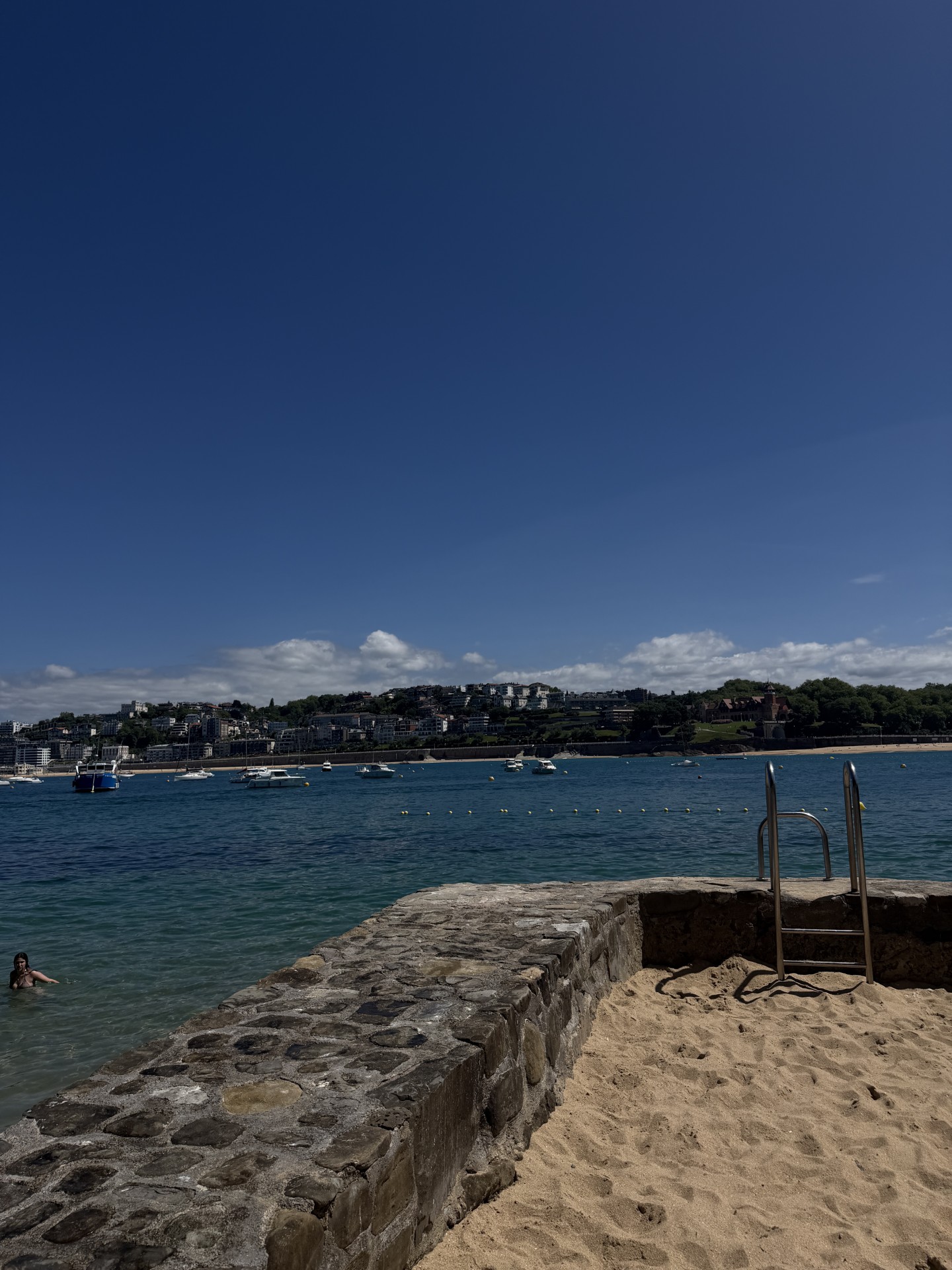
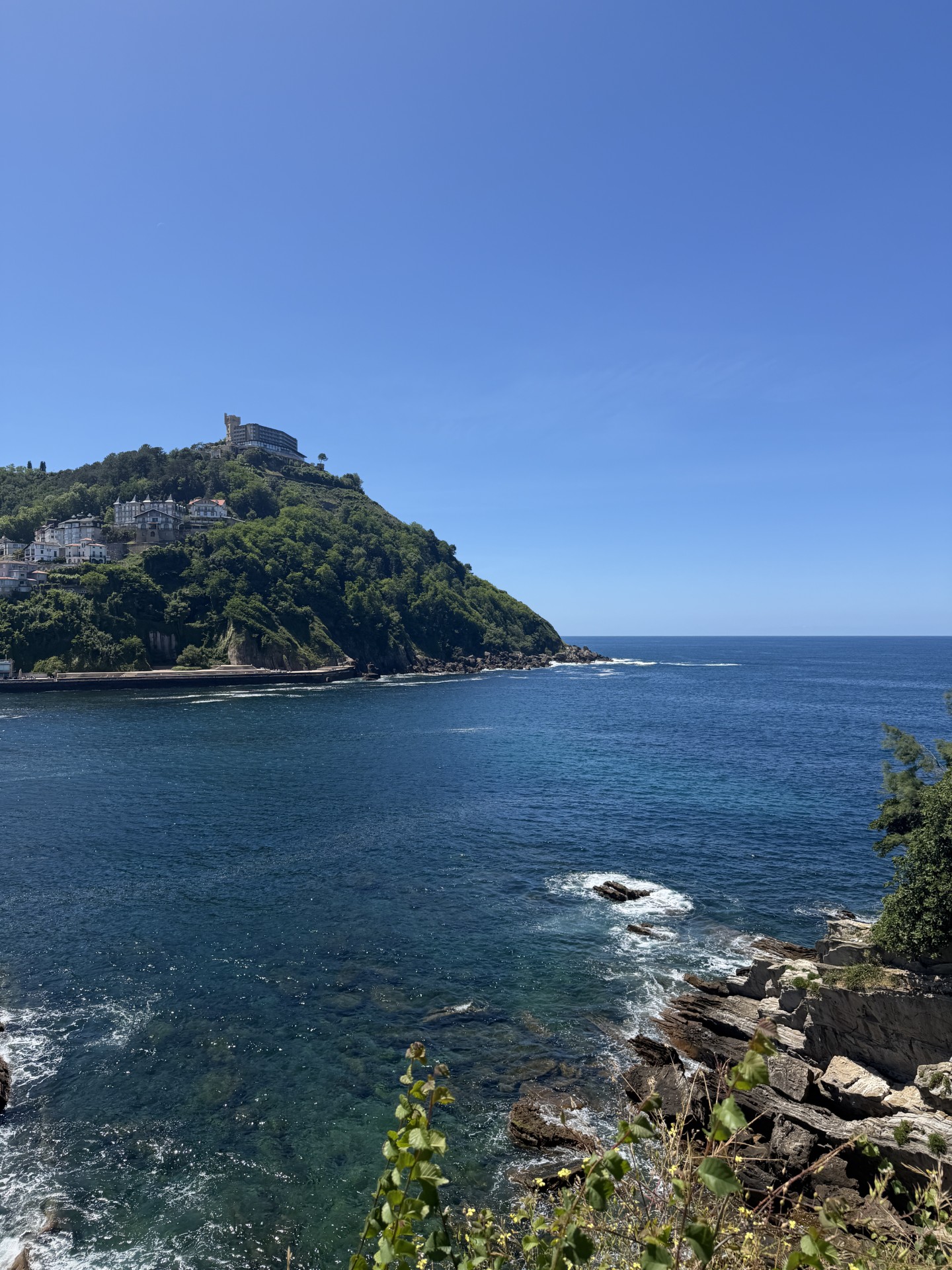
Since day one, the beaches and landscapes of San Sebastián have captivated me. The way the beach, mountains, and city come together so seamlessly makes it feel as if I am looking at a painting that nature carefully created. Yesterday, we had the opportunity to take the ferry and visit Santa Klara island, a small island located between the mountains and the sea. From there, we enjoyed breathtaking views of San Sebastián, with the city, coastline, and endless blue water stretching out before us. In my eyes, it was the perfect way to spend the day.

The ferry ride itself was a memorable experience. Although Santa Klara Island is located only a short distance from the city, being out on the water gave me a completely different perspective of San Sebastián. It was one of those moments that made me stop and appreciate how lucky I am to be studying abroad in such a beautiful place, and reminded me why I was so excited to come here in the first place. 

Once we arrived on the island, we spent time swimming and enjoying the warm weather. Besides spending time in the refreshing water, I took photos of the incredible scenery around us. Being on the island was the perfect way to spend my final 48 hours of my trip, reminiscing about everything we have done during our time abroad, and thinking of the things that we did not get the chance to do, but gave us a motive to want to come back in the future. 

After spending the afternoon on Santa Klara Island, we returned to the city and decided to continue exploring one of the most famous aspects of Basque culture: its food. We planned to go pintxo bar hopping, something that has become a popular activity for both locals and visitors. One thing I have quickly learned about San Sebastián is that food is much more than just a meal. It is an important part of the culture and a way for people to come together and socialize. However, our plans did not go exactly as expected. Because it was a busy evening, many of the bars were packed with people, and we realized that finding space for our group would be difficult. At first, I was disappointed because I had been looking forward to trying pintxos from several different places, and immersing myself in this experience that seems to be so typical and important for locals. Looking back, though, the change of plans ended up making the evening even better.

Instead of continuing our search for pintxo bars, we decided to visit Konbini 109, a restaurant that had been recommended by Marti Buckley. The day before, we got the chance to meet her, and she mentioned how this restaurant was a hidden gem and really played a part in her falling in love with Basque cuisine. We trusted her recommendation and the restaurant did not disappoint, and it actually ended up becoming the highlight of the day. From the moment we walked in, the restaurant had a warm and relaxed atmosphere that made us feel comfortable right away. Surprisingly, we were the only customers there for most of the evening, which made the experience feel even more special and personal. The staff were incredibly welcoming, attentive, and kind. They took the time to answer our questions, make recommendations, explain every dish and made sure that we were enjoying our time at their establishment. Their hospitality made the entire experience even more memorable. 

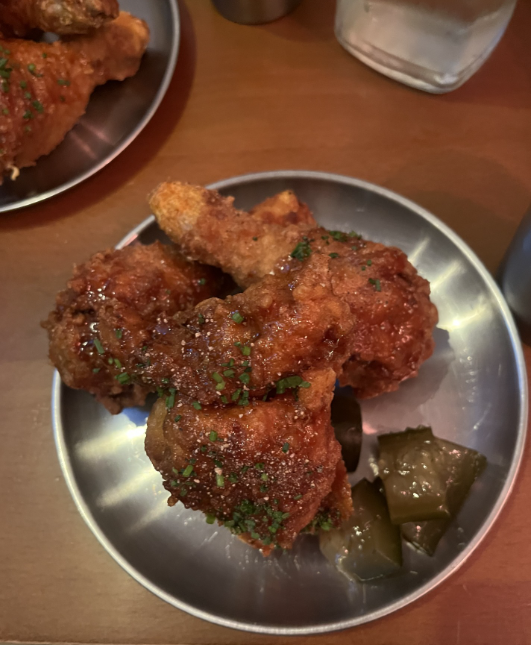
Of course, the food was absolutely delicious. I tried the fried chicken, a dish that reflected the quality of the place and how special and meticulous it was prepared. We found ourselves enjoying every bite instead of rushing through the meal, and repeating how we wished that we found out about this place earlier, because we would’ve wished to come more times. Even something as simple as the water deserves a mention. I know it sounds dramatic, but it was genuinely the best water I have had since arriving in Spain. Whether it was the food, the atmosphere, or that amazing water, we spent hours talking and laughing together, to the point that tears were rolling down my face. Even the bathroom had its own personality, with music and lighting that made it feel more like a small nightclub than a restaurant restroom. The entire experience perfectly captured what I have come to appreciate about dining in San Sebastian, good food, good company, and taking the time to enjoy the moment rather than hurrying on to the next thing. 

Experiences like this have taught me that some of the best moments while traveling happen when things do not go according to plan. What began as a simple trip to Santa Klara Island became one of my favorite days so far in San Sebastián. Between the beautiful scenery, the time spent with friends, and the amazing food, the day perfectly captured what I have come to love about this city. San Sebastián continues to surprise me every day, and I am definitely not ready to say goodbye.

Meeting Marti Buckley

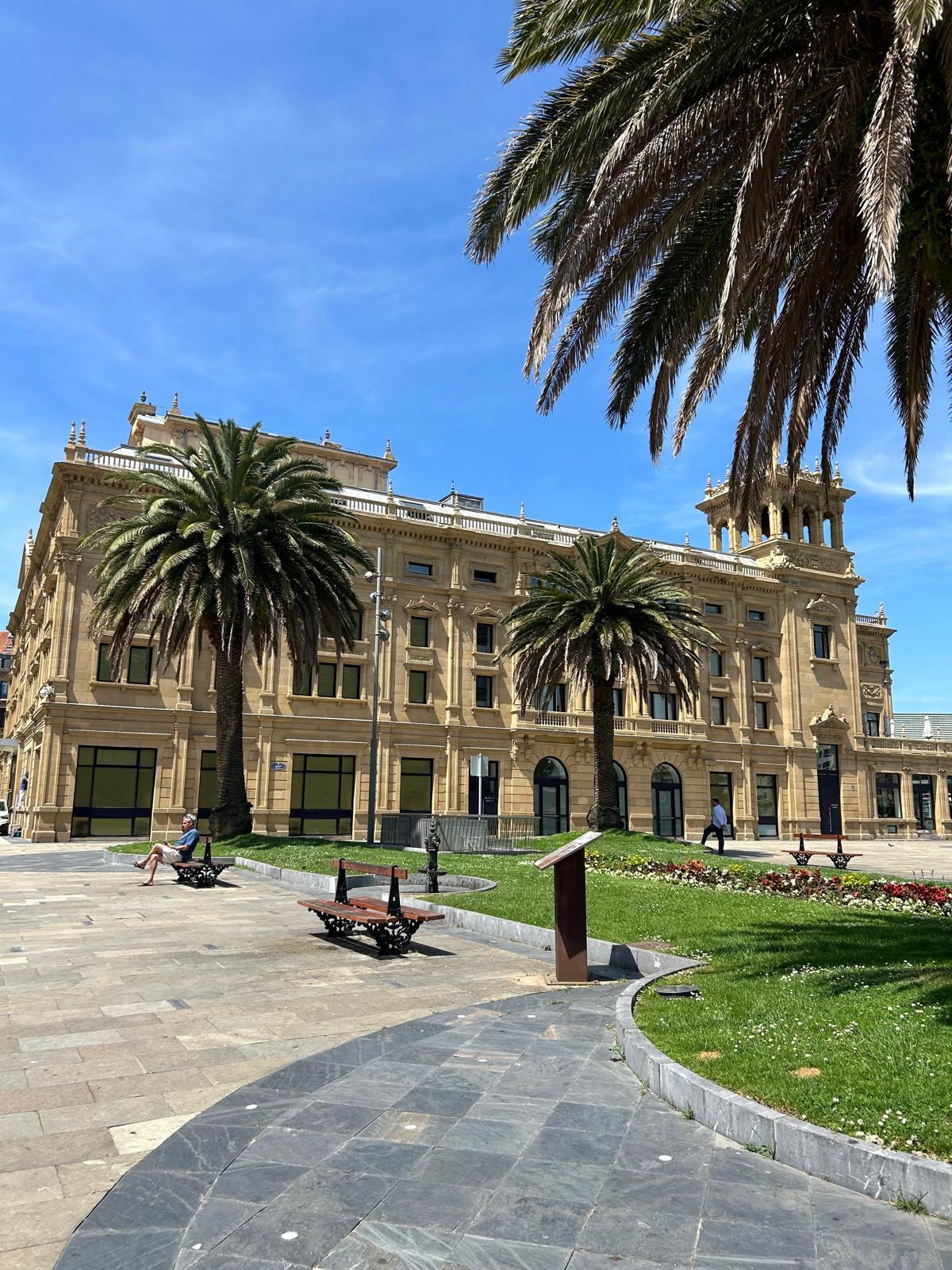
After a week and a half of studying abroad in the beautiful city of San Sebastian, we were given the opportunity to speak directly to one of the people that made the city, and the Basque country in general, so intriguing and captivating for college students like us, Marti Buckley. We met Marti in the afternoon next to Hotel Maria Cristina, a hotel famous in San Sebastian for housing famous celebrities such as Jake Gyllenhaal and others. Unlike those famous celebrities, Marit was incredibly humble and down to earth. She took time out of her incredibly busy schedule to meet with us and give quite an inspirational talk about her experience ingratiating herself in a completely different culture. Marti was originally born in Birmingham and was able to experience studying abroad just like us many years ago. In our talk, she shared her experience of studying abroad at LSU and the long and unpredictable path to becoming a published author and a celebrity in the Basque culture.

Marti shared many different experiences in her life from accidently becoming a line cook to her struggle with pursuing her passion or listening to her parents. She told us the story of how she was working in a restaurant for free and eventually became a line cook out of nervousness to say no to coming back to the restaurant. While this story may sound brazen she went on to tell us how the head cook at that restaurant was the exact person that later got her a book deal and led her to becoming a published author. This made me realize that there is great power in connections. You never know exactly who you’re speaking to and what they can do for you. The friends I have made on this trip may go on to be incredibly successful and making these important connections now will show that studying abroad can impact you for a lifetime. However, Marti also gave us some incredible advice that I believe can lead everyone to success.

Marti shared with us the entire story of how she became a published author. The long road to a book deal and the uncertainty that came with living in Spain. Ultimately though, the bottom line was this: taking small steps in the right direction will most likely lead you to success. When she first came to Spain, she had no idea that she would make a life there. There was no exact plan to write books about pintxos or Basque cuisine. Rather there was passion. Over the course of many years, Marti studied the culture a little bit everyday and that ultimately led to her to create her books. Although it was against the advice of her parents, Marti pursued her passion by taking small steps towards a big goal every single day. Marti’s experience mirrored mine in San Sebastian. When I first got here I was terrified of the new things I was going to experience. I’ve never been good at Spanish and I took classes for 3 hours the past two weeks. I never thought about the fact I was going to be taking 42 hours of classes but rather I thought about learning a little bit everyday and now I can conversate—albeit very basically—in Spanish. I also did not think I would like any of the food here. I expected to avoid all types of new food and stick to what I know. Instead of that, I tried a few new things everyday and while I still don’t enjoy some of the food, there are many new things that I like. In the end, the conversation with Marti was incredibly moving and the advice she gave is certain to change the mindsets of me and my peers.

Talai Berri Winery: Basque agricultural traditions

Ever since arriving in San Sebastian, one thing I noticed is how common it is to see people drinking wine throughout the day. Whether people are enjoying a meal, sitting outside at a bar, cafe, or spending time with friends and family, wine seemed to be a normal part of everyday life. Coming from somewhere where I do not really see that, it was interesting to observe how deeply connected wine is to the culture here.

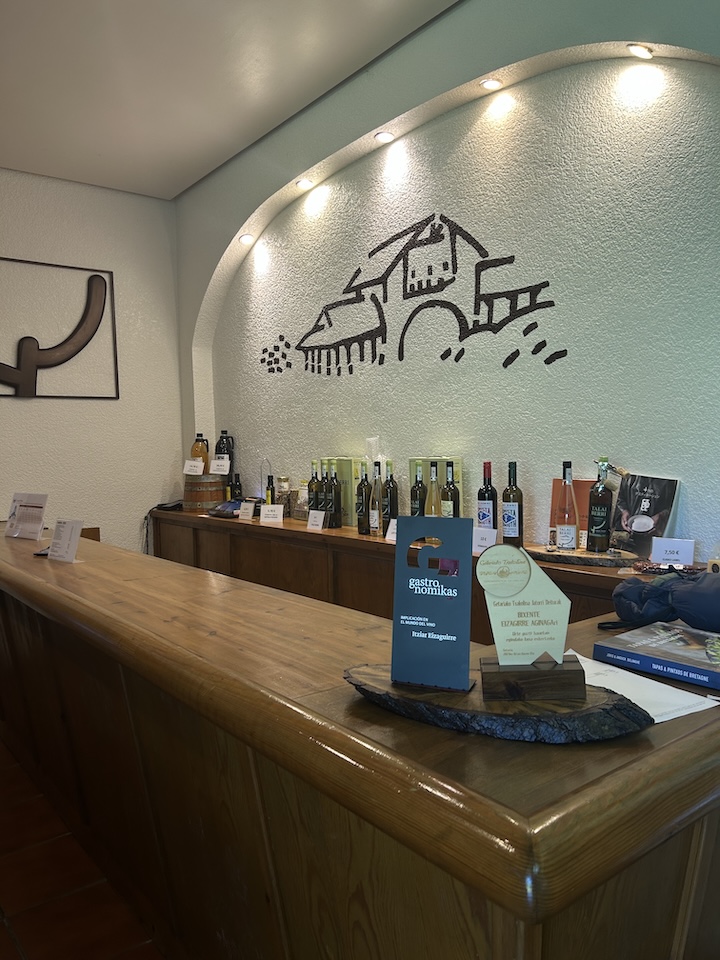
One of the highlights of the week was our visit to Talai Berri Winery. Going into the experience, I was excited because it was something completely different from what I would normally do. I am not really a wine drinker, and honestly it has never really brought an interest to me. However, I knew there would be non-alcoholic options, which made me more open to the experience. I was excited to learn more about the winery and seeing how the production is.

Alongside our Professor, Julian and our guide, we learned about the history behind Talai Berri and how the winery came to be. What started as a small family farm slowly grew over time into the winery it is today. It originally began with a family working the land and cultivating grapes, and over time it developed into a more established winery as their production grew. Even though it has expanded, it still maintains a strong connection to its family roots and agricultural tradition.

An interesting part of the visit was walking through the actual production area of the winery. The guide walked us into a room where the win travels through long connected tubes that run between the different rooms, moving through each stage of production. Right after, we steped into a very chilly room where large stainless steel tanks were, showing where the wine was processed and fermented. It was interesting to see everything close up, firsthand rather than just hearing about it. The tanks played a role in controlling the fermentation process, and how carefully everything has to be monitored to make sure the wine develops correctly. Seeing the scale of the equipment made me realize how technical and precise wine making actually is.

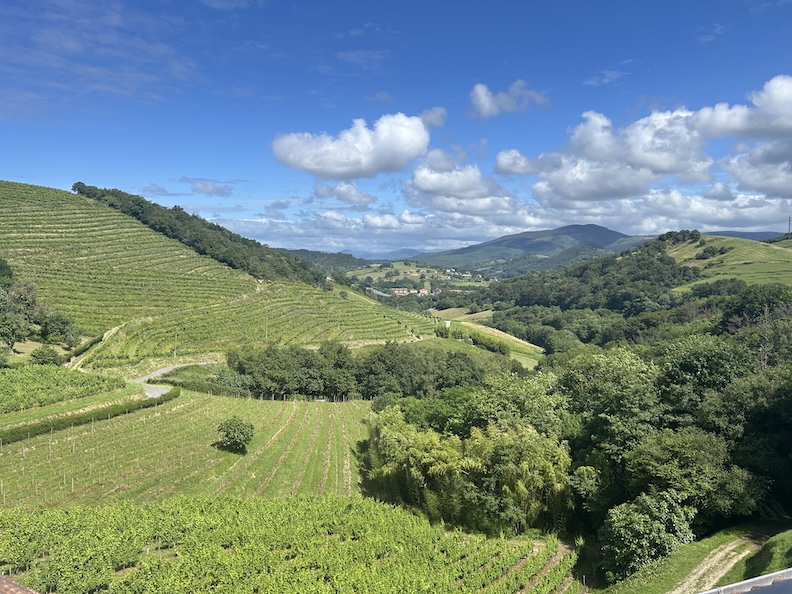
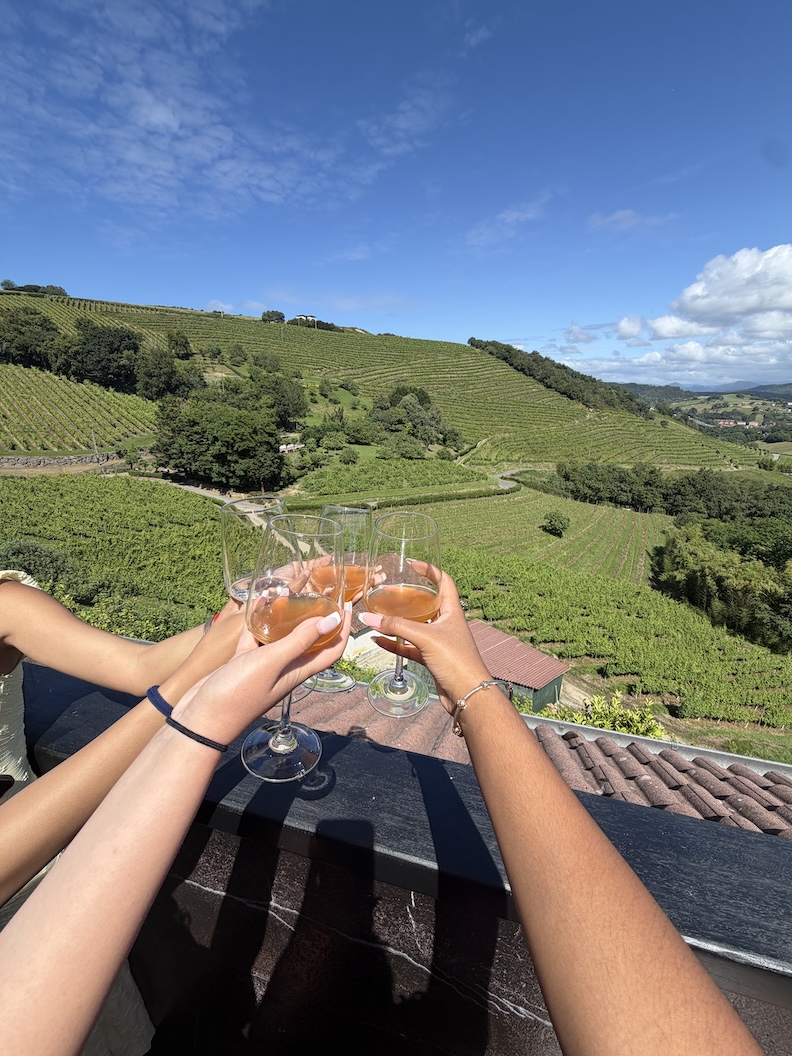
Before the tasting started, we stepped out onto a rooftop balcony that overlooked a beauty of a landscape of the vineyards. We could see rows of grapevines stretching across the hills, and Professor Julian explained how they are planted according to the slope of the land. This helps with rainwater runoff because the water will naturally flow downhill instead of collecting in one area.

The view itself made the experience even more memorable. Not only could we see the vineyards, but we could also see the surrounding countryside with mountains and even people paragliding in the distance, which looked super fun. It was one of those moments where I just stopped and appreciated how beautiful it everything around us was.

After taking in the views, we gathered around a table with several different wines. Some students sampled the regular wines, which included both lighter and darker varieties, while others, including myself, tried the non-alcoholic option. I was surprised by how much I enjoyed it. It tasted really refreshing and incredibly fresh, almost like it had just been made. It honestly put me in a better mood, and I was glad that I had not pushed aside the experience simply because I don’t normally drink wine. Other students who tried the regular wines seemed to enjoy them as well, as they were refilling their glasses.

Along with the wine tasting, we were also able to sample two different types of vinegar produced by the winery. We paired them with pieces of bread, which made for a simple, enjoyable snack. I had never really thought much about vinegar before or would normally snack with it, but it actually tasted very nice. It was interesting to learn that the winery produced more than just wine.

Overall, I am really glad that I kept an open mind and embraced the experience. Visiting a winery is not something I would normally choose to do, but it was a very fun experience. It reminded me that studying abroad is not just about visiting new places, but also stepping outside of your comfort zone and experiencing different cultures with an open mind. Sometimes the experiences you least expect turn out to be the most memorable.

After leaving the winery, we stopped that a small restaurant that overlooked the land and ocean. Although we did not order anything, the view alone made the stop worth it. Seeing the ocean, and the beautiful landscape all together was the perfect way to end of the day.

Weekend Excursion

I never thought I would meet friends that would last a lifetime in a foreign country on a study abroad trip. No matter what plans we have or what goes wrong we still have the best time because the only thing that matters is the people with whom you are with.

When we arrived in San Sebastián, we had no idea how to use public transit but soon after we learned together and were confident about getting on buses and knowing that we would arrive at our destination. We gained an independence that we did not have before arriving and this was a liberating experience.

One thing about San Sebastián is that you will need a siesta. Siestas were the best thing to ever happen to us. After a long day of class or after a big lunch, either way, it is going to be renewing and prepare you for the long night ahead. If you have any plans of going out at night like us then a siesta is definitely a necessity.

The city of of San Sebastián is beautiful but the surrounding cities which people may not know much of can be just as beautiful if not more. Pamplona, the city where the fiesta of San Fermín happens every year. This beautiful city is where the infamous running of the bulls and week long party happens. During fiesta time the city is filled with people partying all day and night but during the off season it is quiet and peaceful. Many people visit the city during fiesta but miss the peacefulness of the city during other months of the year. There are beautiful parks, kind people, and lots to do here. Although it may not be as busy or well known as other cities surrounding it, it is a place where people should visit sometime in their life.

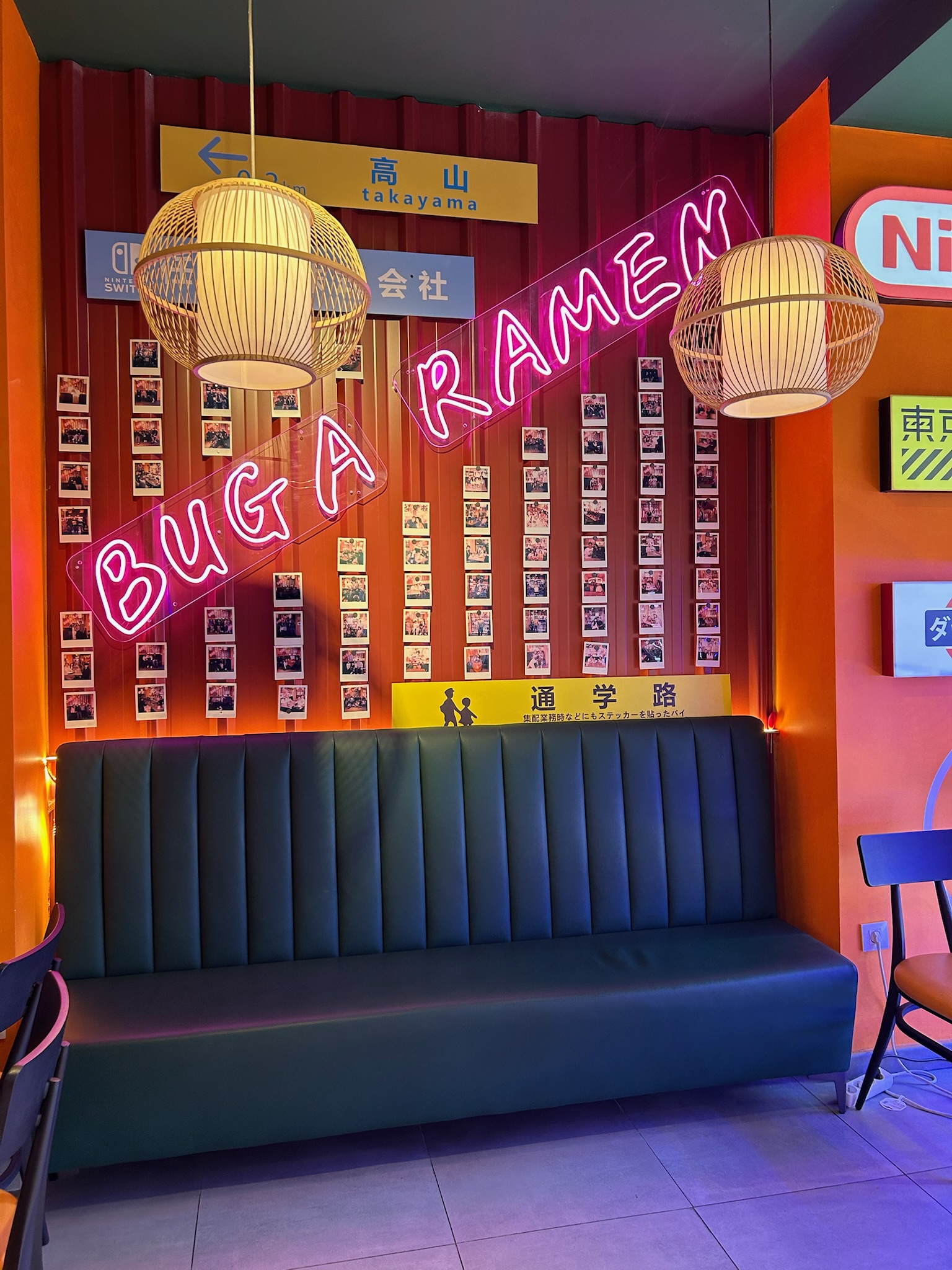
During our short time in Pamplona, we walked through the city, admiring the beautiful landscape and architecture. We decided to save a few dollars and buy ingredients for pasta in the supermarket. Then we arrived at the airbnb which was the perfect little room for the number of people in our group. After arriving, we decided to make pasta because we were all pretty hungry from our travels and cooking together was a blast. Then we went off on our journey through the night with even more pasta after we got back which was the highlight of our weekend. The next day we had a delicious bowl of ramen which was the cherry on top to our amazing weekend. 

After leaving the beautiful city of Pamplona, we returned to San Sebastián and, of course, went straight to the beach. It was the perfect beach day of many here in this beautiful city. We soaked up the sun and enjoyed an afternoon siesta to end the weekend.

During our free weekend we learned so much about the people of Spain and about ourselves. We also grew closer to the other students in our group and gained valuable life skills to be more independent adults.

Free Friday

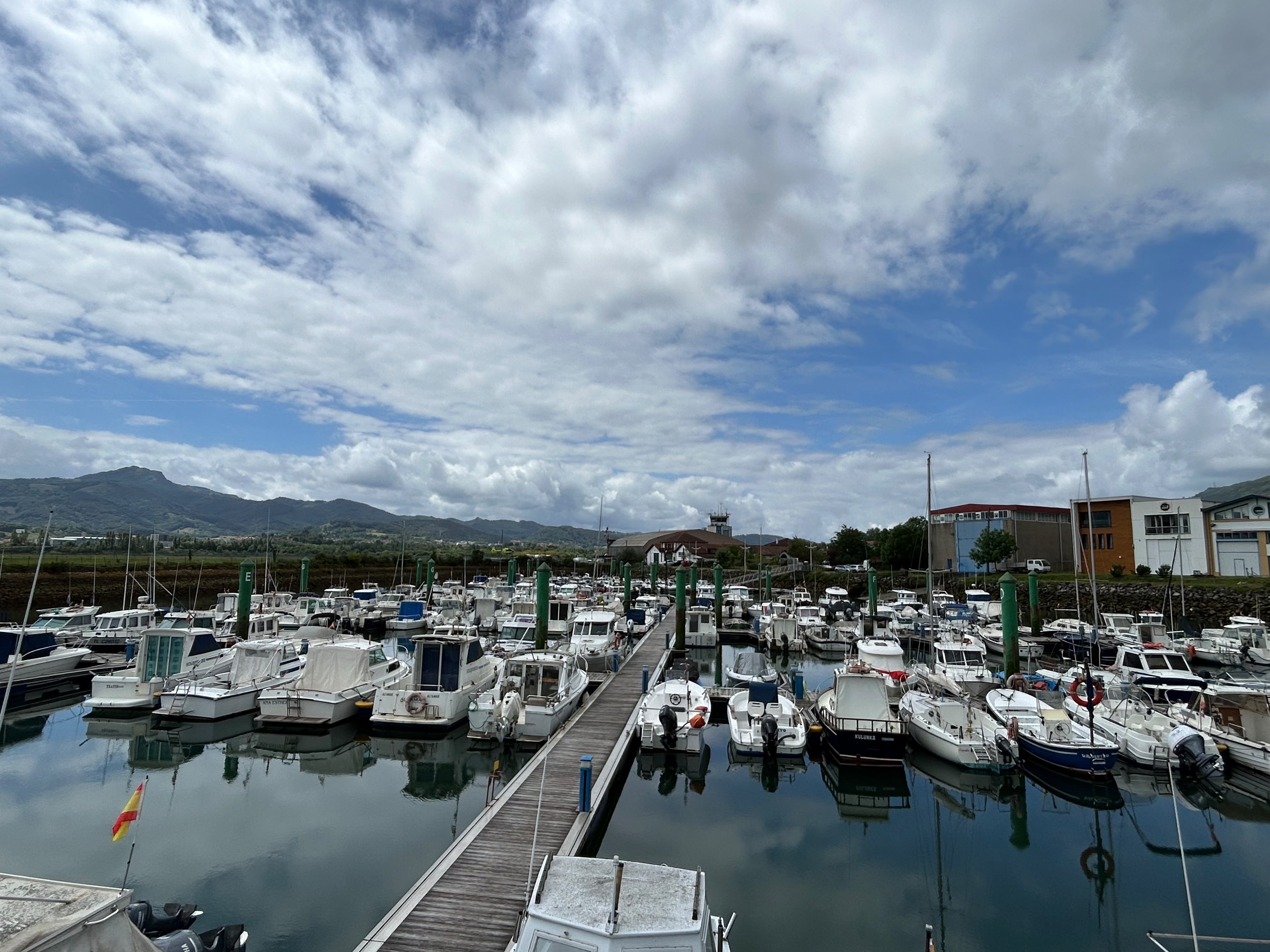
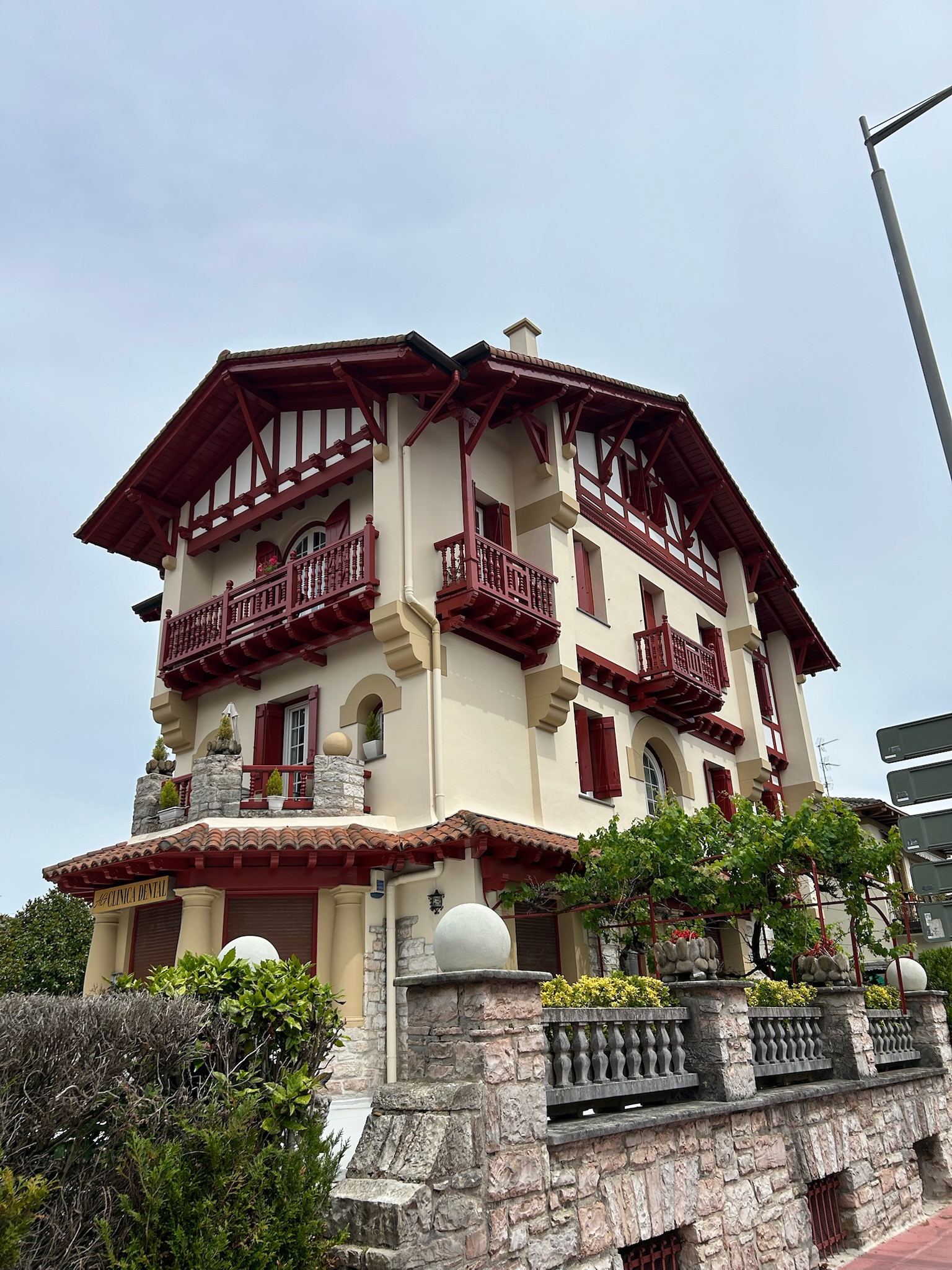
My main goal of the day was to travel to Biarritz, France, but instead, my group and I ended up in Hondarribia, Spain, thirty minutes away from our hotel due to public transportation confusion. I will admit I was aggravated at first, but the beautiful views and architecture softened the blow, but what truly made it better was being in a ‘strange’ place with all my friends and us slowly but surely finding our way. I do not know how many cafes/restaurants we walked up to only to be frozen by the price. After thirty minutes of wandering, we finally saw it: a Mexican restaurant– I do not think I have ever run into an alley so fast. I looked up and down the street and saw nothing but a tiny kabob place at the end of the road. So that is where we ended up. Waking up early, after only getting three hours of sleep, missing 2 buses and 2 stops, resulted in a pretty view and less than a 10-dollar meal at a tiny kabob shop in an ally with a freaky pigeon at my feet.

The Mariana

We decided to stroll across the marina and saw locals fishing, dogs lying with their owners, and beautiful boats sailing across the ocean. You could tell the atmosphere compared to San Sebastián was different but in a good way. The atmosphere was calmer and more relaxed. The people did not seem in as much of a rush as from what I have seen in the city. The houses were bright and colorful, displaying individuality and character.

We eventually made it back to San Sebastián after a tiny but more bus confusion, but we did as a team, and that is what mattered. I learned that patience is key and that sometimes plans do not work out, and you need to ‘go with the flow.’ On the way to the first bus stop (that we missed), there was a graffitied message hidden behind the trees and said in bright pink letters to “Enjoy the silence,” which, I will admit, took me a while to understand, but in the quiet town of Hondarribia, I understood the meaning behind it: to not only enjoy the actual silence but take note of the peaceful environment that others call home. Without the artificial sounds of the city, I was able to completely focus on the nature and my time with my new friends.

Bataplán

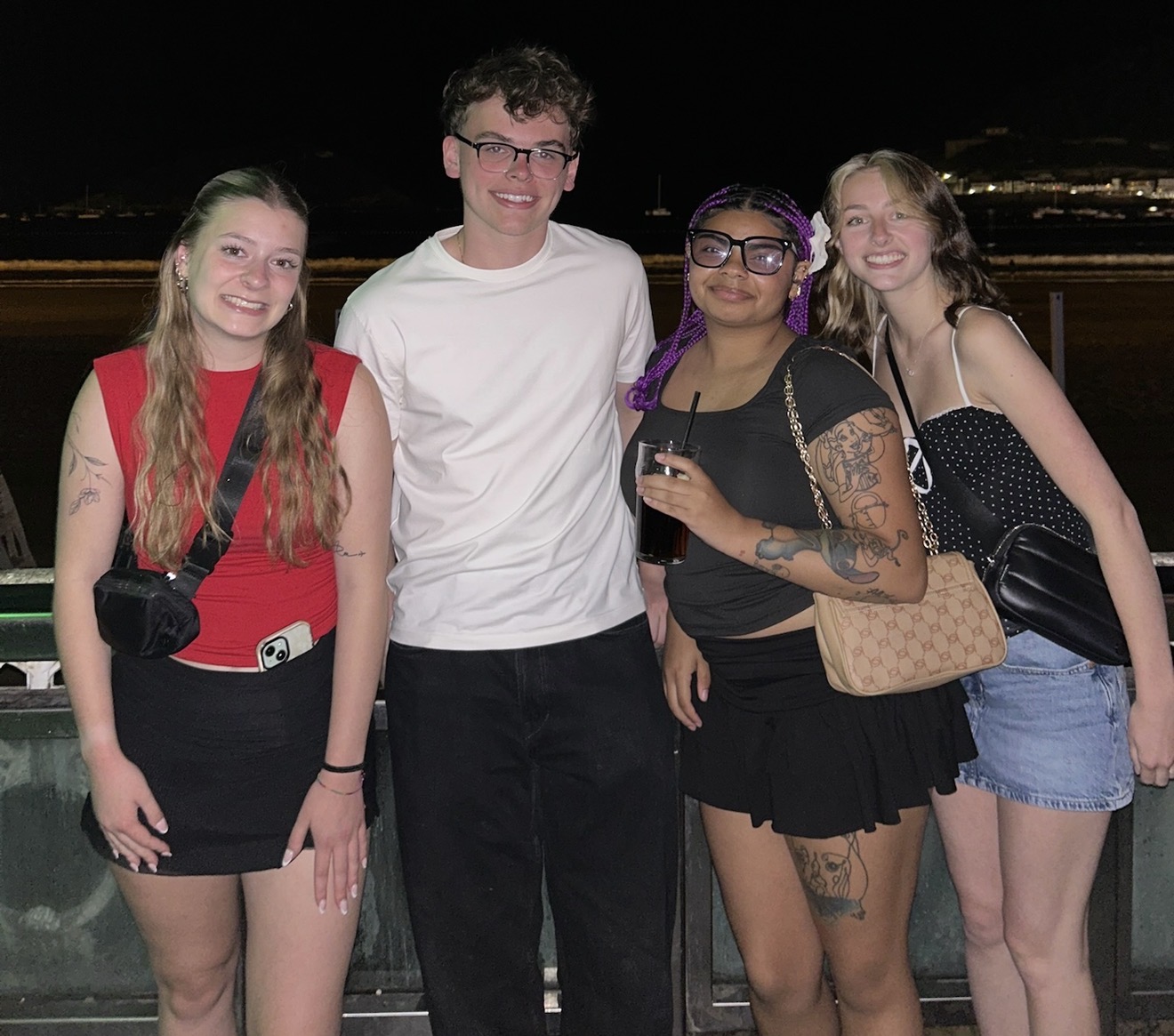
Even though my plans didn’t work out, I know in my heart that no matter where I am, as long as you’re with friends (no matter how recent they are), you can and will have the time of your life.

I’ll never be in Spain at 19 getting lost with a group of people I just met (to whom I now consider my close friends), and therefore, I have no regrets and would do it all over again!

The End!

Pintxo Tour of San Sebastián: The Gros Neighborhood

Pintxos are the staple food of the Basque Country. They are small, flavorful creations sitting in the glass display cases of bars that you can’t help but marvel at as you pass through the streets of San Sebastián. Unlike tapas, which are often served with a drink as free appetizers, pintxos are the main highlight and the pride of a bar; they are individually crafted, unique to each bar and restaurant aside from a few classic recipes, and are a representation of Basque culinary excellence. 

For the first couple of days of the study abroad, we explored some of the bars in the city on our own and ordered pintxos ourselves. While the pintxos we ate on our own were tasty, we were largely trapped behind a language barrier. We would go to bars with English menus or simply chose pintxos that were already in the glass displays so that we could point to them. While we enjoyed trying those pintxos, they didn’t quite satisfy our curiosities: What would locals choose to eat? Which bars would locals go to? What are we missing out on? For this reason, one of the events I was most looking forward to during this study abroad was the pintxos tasting tour. Professor Zabalbeascoa, who is of Basque descent and is familiar with the language and culture, gave us an authentic, informative, and delicious tour of some of the best bars in the Gros neighborhood of San Sebastián. He emphasized that people hesitate to order pintxos that look or sound uninteresting or too simple, but those are often some of the best ones that they are missing out on. Prepared with a try-it-all mentality and raincoats (it was seriously raining!), we set out to our first location. 

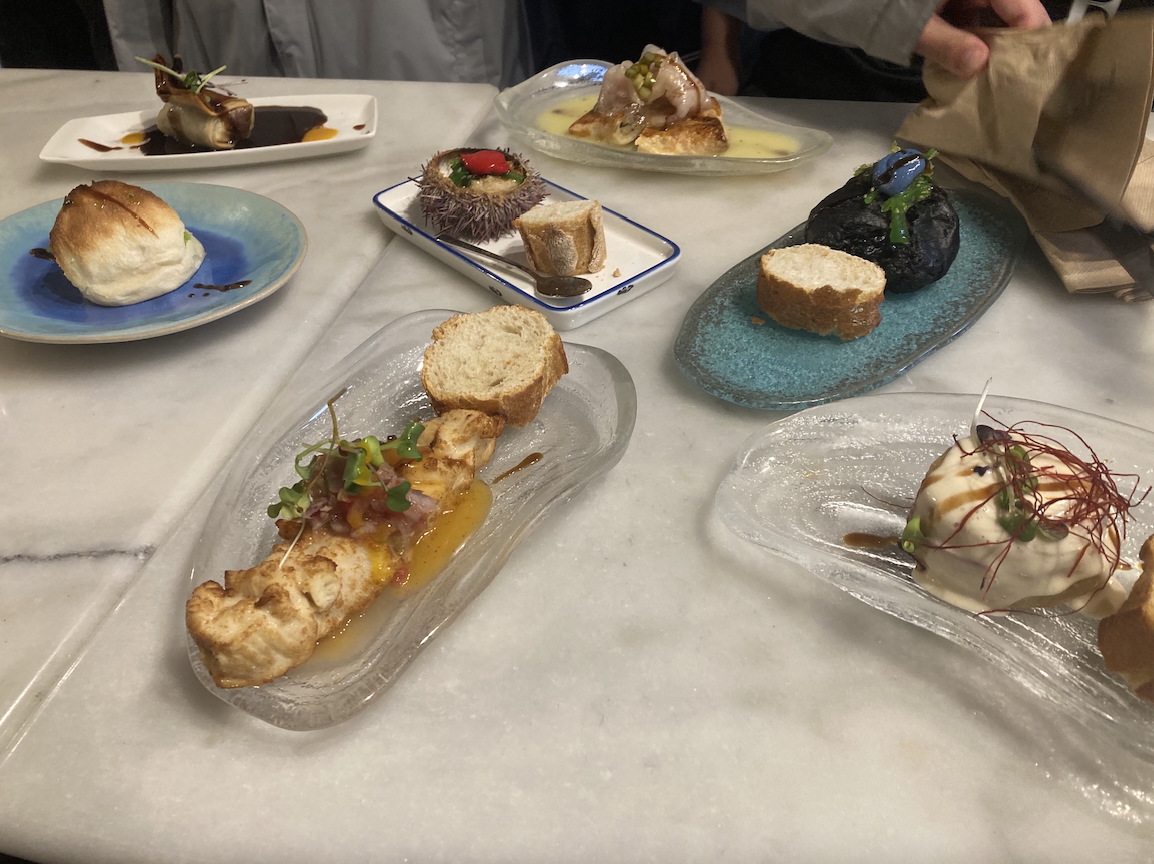
We started at Eguzki Bistro Bar. The majority of the pintxos we tried throughout our tour were seafood, and this bar had several seafood dishes. Something I had never tried before was squid, and one of the pintxos was squid in its own ink, pictured in the image as rightmost in the center row. Although I wasn’t sure what to expect, I really loved it. The ink was like black foam around the squid, soft and deliciously chewy, almost like a bun, and the squid itself added a delicate crunch to each bite. The pintxos were so varied and flavorful. Each one of us had a different favorite, and we all agreed that they were unlike anything we had eaten before. 

Pintxos at Eguzki Bistro Bar demonstrate the variety of pintxos and the craftsmanship that goes into making them. 

Next, we went to Bar Bergara, an award-winning restaurant. Here, we tried both hot and cold pintxos. Cold pintxos are the ones sitting in the glass displays at the front of the bar. They are already prepared and ready to be eaten. Hot pintxos, on the other hand, are made in the kitchen when you order them and often have more intricate preparation and presentation. Although different, both are delicious and show the bars’ unique creations. 

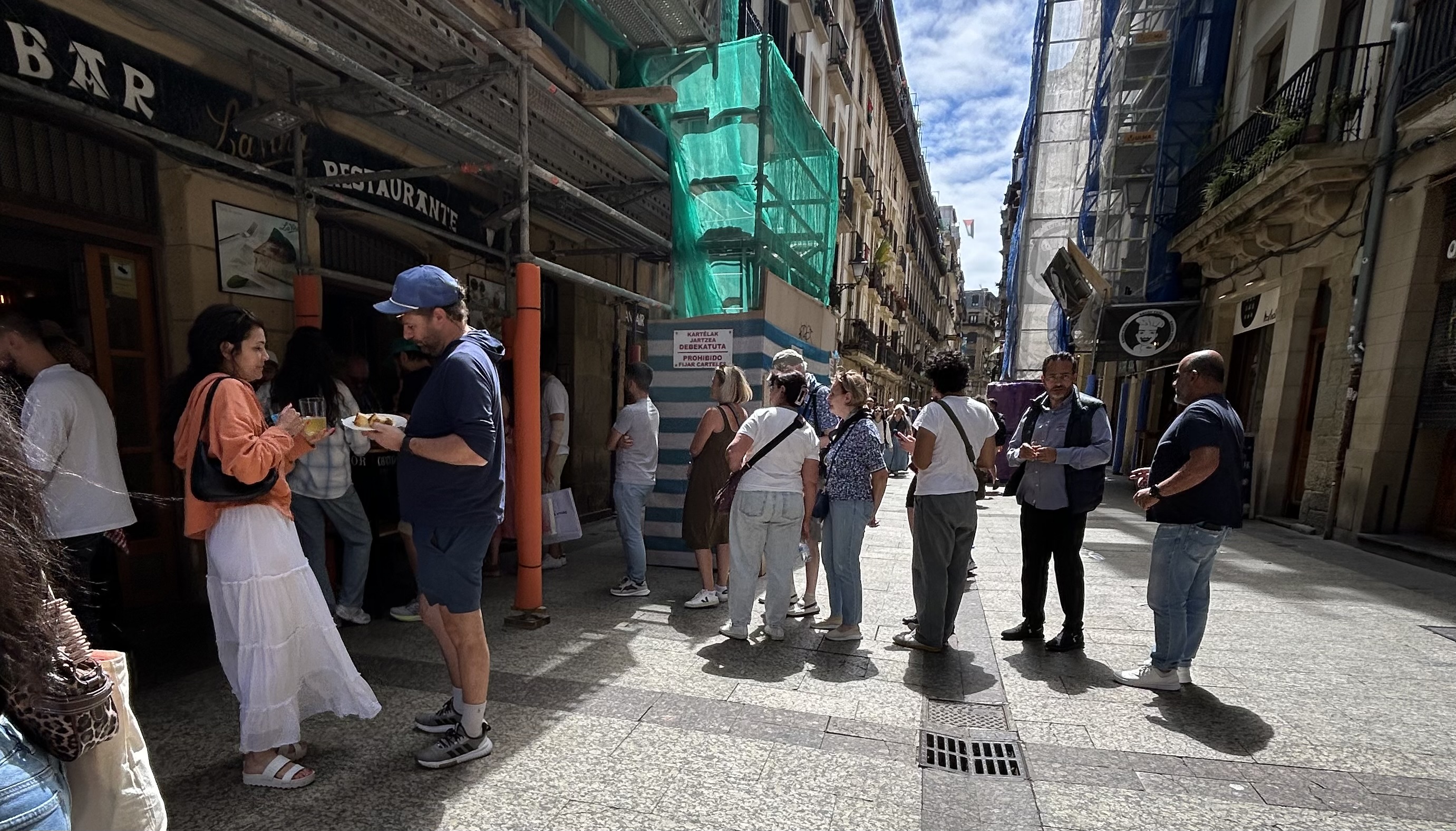
One of the locations we passed by was the road along which the traditional bar-hopping way of eating pintxos was born, called Zabaleta Kalea, or Zabaleta Street, as Professor Zabalbeascoa explained. It has a group of restaurants whose owners tried to bring in business during Spain’s Great Recession by offering a drink and a pintxo for around two euros while limiting every person’s order to that one drink and pintxo. This encouraged customers to keep moving throughout the other restaurants to get their fill of pintxos. They would move down the rows of restaurants, bar-hopping from place to place, which caught on and become the traditional Basque way of eating pintxos. 

Zabaleta Street, where pintxo bar-hopping was born. 

We tried several other pinxto locations, such as a tortilla place, a place with jamón ibérico and octopus, and we finished off the tour with gelato. These dishes were delicious as well, and they also exist outside of the Basque country as Spanish cuisine in general. 

I enjoy trying new things, especially food, and having the opportunity to eat such unique dishes that I would not have discovered on my own was incredible. I tried so many new flavors, and I absolutely loved them, even if I felt hesitant about eating some of them at first. The mentality behind trying pintxos can be applied in your day-to-day life as well: even if you are nervous or uncertain, it’s worth it to try something new. This tour encouraged me to continue studying Spanish and even some Basque, as understanding the language is a key aspect of understanding a culture and society, and it also allows you to engage with locals and their craft in a way that wouldn’t be possible otherwise. I started the study abroad shy and a little hesitant about being in an unfamiliar place, but the more we explore and immersive ourselves in the culture and the language, the more inspired I feel to keep learning and keep interacting with the unique culture and culinary traditions of not only this region, but the world. 

Pintxo Tour of San Sebastián

“Try new things” is what I have to remind myself while being on this trip to San Sebastian. The Pintxo tour, specifically, is coming from an interesting perspective, because I haven’t enjoyed seafood a day in my life. I came on this trip hoping to gain something from it, and this was by far the biggest surprise moment of the trip for me because not only did I eat all the food that was offered to me without fear, but I ended up really liking everything I had the opportunity to try. Despite this, the pintxo tour was most enjoyable because of the atmosphere that surrounded it. People line up for these places, all down the street, and sometimes around the block if you go at the right time.

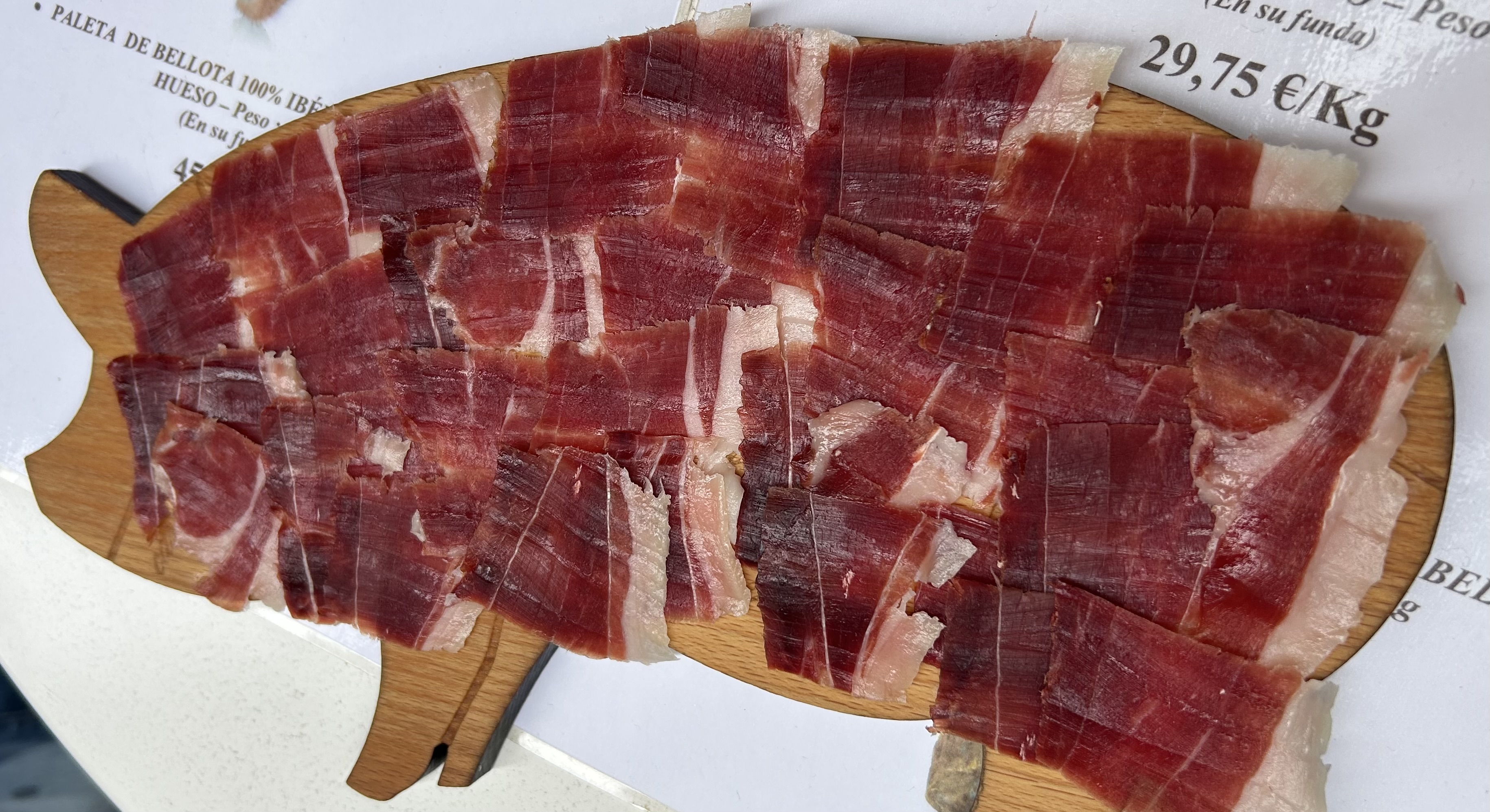
Seeing how eager people were to eat these bite-sized pintxos shows how delicious these simple dishes can be. You go in, find a spot near the bar, and order the pintxo already displayed in front of you. You can get it with a drink or without, and simply leave the plate when you’re finished. In every bar we visited on this tour, the people were friendly, the bars were lively, and the food was incredible. We started off with a classic, “The Hilda”, which was a salty anchovy on a toothpick, combined with small green peppers and an olive. This pintxo was one that I was most afraid of because it is so obviously a fish, but I was pleasantly surprised when I took my bite of the hilda and really enjoyed it. The texture and the combination of flavors are an incredible combination for something so simple. We then went on to taste several other pintxos. Everything from the classic Jamón Iberico to goat cheese and pig’s ear, octopus and calamari, and even black pudding and salt cod. Each of these delicate dishes had such a unique and distinct flavor that it can be seen as different than traditional seafood or pork. Food is treated with such value here in the Basque Country, and that is part of what makes the ability to try these foods so special.

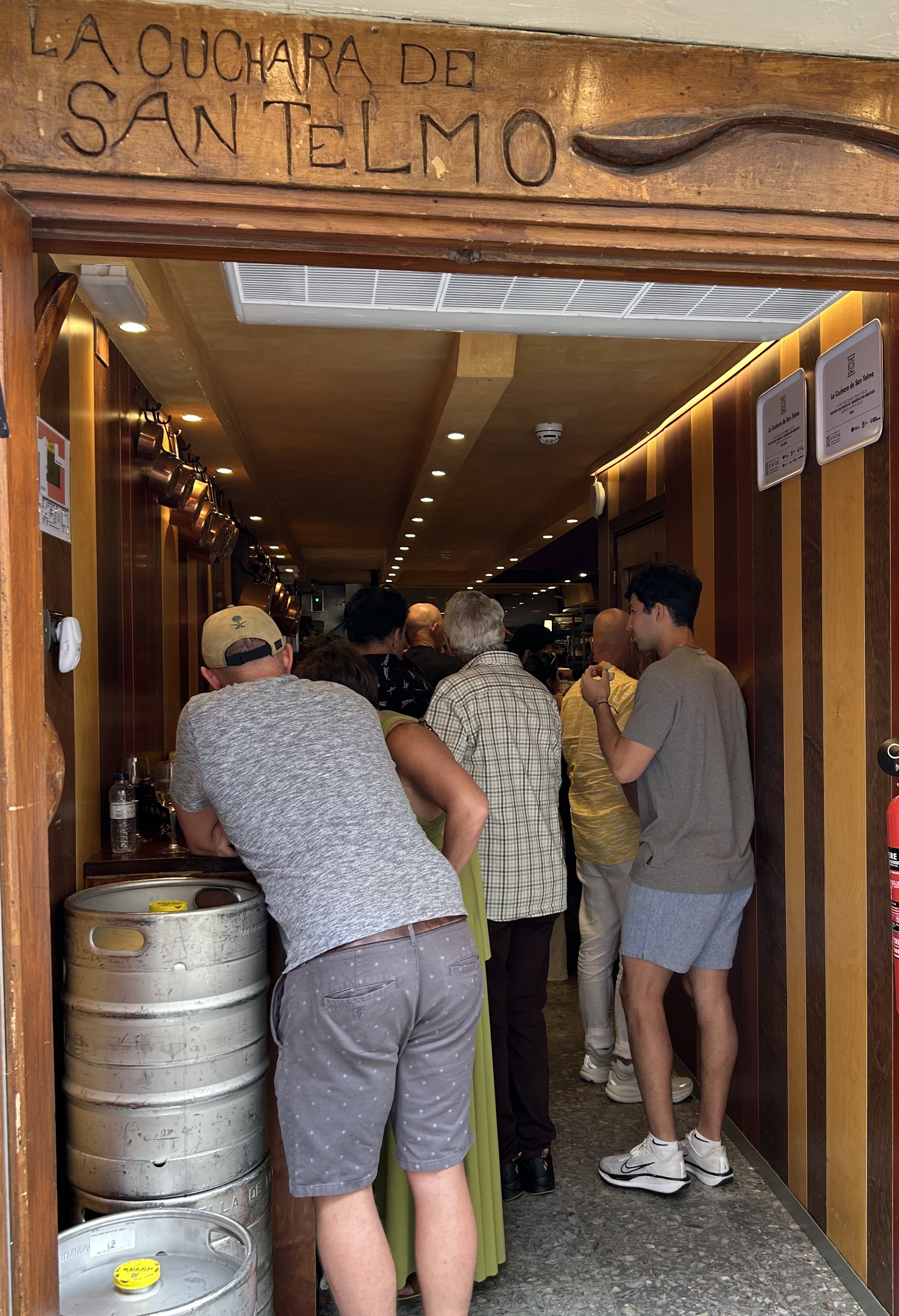
La Cuchara De San Telmo

I have only been in San Sebastian for a few days, so I am sure I will be surprised by many other things on this trip, but if one thing will define my time here in the Basque city of San Sebastian, it will be the pinxo tasting. This encouraged me to try things I’ve never even heard of in my life, and it will send me back home enjoying seafood and food in general much more than I did before my time here on this study abroad. The bars here in the city and the people that surround them and keep them running set a great example for others that pintxos are more than just food, but a way of life for the Basque people here. Although it might be the most basic of foods that I tried on this day, I think the cheesecake was the best way you could end the tour. The combination of all the delicious, salty food you had while going from bar to bar, then topping it off with some Txocoli or cheesecake and eating it with an ocean view, is really a cherry on top of this incredible experience in San Sebastian.

The most simple things have greatest meaning behind it.

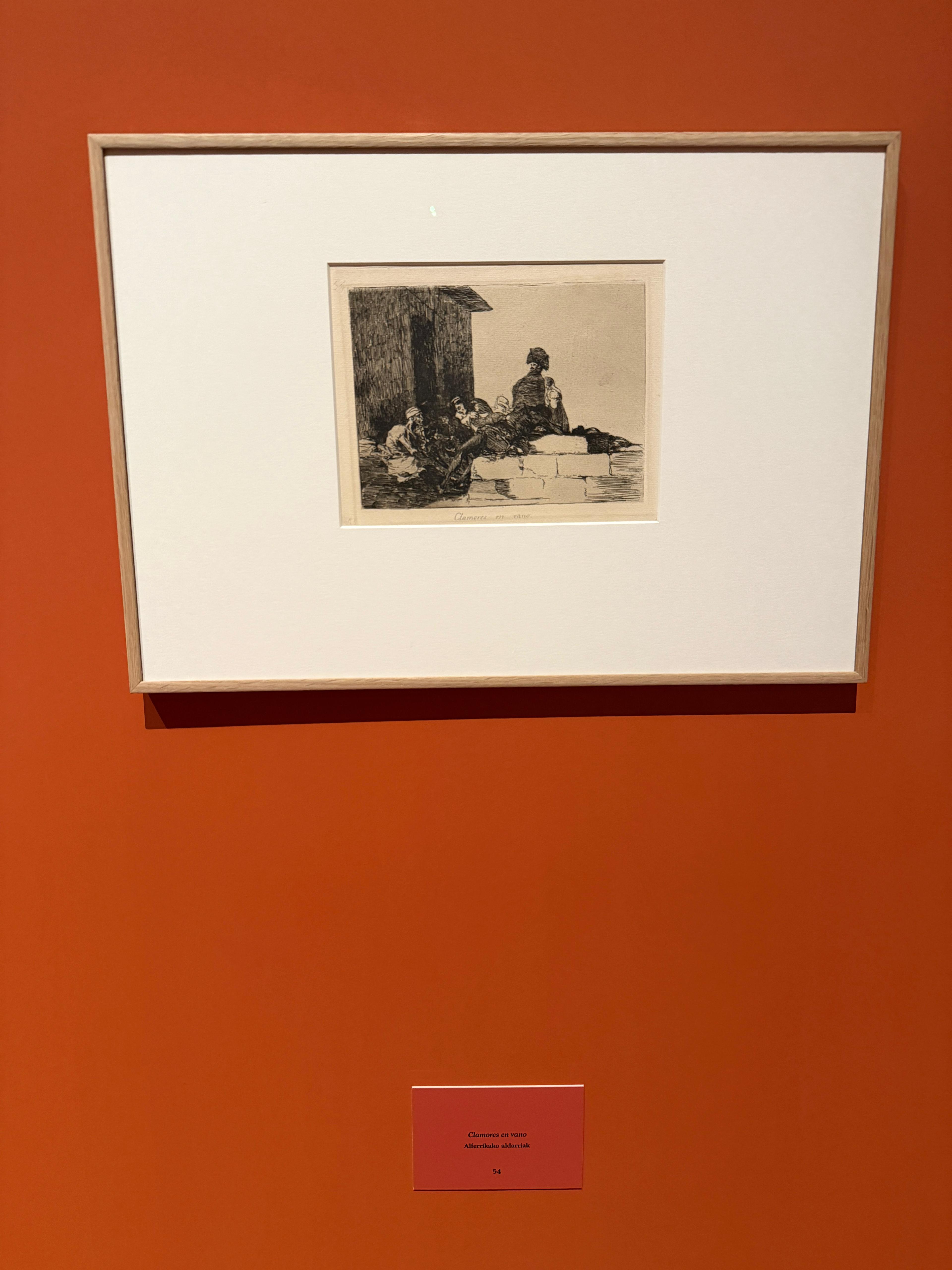
When I decided to do the Study Abroad Program to San Sebastian I couldn’t believe that I got accepted, for me this whole process would be complicated which it turns out that it wasn’t at all. I remember looking up everyday the city San Sebastian on social media, and most of all I always got Monte Igueldo, where the view of the city is amazing, exciting to actually go there myself and enjoy the beautiful views. Our professor Julian after class took us to the San Telmon Museum, which is a museum that explains the history of the city and the most important people that somehow had an impact on the city. We went inside the museum and our first stop was this room with an orange wall and a bunch of print series by Francisco de Goya. His work was a reflection of the Peninsular War that happened in 1813, this is the reason why he named this series “The Disaster Of War”.

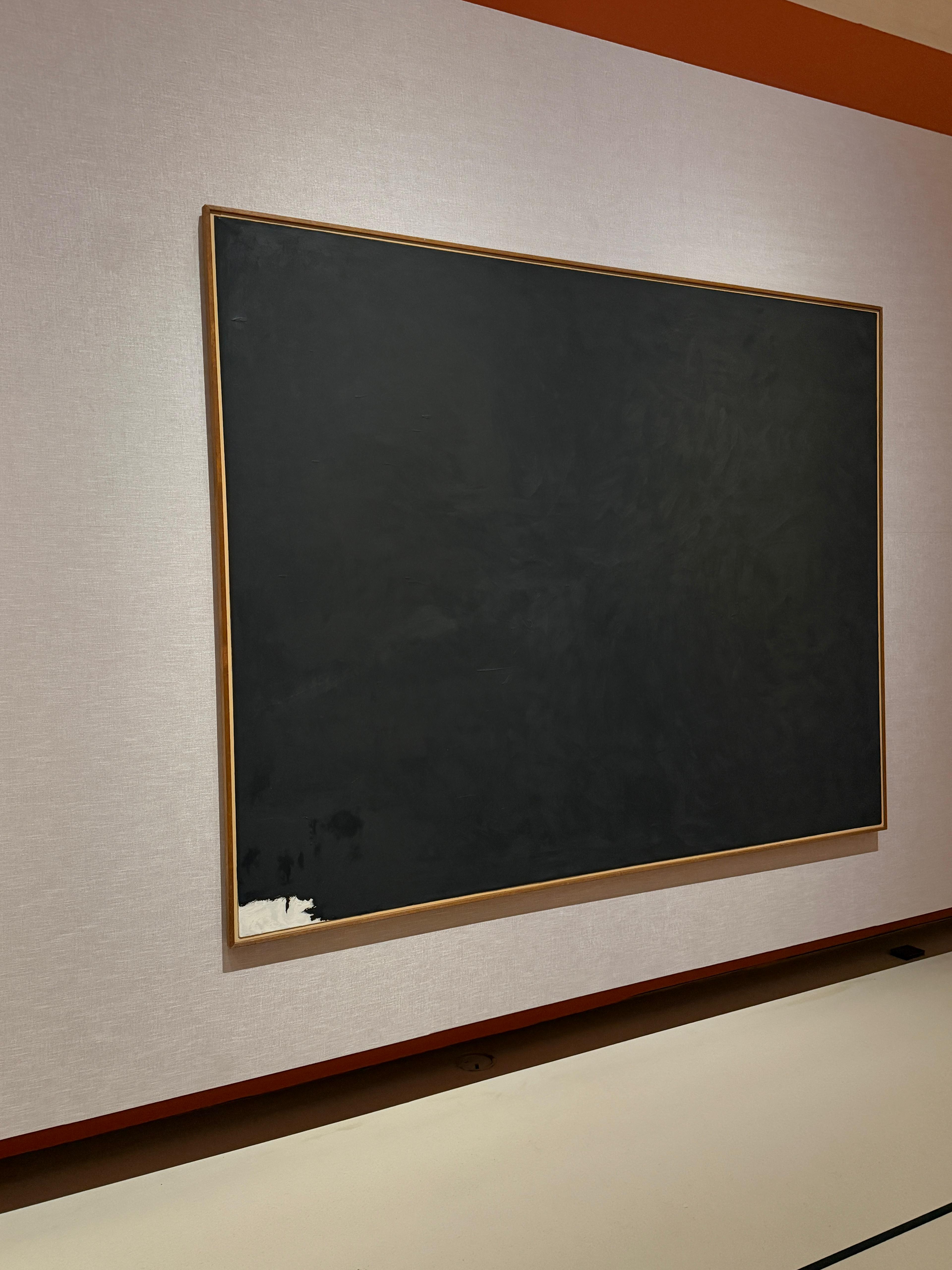
The were a lot of of interesting drawings/ painting, but there was a specific one that caught my attention that one was the piece that closely resembles “Iberia”, this was an oil on canvas painting by Robert Motherwell, this piece even thought it look simple it has a lot of hiding meaning behind it. After doing some research about this piece I found out some historical and political meaning behind it. The whole painting is connected to the Peninsular War between Spain and Portugal, it reflects the somber atmosphere, political oppression, and the emotional weight of Spanish people under the Francos dictatorship. Another part of the same piece that catches my attention was the missed corner on the left side of the painting which emphasizes the weight and density of the black paint making it look less shadow consuming the light, which if we connected to the history it can represents the struggle between light and darkness, and also from my point of view its representing upcoming hope or peace after the disaster.

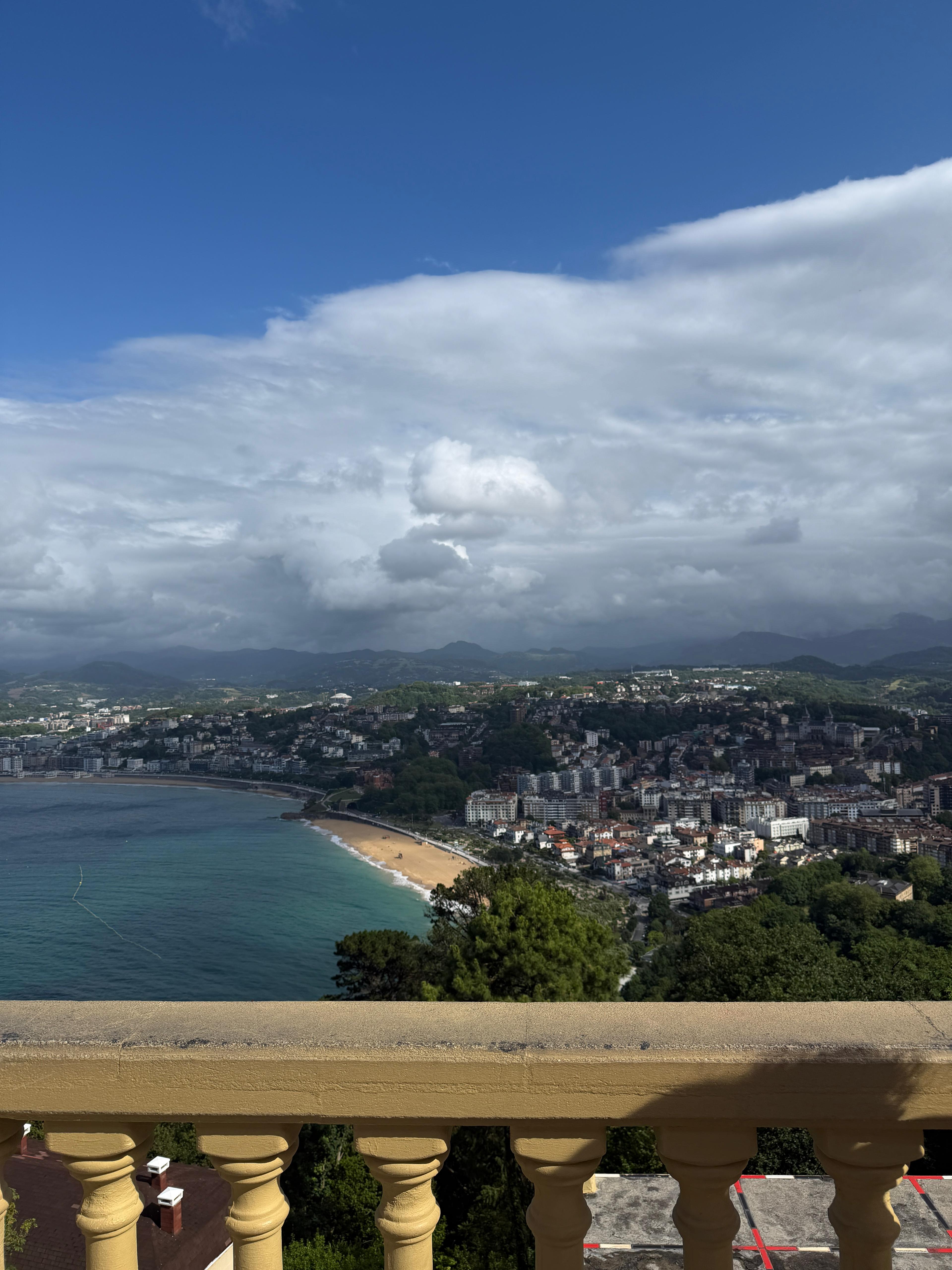
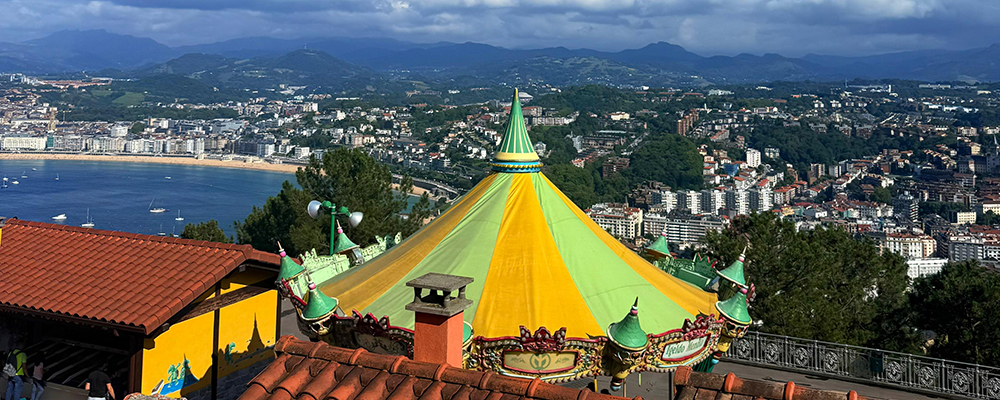
We couldn’t finish the whole tour because we were running late to go to Monte Igueldo. For this reason we left the museum a little bit early, we had to take a bus to Monte Igueldo so we were forced to speedwalk to be able to make it on time. Although it was pouring rain the whole day  luck was on our side, the sky cleared up and we were able to go all the way to the top and enjoy the beautiful view. Once we arrived at the top I couldn’t believe what my eyes were seeing, what one day I saw through a screen was right in front of me. Julian told us a little history behind how old the place was, yet they were able to build an attraction park, it was amazing. My friend Gaby and I didn’t hesitate to take a bunch of pictures not only of the view but also ourselves with the beautiful beach behind it.

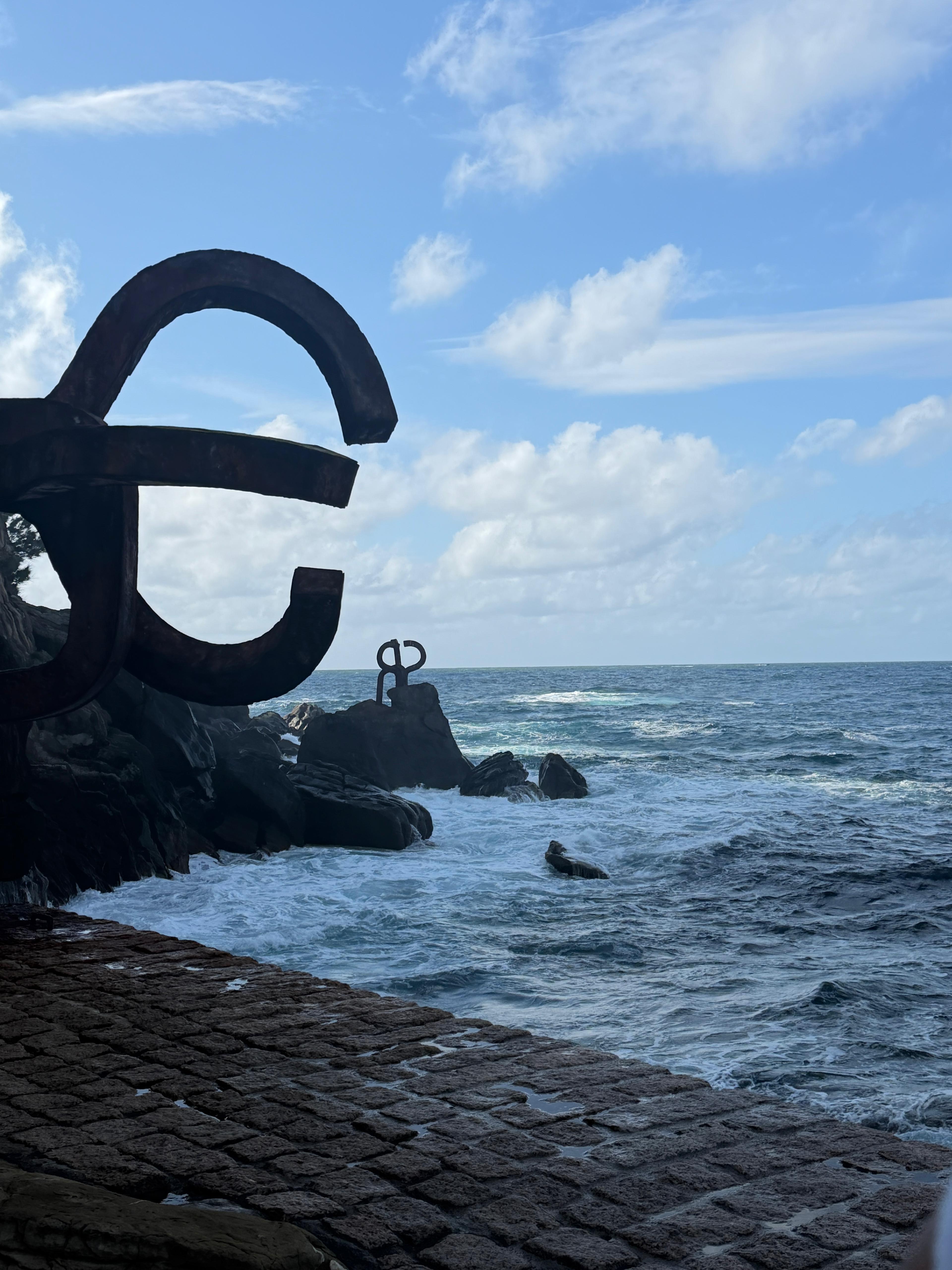
Lastly we did like a ten minute walk to this place that is called Peine del Viento that in English is translated to The Comb of the Wind, the view here was amazing too. What catched my attention was the meaning behind the three comb, the first one represents the past, the second one which is where we were standing represents the present, and the last one represents the future. It is crazy how the professor asked us what we thought it meant and none of us thought it would be this simple, which is something I really like about this city is how the most simple things have the greatest meaning behind it. I never thought of actually leaving one of my biggest dreams, which was studying abroad. I always wanted to do it but never actually realized how close that dream was. We been only here for three days and I already fall in love with the city, its uniqueness, the wonderful places all around it, the music, and specially the ice cream which they are delicious, I treat myself with a little ice cream most of the time after finishing our tour around the city, as a reward for all the walk.