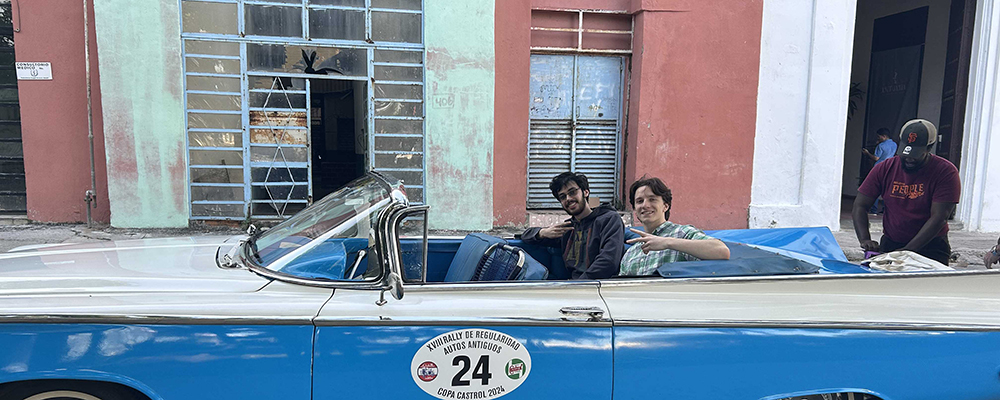
Saturday, January 3, marked the first full day of our study abroad experience in Cuba. This day would certainly set the tone for an exciting week ahead, as we learned about culture, cuisine, and visited a small town called Cojímar! The day ended with a fantastic welcome dinner with our professor and the rest of the API staff, at a restaurant named El Idilio– walking distance from Casa Vera (our residence for the week).
After fueling at breakfast, the sun was shining, and we were ready for our bus ride to Centro Habana, where we would receive an introduction and briefing on the Cuban Ocha-Ifa religion. Also known as Santería, Cuban Ocha-Ifa stems from complex Afro-Cuban roots dating back to the 19th century. Brought to Cuba by enslaved Africans, this practice blends West African Yoruba traditions with Spanish Catholicism, the dominant religion at the time due to Spanish colonial control over Cuba. This religion is centered around the worship of “Orishas” or spiritual deities, to connect with ancestors and achieve a balance between nature and community.
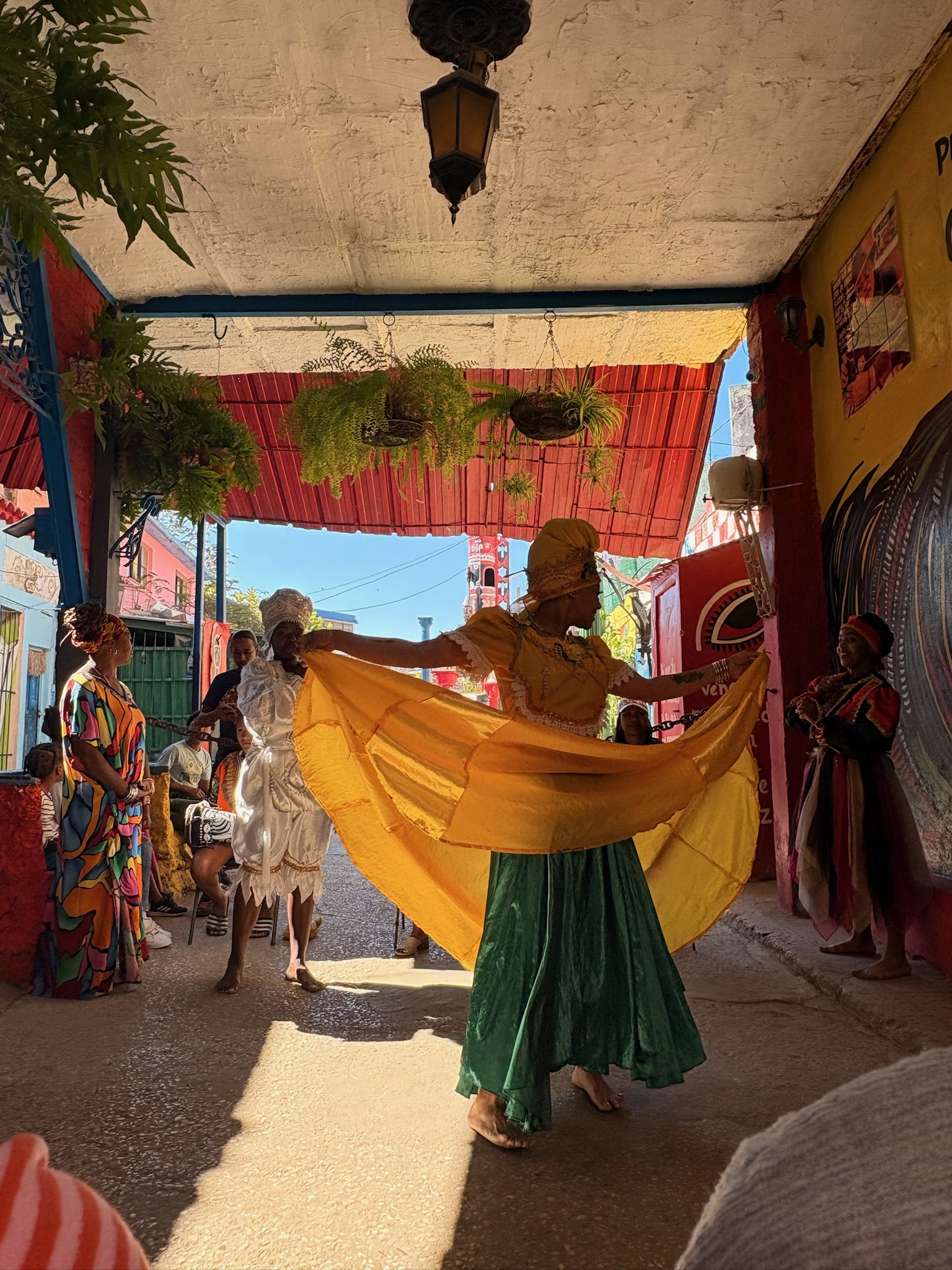
After receiving a tour of Santería altars and having the opportunity to walk around a house-temple, we had the chance to view and take part in their sacred ceremony. There are many elements to this ritual, largely revolving around music, dance, chants, prayers, and offerings. I was moved by the amount of joy and passion emanating from the space at which we were gathered. I happened to be sitting in the front row during the ceremony and got invited up to the central area to dance with the Orisha of youth and mischief!
It was time to hop back on the bus to attend our 1PM lunch reservation at Ajíaco Cafe in Cojìmar. This was our first full sit-down meal as a group, and one of the restaurant’s staff members prepared us for the multi-course meal ahead by explaining the order of the meal and different options. The main appetizer was the famous Ajíaco stew, a dish that showcases Cuban cultural fusion by blending a mix of meats with a variety of root vegetables and a sofrito base. The main entree consisted of chicken, beef, pork, rice, beans, and salad. Dessert featured “dulce de coco con queso,” meaning “sweetened coconut with cheese.” This was an interesting, yet tasty combination! And, as a coffee connoisseur myself, perhaps my favorite part of the meal was being able to watch an older woman brew hot coffee for us, preparing it as they do in the mountains of Cuba. This coffee preparation method involves a Moka pot and results in a concentrated and strong brew.
Just a few minutes down the street from Ajíaco Cafe, was JJ Brothers Garden—an urban farm that provides much of the restaurants’ fresh, organic produce! As a Climate Change & Sustainability major, our visit to this urban farm was one of the parts of the trip I was most looking forward to. I was deeply inspired by their anti-pesticide, all-organic approach consisting of a diverse mix of plants and produce, a composting system, and the reuse of materials. For example, plastic and glass bottles were used as a sturdy structure to separate plant beds. Additionally, in each plant bed, there were plastic water bottles painted a certain vibrant color that the farmers would put animal fat on to attract and eliminate pests (in a natural way). Throughout our tour of the farm, we got to sample fresh herbs like oregano and rosemary, and even coffee beans! This experience allowed me to draw parallels between urban agriculture efforts I have witnessed at UMass Lowell and beyond, re-emphasizing the positive environmental and food security benefits these projects have on local communities.

Cojímar is a historical fishing village that provided a contrast between the hustle and bustle of life in Centro Habana, where we spent the morning. In Cojímar, many people were enjoying the boardwalk and playing music. We visited a 17th century fort and Ernest Hemingway’s memorial. We would later learn that Hemingway based characters from Old Man and the Sea on local fishermen from Cojímar, with whom he spent much of his time. Hemingway also docked his famous fishing boat, El Pilar, in Cojímar’s harbor.
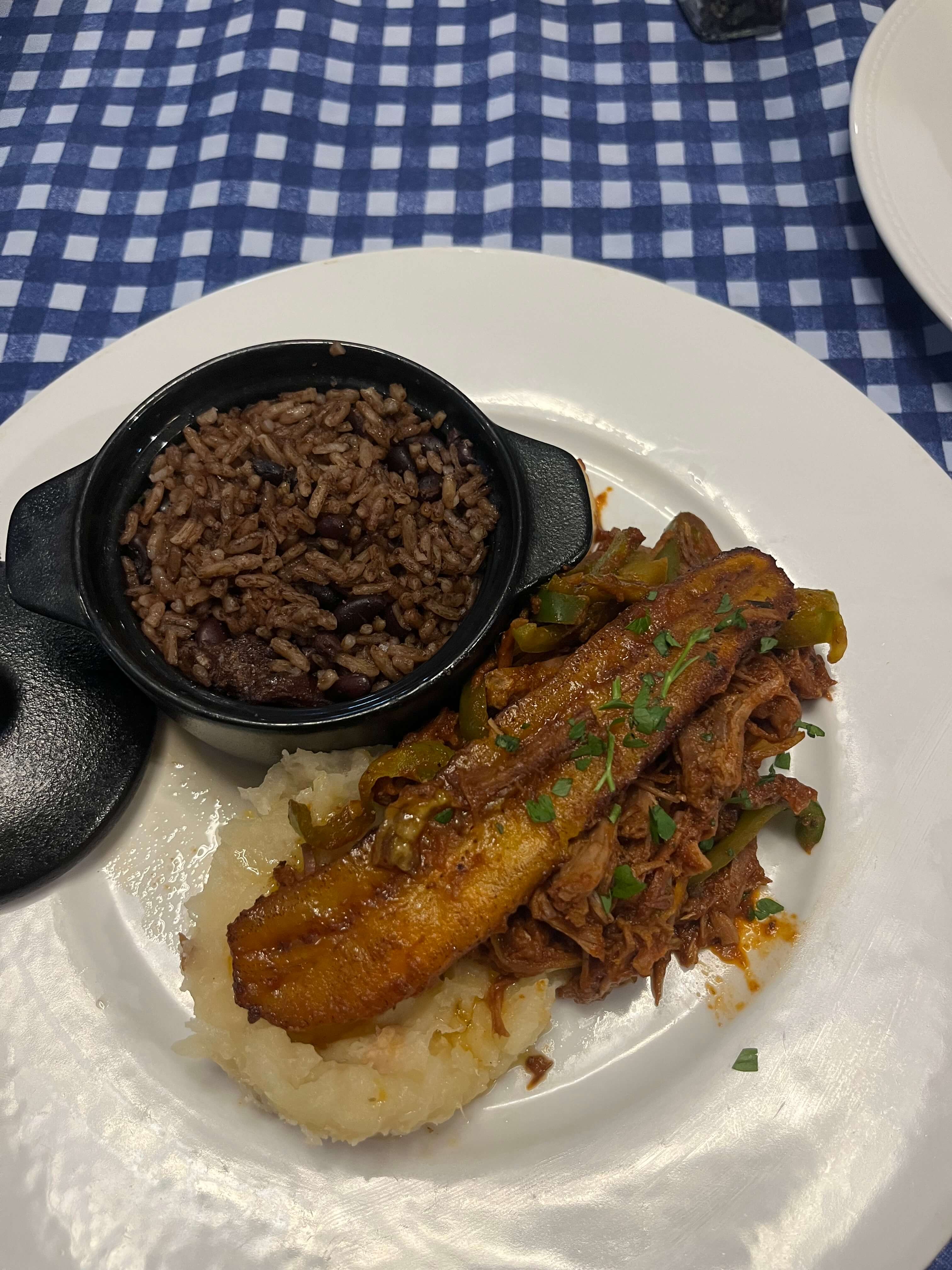
Our welcome dinner at El Idilio was the perfect ending to a great first full day. Appetizers featured foods such as: croquetas, empanadas, jamón, and queso. For the main meal, I chose “la ropa vieja” a classic, traditional Cuban dish that I was excited to try upon my arrival in the country. I was so impressed by the quality, depth of flavor, and presentation of the food! And of course, no welcome dinner is complete without a rich, decadent slice of chocolate cake with a scoop of vanilla ice cream.