Day 6 in Cuba (Wednesday, January 7th)
On day six in Cuba, we ate breakfast at the residencia, visited a museum called “Centro Fidel Castro Ruz”, had a lecture on US-Cuba Relations, ate lunch in a mosaic-covered neighborhood called Fusterlandia, and visited a health and wellness LGBTQ+ advocacy center called CENESEX. Due to illness, I wasn’t able to join the group for the morning activities, but I joined them for the afternoon ones.
Fusterlandia: The Mosaic Neighborhood
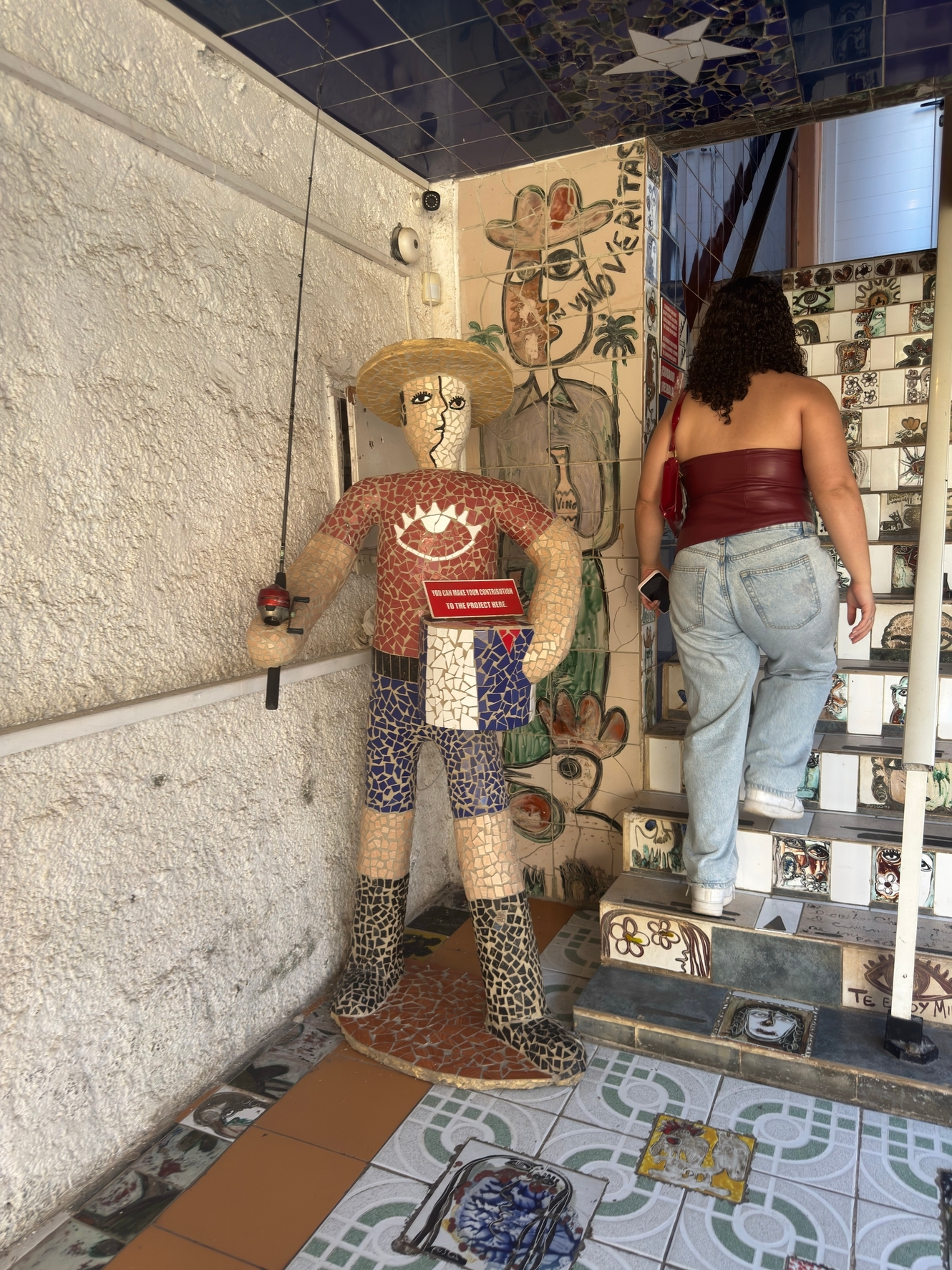
After the group finished the lecture on US-Cuba Relations, I met them at the lecture hall called CIPS, and we got on the bus to eat lunch in a colorful neighborhood called Fusterlandia. Fusterlandia is a public art neighborhood located in Jaimanitas, a coastal district on the western outskirts of Havana, Cuba. This neighborhood was created by artist Jose Rodriguez Fuster and is now a unique work of public art. What started as a personal project became a community-wide transformation. Begun by artists several decades ago, this art complex now covers houses throughout the neighborhood and on walls lining the streets. It’s an open-air art environment filled with mosaics, murals, sculptures, and hand-painted buildings. Fusterlandia is defined by its vibrant, kaleidoscopic mosaics that cover everything from houses and rooftops to bus stops and benches. Some people actually call it a “mosaic wonderland” because of the fact that everything is covered and made with mosaics. It’s truly incredible to see. I wish I was there to experience the neighborhood back when it was in the process of being built! Fusterlandia is approximately 20–30 minutes by car from downtown Havana and there are onsite souvenir shops selling original ceramics and paintings. Also, some tours, like ours, include lunch on the property. This spot in Cuba was really fun to see and one of my favorite sights we saw on the trip by far!


CENESEX lecture: care, rights, and respect for all
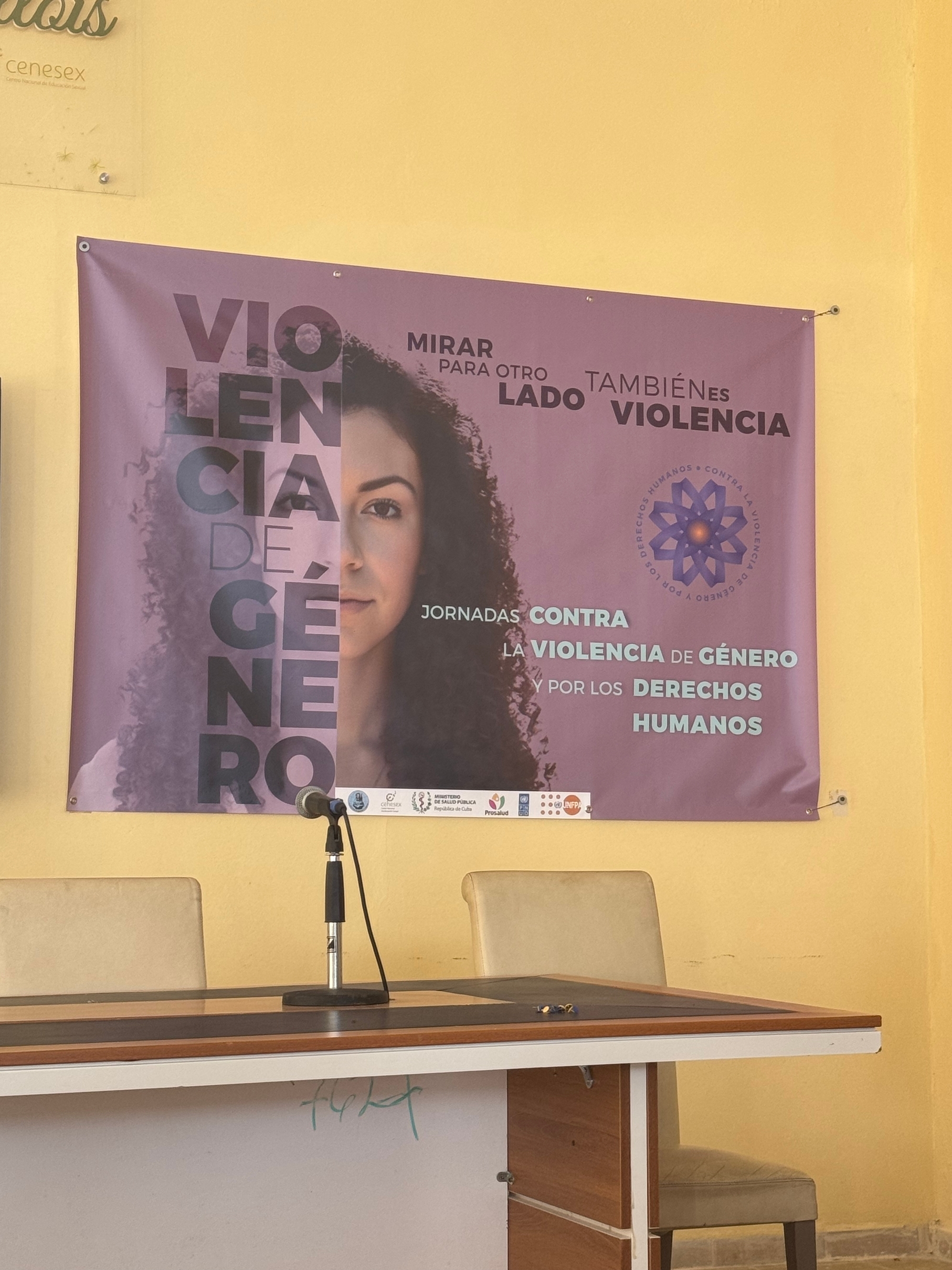
After we ate lunch at Fusterlandia, we visited a place called CENESEX which is a Cuban government-funded institution based in Havana dedicated to sexuality education, research, advocacy, and health services. It operates under Cuba’s Ministry of Public Health and plays a major role in shaping sexual rights, education, and policy on the island. We learned so many interesting things during this lecture including that CENESEX was founded in 1988, one of its first directors was Monika Krause-Fuchs (a German sociologist and educator), and CENESEX grew out of earlier national sex-education efforts beginning in 1972 with the Grupo Nacional de Trabajo sobre Educación Sexual (initiated by Vilma Espín of the Federation of Cuban Women). The full name of the center is “Centro Nacional de Educación Sexual” (National Center for Sex Education).
CENESEX’s work and goals are very broad. They develop educational materials and programs on human sexuality, sexual health and rights, they offer workshops, classes, training for professionals and the public, they provide postgraduate and accreditation programs in sexual health and education, and so much more. Their overall goal is to promote a comprehensive, rights-based approach to sexuality as part of overall human wellbeing. Another important thing they do is continue to work on anti-discrimination initiatives, including campaigns against homophobia and transphobia. CENESEX also offers counseling and support related to sexual orientation, gender identity, sexual violence, reproductive health, etc. In addition, they work with institutions on care for victims of abuse, and community health.
CENESEX is especially well-known internationally for its role in advancing LGBTQ+ rights in Cuba. It has championed acceptance of sexual diversity and the rights of LGBTQ+ people, including transgender rights and legal recognition of gender identity. CENESEX has also played a key role in Cuba’s International Day against Homophobia and Transphobia celebrations and public awareness campaigns.
Overall, CENESEX’s mission is to promote a culture where sexuality is understood as healthy, pleasurable, and responsible, and to ensure the full exercise of sexual rights as part of human rights in Cuban society. The CENESEX team emphasizes a comprehensive, rights-based model of sexuality education rooted in scientific research and social engagement and also manages education, community outreach, and legal advising related to sexual health and rights.
Some of my thoughts on CENESEX: I definitely support what CENESEX is trying to do for the Cuban community, I think it’s wonderful. I really appreciate the fact that CENESEX helped reverse past state discrimination, they see sexuality as a health and human rights issue, they expanded legal protections for families, made transgender healthcare accessible, they use education rather than punishment, they created public space for LGBTQ+ visibility, and CENESEX works within Cuban reality. There are so many reasons for people to appreciate what CENESEX is doing (and has done) for the community in Cuba, and their work is never done. They’re always looking ahead into the future to see who they can help next, and I think that’s definitely a strength CENESEX will always have.